
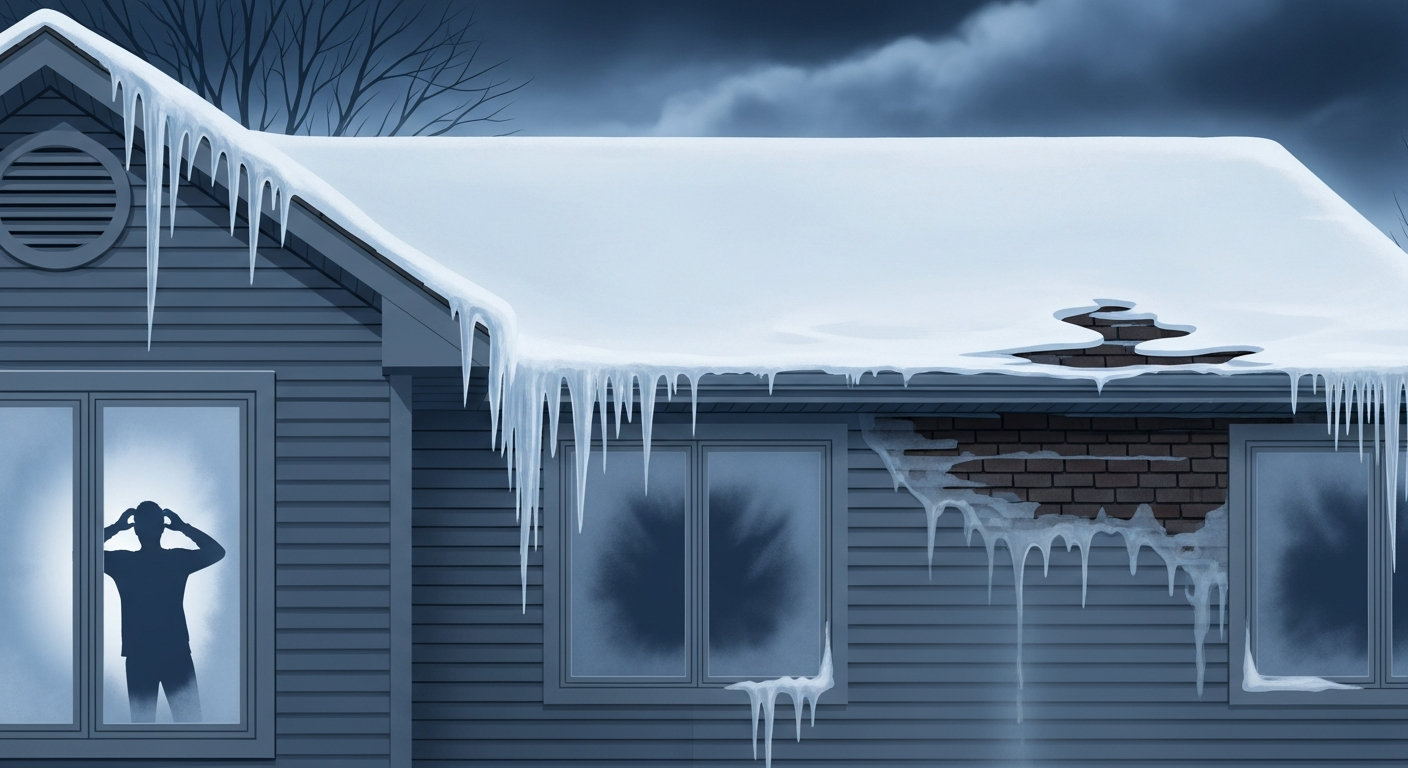
As Twin Cities homeowners scramble to deal with ice dams during this winter’s harsh conditions, we’re witnessing more than just a seasonal inconvenience – it’s a recurring infrastructure failure that exposes our reactive rather than proactive approach to home maintenance. Steve Kuhl and his busy crews at The Ice Dam Company represent the frontline response to a problem that shouldn’t be surprising anyone in Minnesota, yet continues to damage homes and drain wallets every few years. The cyclical nature of this issue – occurring ‘every three to four years’ according to Kuhl – demonstrates how we’ve normalized preventable damage rather than addressing the root causes.
Our Homes Weren’t Built for Climate Reality
The fundamental issue isn’t just this winter’s weather pattern but the inadequacy of standard residential construction in northern climates. Many homes in the Twin Cities region were built with insufficient roof insulation and ventilation systems that simply can’t handle the thermal dynamics of heavy snow loads combined with temperature fluctuations. The University of Minnesota’s Building Research Center has documented that up to 40% of homes in the region have insulation values below current code recommendations, even though proper insulation would prevent most ice dam formation.
Consider the case of Edina’s Morningside neighborhood, where homes built in the 1940s and 1950s regularly suffer ice dam damage. A 2019 neighborhood association survey found that 78% of homeowners had experienced ice dam problems, yet only 32% had undertaken significant insulation improvements. The prevailing approach remains reactive – calling emergency removal services rather than investing in prevention.
The Economics of Prevention vs. Emergency Response
The business model of companies like Kuhl’s thrives on our collective failure to invest in prevention. While emergency ice dam removal typically costs $400-800 per hour with steam equipment, comprehensive insulation and ventilation improvements average $3,000-7,000 per home. The math should be compelling: a single severe ice dam event can cause interior damage exceeding $15,000, according to State Farm Insurance data from Minnesota claims.
Heat cable systems, which Kuhl mentions installing as preventative measures, represent a band-aid solution rather than addressing the core issue. These systems consume electricity continuously, adding to homeowners’ utility bills and environmental impact, when proper insulation would eliminate the need entirely. The Rochester Public Utilities efficiency program documented that homes with upgraded attic insulation saw a 92% reduction in ice dam formation compared to just 67% for homes using heat cables alone.
Climate Change Amplifies Design Failures
The weather patterns creating ideal ice dam conditions – heavy snowfall followed by temperature fluctuations – are becoming more common in Minnesota due to climate change. The Minnesota State Climatology Office has recorded a 15% increase in winter precipitation events with rapid temperature shifts over the past three decades. Our housing stock isn’t just failing to meet current conditions; it’s increasingly vulnerable to future weather patterns.
The Twin Cities Metropolitan Council’s 2022 Climate Vulnerability Assessment identified residential roof damage from ice dams as a growing economic threat, with projected annual damages increasing 23% by 2040. Yet building codes and renovation incentives haven’t adequately addressed this looming crisis. While new construction has improved standards, the vast majority of existing homes remain vulnerable.
Alternative Viewpoints: The Complexity of Housing Improvements
Some would argue that comprehensive home improvements are prohibitively expensive for many homeowners, especially in older neighborhoods where residents may be on fixed incomes. This perspective has merit – the upfront costs of proper insulation, ventilation, and roof modifications can be substantial. Additionally, finding qualified contractors for these improvements can be challenging during Minnesota’s short construction season.
However, this view overlooks the availability of energy efficiency financing programs like the Minnesota Housing Finance Agency’s Fix Up Fund, which offers low-interest loans specifically for these improvements. It also fails to account for the cumulative costs of repeated emergency services and interior repairs, which eventually exceed prevention costs for most properties. The Center for Energy and Environment in Minneapolis has documented that properly executed attic improvements typically pay for themselves within 7-10 years through combined energy savings and damage prevention.
A Community Problem Requires Community Solutions
The individualistic approach to ice dam prevention fails to recognize that housing resilience affects entire communities. When homes suffer water damage, it impacts neighborhood property values, increases insurance premiums across rating territories, and diverts emergency response resources. The city of Bloomington implemented a neighborhood-scale insulation improvement program in 2018 that achieved economies of scale by coordinating improvements across multiple properties, reducing costs by 22% compared to individual projects.
Municipal building departments could play a more proactive role by requiring ice dam prevention measures during permit approvals for roof replacements or major renovations – critical intervention points when prevention is most cost-effective. Currently, most Twin Cities municipalities check for code compliance but don’t incentivize exceeding minimum standards for climate resilience.
Conclusion: Moving Beyond the Reactive Cycle
As Pat Hall of Keyprime Roofing predicts more leaks with next week’s warming trend, we’re witnessing the consequences of treating ice dams as inevitable rather than preventable. The busy schedules of removal companies reflect our collective failure to address a known, recurring problem with proven solutions. Breaking this cycle requires shifting from emergency response to systematic prevention through improved building standards, financial incentives for improvements, and community-scale approaches to housing resilience.
The true cost of ice dams isn’t measured just in the hourly rates of removal services or even in the interior damage to individual homes – it’s in the perpetuation of a housing infrastructure that remains vulnerable to predictable climate conditions. Until we treat ice dams as a system failure rather than a weather event, Steve Kuhl and his competitors will continue to have busy winters, and homeowners will continue to pay the price for our collective inaction.