
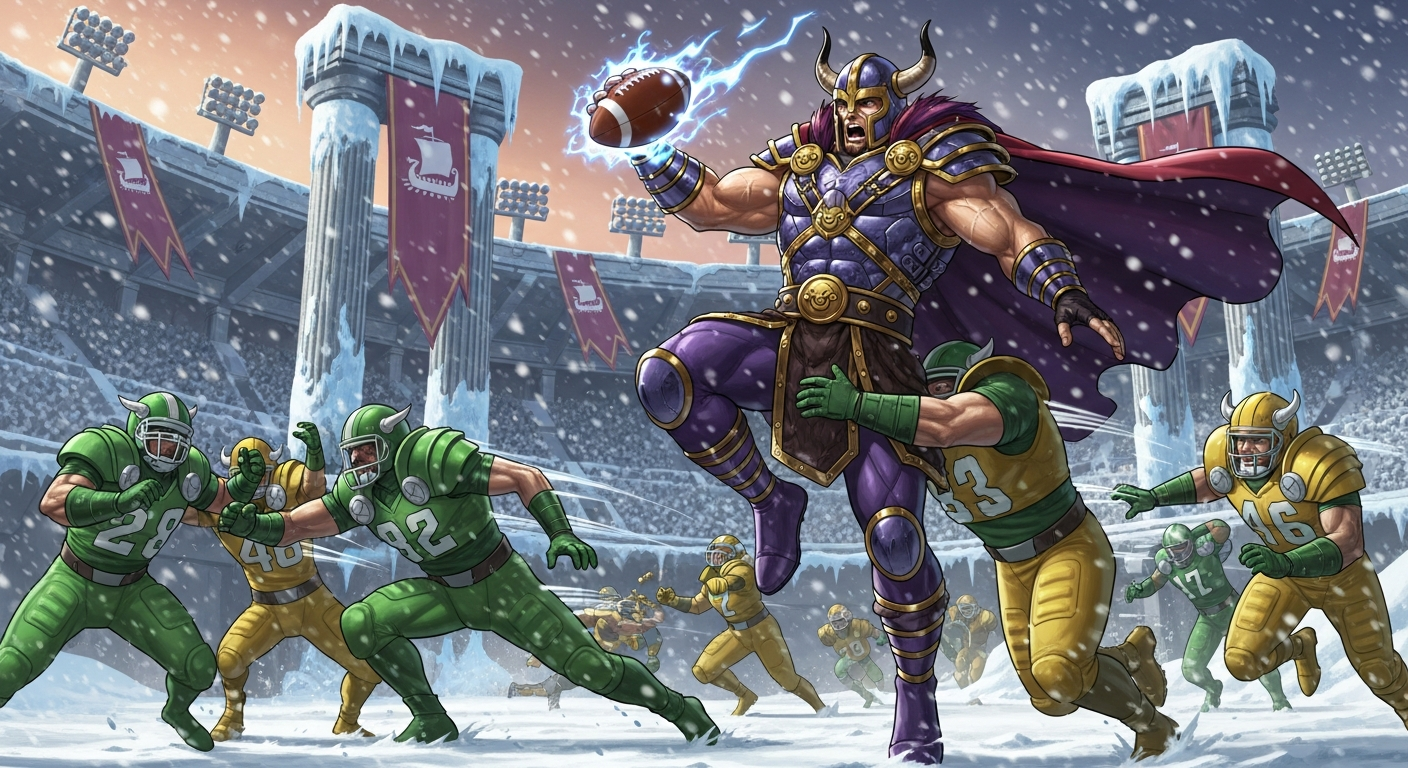
The Minnesota Vikings’ recent offensive resurgence under J.J. McCarthy isn’t just a silver lining in a lost season—it’s damning evidence of organizational mismanagement in quarterback development. After consecutive promising performances, including a career-high 250-yard showing against Dallas, the Vikings now face the consequences of their overly cautious approach with their first-round investment.
McCarthy’s sudden effectiveness raises the uncomfortable question: Could Minnesota be fighting for playoff position rather than planning for 2026 if they had committed to his development earlier?
The Vikings’ Self-Inflicted Quarterback Crisis
Minnesota’s handling of McCarthy represents a case study in how not to develop a first-round quarterback. The organization’s decision to start Sam Darnold while keeping McCarthy on a limited practice schedule created the worst possible scenario—a rookie quarterback receiving neither game experience nor adequate practice repetitions. When McCarthy finally got his chance, he was predictably raw and unprepared.
Compare this approach to Houston’s handling of C.J. Stroud or Green Bay’s transition to Jordan Love. Both organizations created clear development paths with appropriate expectations and support systems. The Texans immediately committed to Stroud as their starter, while the Packers gave Love three years of development before handing him the keys. The Vikings, meanwhile, created a murky middle ground that served neither McCarthy’s development nor the team’s competitive needs.
The Late-Season Evidence Is Damning
McCarthy’s performance against Dallas wasn’t just statistically impressive—it revealed the quarterback the Vikings could have been developing all season. His 10.4 yards per attempt demonstrated the downfield passing ability that O’Connell’s offense requires. The perfectly placed back-shoulder fade to Jalen Nailor on fourth down showed both arm talent and situational awareness that comes from experience and coaching.
Most telling was McCarthy’s post-game comment: “The guys are always going to get open, so it’s just a matter of me putting it in the right spot and having the time allowed to put in the right spot.” This statement reveals a quarterback who needed reps and confidence, not a clipboard and a headset.
The Salary Cap Consequences Loom Large
The Vikings’ mishandling of McCarthy extends beyond this lost season. Minnesota now faces a compressed development window with severe salary cap constraints. Players like Jalen Nailor, who has emerged as a reliable third receiver with two touchdowns against Dallas, will command significant raises that the Vikings may not be able to afford.
This reality makes McCarthy’s delayed development even more costly. The NFL’s economic structure rewards teams that maximize production from players on rookie contracts. The Baltimore Ravens’ roster construction around Lamar Jackson and the Kansas City Chiefs’ early Super Bowl with Patrick Mahomes on a rookie deal demonstrate this principle. The Vikings have effectively wasted the first year of McCarthy’s rookie contract window—a strategic error with long-term competitive consequences.
The Offensive Line Paradox
The Vikings’ pass protection against Dallas was exceptional—no sacks allowed and only one quarterback hit against one of the league’s most accomplished defensive fronts. This performance directly contradicts the narrative that McCarthy was being protected from poor pass protection earlier in the season.
If the offensive line can provide this level of protection now, the decision to delay McCarthy’s development becomes even more questionable. Many developing quarterbacks never receive this quality of protection. The Arizona Cardinals’ handling of Kyler Murray behind perpetually struggling offensive lines shows how development opportunities can be squandered without adequate protection.
Alternative Viewpoints: The Injury Protection Theory
Some will argue the Vikings were protecting their investment by easing McCarthy back from his knee injury. While understandable in theory, this argument falls apart when examining how other teams have handled similar situations. The Bengals didn’t hesitate to play Joe Burrow after his ACL recovery, understanding that game experience is irreplaceable for quarterback development.
Furthermore, if health was the primary concern, why did the Vikings draft McCarthy in the first place? The NFL’s rookie wage scale makes first-round picks too valuable to stash on the bench for developmental purposes unless there’s an established star ahead of them (as with Patrick Mahomes in Kansas City or Jordan Love in Green Bay).
The Path Forward Requires Honesty
For the Vikings to maximize McCarthy’s potential, they must first acknowledge their mismanagement. The final three games aren’t meaningless exhibitions—they’re critical development opportunities that should have been occurring all season.
The organization needs to use these games to expand McCarthy’s exposure to different defensive looks, pressure situations, and game management scenarios. Every rep against Detroit and Green Bay’s playoff-caliber defenses will be more valuable than any practice session could provide.
Most importantly, the Vikings must build their 2026 offseason strategy around accelerating McCarthy’s development to make up for lost time. This means prioritizing offensive line continuity, retaining key receiving targets, and designing an offseason program specifically tailored to McCarthy’s learning curve.
The Vikings have glimpsed their quarterback of the future in these December games. The tragedy is that this glimpse could have come in September, with a full season of development and perhaps even playoff contention to show for it.