
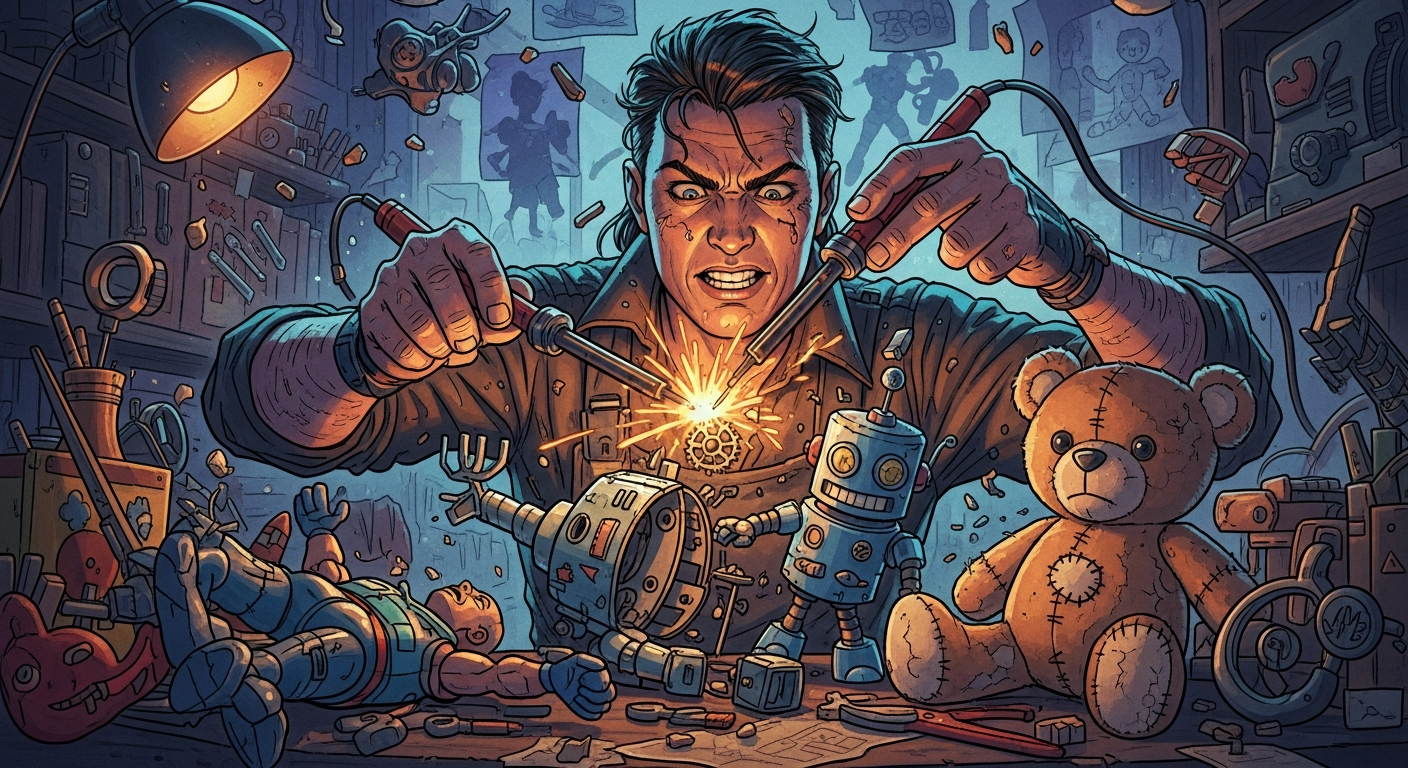
The story of Lauryn Olson’s quest to repair her 26-year-old stuffed cat ‘Kitty’ might seem trivial to some, but it unlocks a profound truth about human psychology that deserves serious attention. In our disposable consumer culture, these threadbare companions represent something increasingly rare: constancy in a world of perpetual change. The viral nature of Olson’s search reveals we’re collectively starving for symbols of permanence.
What’s remarkable isn’t just that adults maintain attachments to childhood toys, but that these objects serve as emotional anchors through life’s most turbulent transitions. Olson’s statement that ‘Whenever it felt like I was moving so much and like nothing in my life was constant, Kitty was always there’ speaks to a universal human need that our modern, mobile society often fails to address.
The Psychology Behind Adult Attachment to Childhood Objects
The phenomenon of adults maintaining deep emotional connections to childhood toys represents more than mere nostalgia—it’s a sophisticated psychological coping mechanism. Transitional objects, as psychologists call them, serve as physical manifestations of security and comfort during development. What’s noteworthy is how these attachments persist long after their developmental purpose seems fulfilled.
Research from the Journal of Consumer Psychology suggests these attachments aren’t signs of immaturity but rather reflect sophisticated emotional regulation. A 2018 study found that adults who maintained connections to childhood objects showed greater resilience during major life transitions. This explains why Olson, who moved multiple times and attended three different high schools, clung to Kitty as her constant.
The stories shared by Melinda Morvari (with her 52-year-old stuffed donkey) and Greta Kotz (with her 59-year-old stuffed cat) further illustrate how these objects transcend mere sentimentality to become repositories of significant emotional connections, particularly to deceased loved ones. Morvari’s statement that her stuffed animal helps her feel connected to her father who died when she was 22 demonstrates how these objects function as physical links to our past selves and relationships.
Our Disposable Culture vs. Lasting Connections
The extreme care these individuals show toward maintaining their worn companions stands in stark contrast to our throwaway consumer culture. While the average American discards over 80 pounds of textiles annually, these individuals seek specialized repair services for objects that most would consider beyond salvation.
This contradiction reveals a deeper tension in modern society. Companies profit from planned obsolescence and constant replacement, yet humans fundamentally crave continuity. The fact that Olson would drive a full day to find a proper repair service rather than simply purchase a replacement demonstrates the irreplaceability of objects imbued with emotional significance.
Consider the Japanese practice of Kintsugi, where broken pottery is repaired with gold, highlighting rather than hiding the damage. Similarly, Olson specifically wants to preserve certain imperfections in Kitty—like the ear sewn by her grandmother—because these ‘flaws’ actually contain precious memories. As she puts it, ‘Mint condition wouldn’t tell the full story of a friendship two decades and counting.’
The Community That Forms Around Shared Vulnerability
Perhaps the most revealing aspect of this story is how Olson’s search created an impromptu community of adults willing to publicly acknowledge their attachments to worn stuffed animals. In an era where social media often showcases carefully curated perfection, the willingness to share these ragged companions represents a rare moment of authentic vulnerability.
This phenomenon parallels findings from social psychology research showing that shared vulnerability, rather than shared success, forms the strongest social bonds. The community that emerged around Olson’s post created connection precisely because it revealed something typically kept private—our enduring emotional attachments to objects that others might view as childish or disposable.
Similar communities have formed around other restoration services, like the American Girl Doll Hospital, which receives thousands of dolls annually for repair from adult owners. These services don’t just fix objects; they validate the legitimacy of maintaining these emotional connections throughout adulthood.
Alternative Viewpoints: The Case for Letting Go
Some psychologists and minimalists argue that excessive attachment to objects—even meaningful ones—can become unhealthy. Marie Kondo’s wildly popular decluttering philosophy encourages people to thank items for their service before discarding them, suggesting that emotional growth sometimes requires letting go of physical reminders of the past.
There’s validity to this perspective. Attachment that prevents forward movement or becomes a substitute for human connection deserves scrutiny. However, this criticism misses a crucial distinction: these individuals aren’t hoarding meaningless objects but preserving singular items that have witnessed their life journeys. The difference lies in the quality of attachment rather than the fact of attachment itself.
Furthermore, in an increasingly digital world where photos exist primarily as pixels and communications as ephemeral text messages, these physical objects provide tangible connections to our personal histories in ways that digital archives cannot. Their very materiality—their wear patterns, their smells, their weight—connects us to our past selves through multiple sensory channels.
The Dignity in Preserving What Others Consider Disposable
There’s something profoundly countercultural about the care these individuals show toward objects that most would consider beyond saving. In a society that increasingly values novelty over durability, the act of seeking specialized repair for a decades-old stuffed animal represents a small but significant rebellion against consumer culture’s underlying message: that everything (and perhaps everyone) is replaceable.
When Kristin Mayberry says of her 36-year-old Elmo, ‘You have a visual of what love has done to this guy,’ she articulates something profound about how authentic care transforms rather than preserves. True love—whether for people or cherished objects—doesn’t keep things in pristine condition; it accepts and even celebrates the transformations that come with time and use.
This perspective offers a powerful metaphor for human relationships as well. Just as these individuals cherish their worn companions, perhaps we might extend similar grace to the aging, changing people in our lives—including ourselves.
Conclusion: The Wisdom in Worn Fabric
Olson’s search for a stuffed animal repair service reveals something much larger than one woman’s attachment to a childhood toy. It illuminates our collective hunger for continuity in an age of constant change, for authenticity in an era of careful curation, and for meaningful connection in a culture that often prioritizes the new over the known.
The worn fabric of these beloved companions contains wisdom about what truly matters: not perfection or novelty, but the steady presence that witnesses our journey through life’s transitions. As we navigate an increasingly fractured and disposable culture, perhaps we should pay more attention to what these threadbare companions can teach us about what deserves to be preserved, repaired, and cherished—not despite its imperfections, but because of them.