
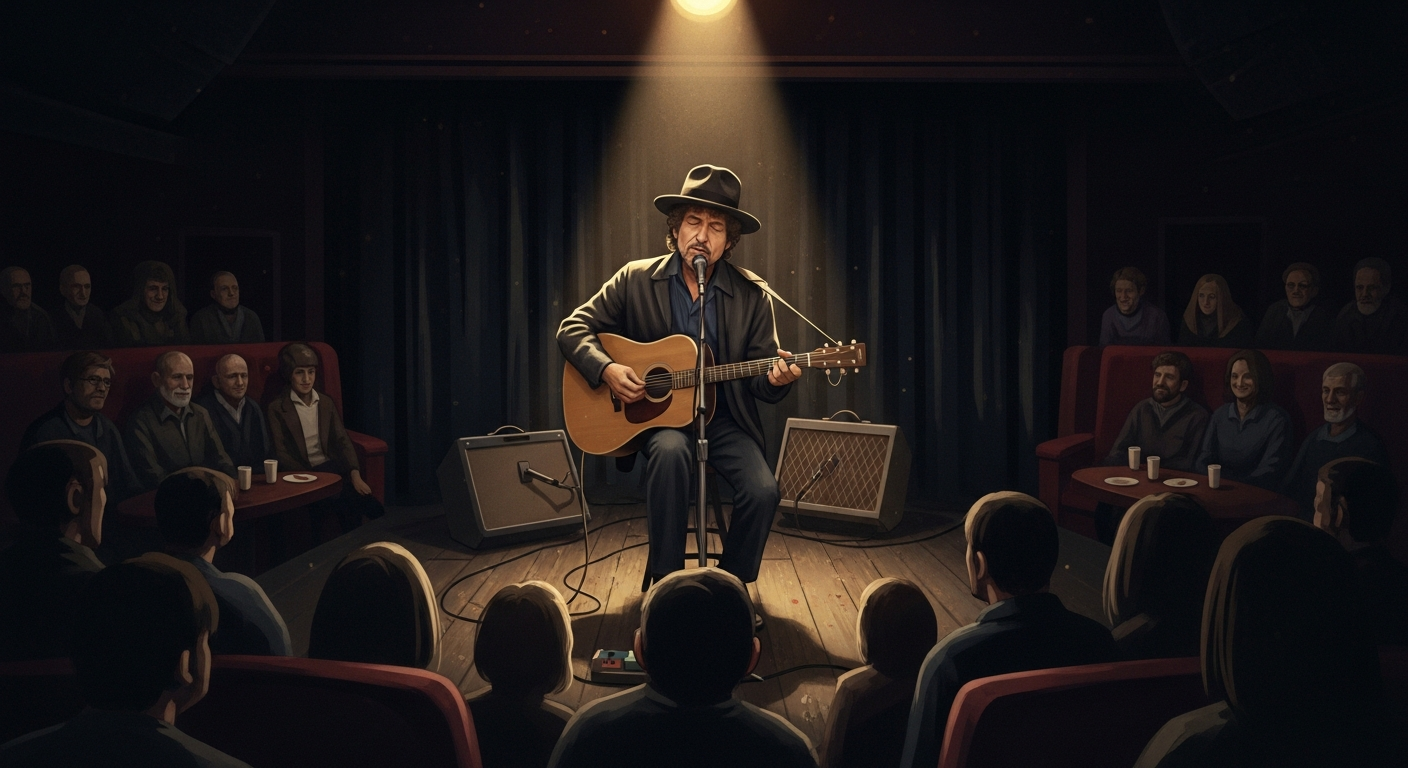
Bob Dylan’s newly announced 2026 tour represents more than just another musical roadshow—it’s a deliberate artistic statement challenging the commercialized stadium concert model that dominates today’s music industry. By choosing mid-sized venues in smaller cities like Rochester, Minnesota while bypassing major metropolitan areas, Dylan isn’t simply planning a tour; he’s making a profound statement about artistic authenticity and accessibility that deserves our attention.
Dylan’s Small-City Focus Represents a Return to Music’s Communal Roots
The decision to perform in places like Omaha, Rochester, Iowa City and La Crosse rather than exclusively targeting major markets stands in stark contrast to the industry standard. Most artists of Dylan’s caliber gravitate toward maximizing profits through massive arena shows in population centers. This approach typically generates higher revenue but creates a disconnected experience where fans become distant spectators rather than participants in an intimate musical exchange.
Dylan’s choice echoes the troubadour tradition that shaped American folk music—bringing art directly to communities often overlooked by the entertainment industry. When Bruce Springsteen experimented with a similar approach during his 2005 Devils & Dust tour, playing smaller venues, critics noted the profound connection established between artist and audience. The smaller setting allowed for nuanced performances where subtle lyrics and acoustic arrangements weren’t lost in cavernous spaces.
This approach also democratizes access to significant cultural experiences. Residents of mid-sized cities frequently must travel hours to major metropolitan areas for concerts of this caliber, adding substantial costs beyond ticket prices. By bringing his legendary catalog directly to these communities, Dylan makes a statement about cultural equity that few artists of his stature bother to consider.
The Fifth Year of Touring ‘Rough and Rowdy Ways’ Shows Artistic Commitment Over Commercial Pressure
Most artists tour immediately after an album release to capitalize on promotional momentum, then quickly move on to new material. Dylan’s dedication to exploring his 2020 album for five consecutive years demonstrates a refreshing prioritization of artistic exploration over commercial imperatives.
This extended focus on a single body of work allows for deeper musical evolution. Jazz legend Miles Davis famously performed compositions for years, continually finding new interpretations and nuances. Similarly, Dylan’s approach permits songs to breathe and transform over time rather than being hastily performed during a promotional cycle and abandoned.
Consider how Leonard Cohen’s later-career tours featured songs he had performed for decades, yet each performance revealed new emotional depths and interpretations. The 2026 tour will likely showcase how Dylan’s relationship with these compositions has evolved, offering audiences something far more valuable than mere nostalgia—a living document of artistic development.
Skipping Major Markets Challenges Music Industry Centralization
The concentration of cultural events in major metropolitan areas has accelerated in recent decades, creating a troubling pattern where artistic experiences become exclusive privileges for urban residents. Dylan’s tour routing deliberately counters this trend, recognizing that meaningful cultural exchange shouldn’t be determined by population density or market size.
This approach also serves as a rejection of the corporate concert model that has come to dominate the industry. When Taylor Swift’s Eras Tour generated unprecedented demand, the resulting Ticketmaster fiasco highlighted how centralized, high-demand shows create barriers to access. Astronomical ticket prices, predatory resale practices, and technical failures locked many fans out of the experience entirely.
Dylan’s more distributed approach potentially mitigates these issues while making a statement about who deserves access to significant cultural events. The Pearl Jam model of the 1990s demonstrated how artists could successfully challenge industry norms by prioritizing fan access over maximizing profits in major markets. Dylan appears to be following a similar philosophy, albeit with his characteristic lack of explicit commentary.
Alternative Viewpoints: Valid Criticisms of Dylan’s Approach
Critics might reasonably point out that Dylan’s tour strategy limits his overall reach. By playing smaller venues in less populated areas, fewer total fans will experience these performances. The mathematics of stadium shows undeniably allows more people to see an artist in fewer dates.
Additionally, some might argue that Dylan’s focus on his 2020 album for five consecutive years represents artistic stagnation rather than dedication. With such an extensive catalog spanning six decades, many fans would prefer a more comprehensive retrospective approach that covers his various creative periods.
These criticisms have merit but overlook the qualitative difference between massive productions and more intimate musical experiences. While stadium shows reach more people, they rarely deliver the nuanced performance possible in smaller venues. The trade-off Dylan has chosen prioritizes depth of experience over breadth of audience—a choice entirely consistent with his artistic philosophy throughout his career.
The Broader Implications of Dylan’s Touring Philosophy
Dylan’s approach represents a potential alternative model for how legendary artists might structure their later-career performances. Rather than chasing maximum profits through limited engagements in major markets, this distributed, community-focused approach potentially creates more meaningful artistic exchanges while preserving the artist’s creative energy.
As ticket prices for major concerts have skyrocketed—with some premium seats for artists like Beyoncé and Adele exceeding $1,000—Dylan’s more accessible approach serves as a reminder that music fundamentally exists as cultural communication rather than merely commercial product.
The music industry would benefit from more artists adopting similar models, particularly those with established careers who no longer need to chase commercial validation. When Radiohead experimented with pay-what-you-want models and unconventional distribution, they demonstrated how established artists can use their position to challenge industry norms rather than simply maximize extraction.
Dylan’s Rochester stop, as his only Minnesota appearance despite his roots there, further emphasizes this deliberate decentralization. Rather than playing Minneapolis, he’s bringing his homecoming to a smaller community—suggesting that significance isn’t determined by market size but by the quality of connection established.
What would our cultural landscape look like if more artists of Dylan’s stature made similar choices? Perhaps we’d see a more equitable distribution of cultural experiences across communities and a return to music as communion rather than spectacle.