
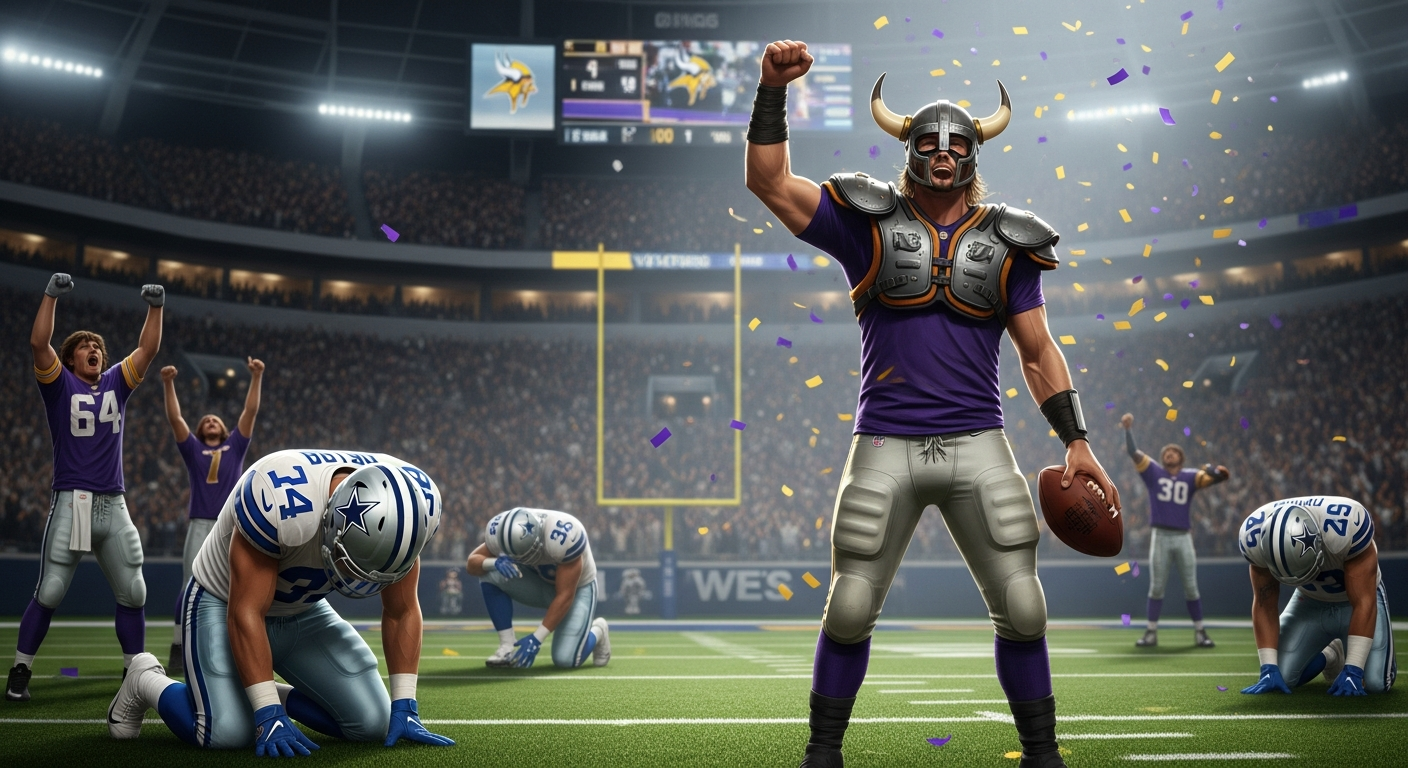
While the Vikings may be mathematically eliminated from playoff contention, their 34-26 victory over the Dallas Cowboys reveals something far more significant than a mere spoiler win. J.J. McCarthy’s continued development represents the emergence of Minnesota’s future, while Dallas’ season collapse exposes fundamental organizational flaws that go beyond this disappointing campaign.
McCarthy’s Growth Trajectory Proves Vikings’ Long-term Strategy is Working
The rookie quarterback’s performance against Dallas – 250 yards passing and three total touchdowns – wasn’t just a good game; it was the latest evidence of Minnesota’s shrewd long-term planning. McCarthy’s steady improvement throughout his eight starts (now 4-4) demonstrates the Vikings’ commitment to development over desperate win-now moves. His comfort executing bootlegs, making progression reads, and delivering in critical moments shows tangible growth that statistics alone don’t capture.
Compare this approach to the Philadelphia Eagles with Jalen Hurts or the Houston Texans with C.J. Stroud – organizations that created supportive environments for young quarterbacks to develop rather than throwing them into impossible situations. The Vikings’ patience with McCarthy, particularly after losing Kirk Cousins, demonstrates front office discipline that’s rare in today’s NFL landscape.
Most telling was McCarthy’s fourth-down touchdown run, where his execution of the bootleg showed not just athletic ability but growing command of the offense. His post-game comment about being ‘just another piece of the puzzle’ reflects the team-first culture Minnesota has cultivated despite their losing record.
Cowboys’ Collapse Reveals Systemic Organizational Failures
Dallas’ loss wasn’t simply a bad game – it was the culmination of years of organizational mismanagement now fully exposed. After defeating both Super Bowl teams in consecutive weeks, the Cowboys have lost consecutive games to dash their playoff hopes. This rollercoaster season reflects deeper issues within the organization.
First, the Cowboys’ roster construction has been fundamentally flawed. They’ve committed massive resources to skill positions (Prescott, Lamb) while neglecting offensive line depth – a problem painfully evident when backup tackle Nate Thomas exited with a shoulder injury. The San Francisco 49ers and Detroit Lions, by contrast, have built their rosters with emphasis on line play first, skill positions second.
Second, Brian Schottenheimer’s admission that they ‘never got to the point where I felt like we were able to just kind of seize momentum’ speaks volumes about the coaching staff’s inability to make in-game adjustments. This has been a recurring theme throughout the season, with Dallas looking brilliant one week and completely unprepared the next.
The fake field goal that resulted in Aubrey’s 6-yard run exemplifies Dallas’ season – a momentary flash of brilliance followed by ultimate disappointment when Aubrey later missed two critical field goals. These inconsistencies aren’t coincidental; they’re systemic.
Special Teams Disparities Highlight Organizational Priorities
The contrast between Minnesota’s and Dallas’ special teams performance provides a perfect microcosm of these organizations’ approaches. Dallas relied heavily on Brandon Aubrey, who had been nearly automatic all season, but when he faltered with two crucial misses, the Cowboys had no backup plan.
Minnesota, meanwhile, saw Will Reichard deliver the clinching 53-yard field goal in a pressure situation. More importantly, they executed fundamentally sound special teams play throughout – from Josh Oliver’s recovery of the onside kick to their overall kick coverage.
The New England Patriots under Bill Belichick and the Baltimore Ravens under John Harbaugh have long demonstrated that elite special teams play reflects organizational attention to detail. The Vikings’ superiority in this phase suggests their rebuilding process is more methodical and comprehensive than many observers recognize.
Alternative Viewpoints: Is Dallas Really Finished?
Some might argue Dallas still has mathematical hope – they must win their final three games while Philadelphia loses out. History has seen stranger comebacks, like Washington’s improbable run to the playoffs in 2020 after starting 2-7.
However, this perspective ignores the fundamental issues plaguing the Cowboys. Their inconsistency isn’t random – it’s a feature of their organizational approach. The brief winning streak that included victories over Kansas City and Philadelphia was the anomaly, not the norm, as evidenced by their 6-7-1 record.
Others might suggest Minnesota’s victory is meaningless given their elimination from playoff contention. This view misses the crucial developmental value these games provide for McCarthy and other young players. The Vikings’ ability to maintain motivation despite elimination speaks to a healthier organizational culture than their record suggests.
The Broader Implications
Minnesota’s victory represents more than just pride – it’s an investment in their future. McCarthy’s growing confidence, the coaching staff’s continued innovation, and the team’s resilience all point to a foundation being built for 2025 and beyond.
For Dallas, this loss should trigger serious organizational self-reflection. The Cowboys have now wasted another year of Prescott’s prime with poor roster construction and inconsistent coaching. Their predicament mirrors the Green Bay Packers’ later Aaron Rodgers years – a talented quarterback surrounded by an imbalanced roster and questionable coaching decisions.
The stark contrast between these franchises’ trajectories should serve as a lesson for all NFL teams: short-term excitement (Dallas beating the Chiefs and Eagles) means nothing without organizational coherence and long-term planning.