Your carpet is disgusting. This isn’t opinion—it’s fact. The average square foot of residential carpeting harbors approximately 200,000 bacteria, making your floor the single largest petri dish in your home. You walk on it daily, blissfully ignorant of the microscopic wasteland festering beneath your feet.
The carpet cleaning industry knows this. They count on your ignorance and occasional bursts of shame-driven cleaning frenzies to fuel their $5.8 billion annual revenue. But you won’t be their willing victim any longer.
The Brutal Truth About Your Carpet
Let’s be painfully clear: professional cleaners charge between $120-$230 for services you can execute yourself with ruthless efficiency. They’ve constructed an empire on the foundation of your assumed incompetence. This stops today.
Your carpet accumulates approximately one pound of dirt per square yard annually—dirt you’re inhaling, tracking throughout your home, and allowing to deteriorate expensive flooring investments. The average carpet replacement costs $2,500. Simple mathematics dictates that proper maintenance is non-negotiable.
Step 1: Vacuum Like You Mean It
Amateur carpet cleaning begins and ends with casual vacuuming. This is precisely why your carpets remain filthy. Effective vacuuming requires methodical execution—slow, overlapping passes that extract embedded particles rather than merely disturbing surface debris.
Industry testing confirms that three slow passes remove 79% of soil compared to a single pass’s pathetic 38% extraction rate. Your standard weekend ‘quick vacuum’ is nothing more than theatrical housekeeping—a performance of cleanliness without substance.
Remove all furniture. No exceptions. The area beneath your sofa contains two years of accumulated skin cells, hair, and food particles. Vacuum in multiple directions to lift carpet fibers and extract deeply embedded contaminants. This isn’t optional—it’s mandatory baseline maintenance.
Step 2: Pre-Treatment—The Step Amateurs Skip
Professional results demand professional methodology. Create a pre-treatment solution using one part white vinegar to three parts hot water with a tablespoon of dish soap. This combination breaks down protein-based stains and grease with laboratory-proven effectiveness.
Apply the solution with a pump sprayer—not the inefficient spray bottles favored by cleaning novices. Coverage must be comprehensive but not saturating. You’re preparing the battlefield, not flooding it.
Allow 10 minutes for chemical action to occur. This isn’t a suggestion—it’s a scientific requirement for surfactant penetration of soil particles. Set a timer. Professionals don’t estimate; they execute with precision.
Step 3: Extraction With Mechanical Advantage
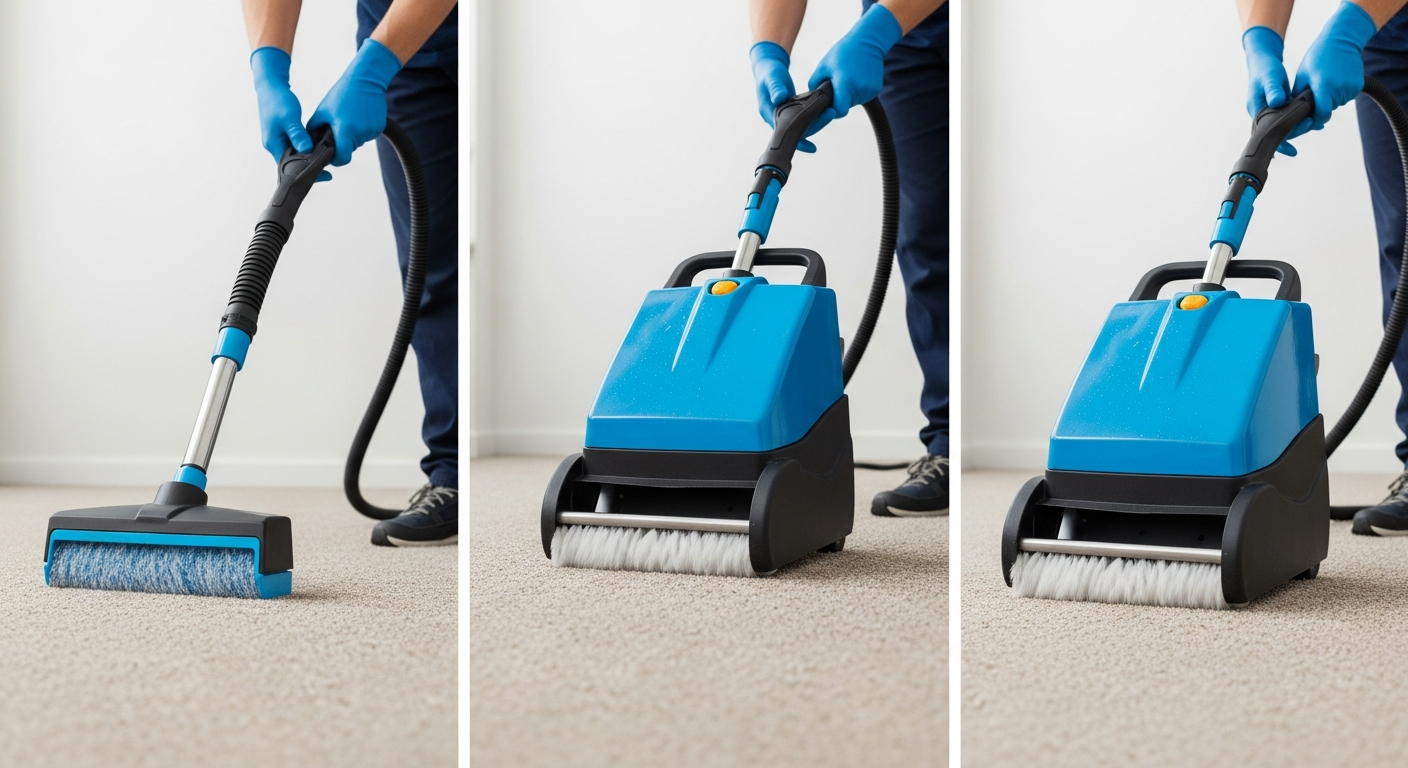
Rent a commercial-grade carpet cleaner. Consumer models produce approximately 30% less suction and inferior results. This isn’t the moment for budget considerations—it’s the critical execution phase of your carpet restoration strategy.
The machine must move backward, not forward. Forward movement pushes water deeper into padding; backward extraction pulls contaminants upward and out. Make deliberate, overlapping passes. Each section requires a minimum of three extraction passes—one with cleaning solution, two with clear water rinse.
Professionals charge exorbitant rates for this simple mechanical process. Their only advantage is equipment access and methodical execution—both now firmly within your capability.
The Aftermath: Mandatory Drying Protocols
Insufficient drying creates the perfect environment for mold colonization within 24-48 hours. This isn’t alarmist rhetoric—it’s microbiological certainty. Accelerate drying through strategic air circulation.
Position fans at 45-degree angles to carpet surfaces. Open windows on opposite ends of rooms to create cross-ventilation. Maintain indoor humidity below 60% using dehumidifiers if necessary. Carpet must be completely dry within 12 hours to prevent microbial growth.
Walk on the carpet with white socks after cleaning. Any color transfer indicates residual soil requiring additional extraction. This isn’t excessive—it’s the minimum standard for actual cleanliness.
The transformation of your living environment from disgusting to acceptable requires nothing more than methodical execution of these steps. The only question remaining is whether you possess the discipline to implement them correctly or if you’ll retreat to overpaying professionals for work you’re entirely capable of performing yourself.
Your carpet awaits your decision.