
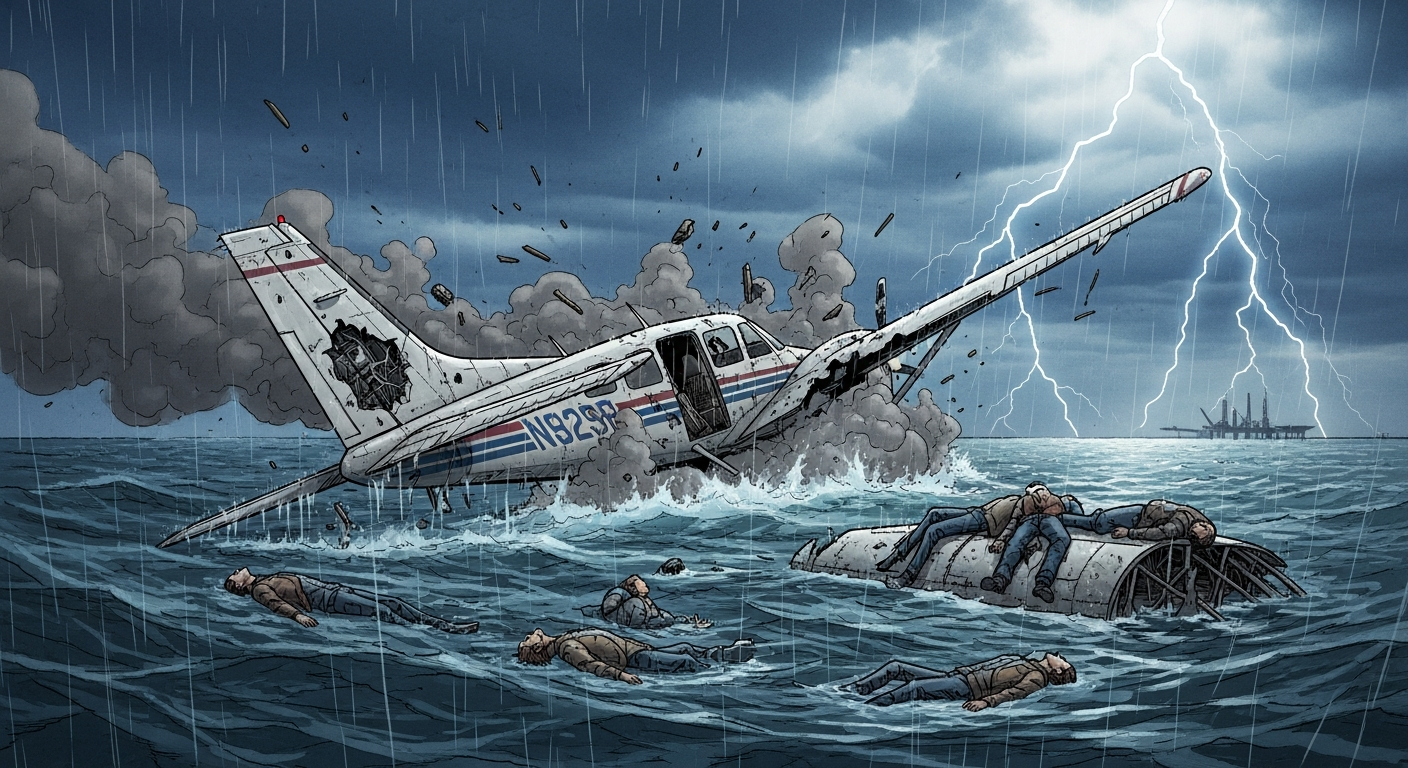
The tragic crash of a Mexican Navy medical plane in Galveston Bay represents more than just an isolated incident—it exposes the dangerous gaps in international medical transport protocols that continue to cost lives. With five confirmed deaths, including dedicated medical personnel and a pediatric patient, this disaster highlights how even missions of mercy can turn deadly when safety standards falter across borders.
The circumstances surrounding this crash—a specialized medical flight carrying a pediatric burn patient through challenging weather conditions—raises urgent questions about risk assessment, weather protocols, and international coordination for emergency medical flights. The fog reported in the Galveston area wasn’t just an unfortunate coincidence; it represents a critical decision point where lives hung in the balance.
Weather Decision-Making: A Fatal Calculation
The presence of heavy fog in the Galveston area should have triggered enhanced safety protocols for any incoming aircraft, particularly one carrying critical patients. When United Airlines Flight 1175 encountered severe fog at San Francisco International Airport in 2019, pilots diverted to Oakland despite carrying passengers requiring connecting flights to medical appointments. This decision prioritized safety over urgency—a calculation that appears to have been missed in the Galveston tragedy.
Medical transport services face a cruel dilemma: delay potentially life-saving care or risk catastrophic failure in challenging conditions. The Mexico-Galveston flight appears to have fallen victim to what aviation safety experts call ‘mission completion bias’—the tendency to press forward despite deteriorating conditions when the mission feels especially important. This psychological trap has contributed to numerous air ambulance crashes worldwide, including the 2019 Survival Flight crash in Ohio that killed three crew members during deteriorating weather conditions.
International flights add another layer of complexity, as different countries maintain varying standards for medical transport operations. The Mexican Navy’s involvement suggests this wasn’t a typical commercial medical flight but rather a governmental humanitarian mission, potentially operating under different safety thresholds than private medical transport services.
Cross-Border Medical Transport: A Regulatory Void
The tragedy exposes a troubling regulatory gap in cross-border emergency medical services. Unlike domestic medical flights, which must adhere to strict FAA regulations in the U.S., international medical transports often navigate a patchwork of inconsistent safety standards. The European HEMS & Air Ambulance Committee (EHAC) has been pushing for standardized protocols across borders since 2015, recognizing that emergency medical flights frequently cross international boundaries.
In North America, no equivalent standardized system exists between Mexico and the United States. The result is a dangerous inconsistency in weather minimums, pilot qualification requirements, and risk assessment protocols. When Angel MedFlight conducts cross-border transports from Mexico to U.S. hospitals, they operate under dual protocols that sometimes conflict, creating confusion during critical decision-making moments.
The Galveston crash mirrors the 2018 incident where a Mexican air ambulance crashed while attempting to transport a patient to San Diego during marginal weather conditions. Both cases highlight how the urgency of medical transport can sometimes override safety considerations, particularly when crossing international boundaries where communication and coordination protocols may differ.
The Hidden Costs of Medical Heroism
The loss of medical personnel in this crash—including Lieutenant Junior Grade Víctor Rafael Pérez Hernández and Dr. Juan Alfonso Adame González—represents not just individual tragedies but a devastating blow to emergency medical capacity. When medical transport crews are lost, the impact extends far beyond the immediate tragedy. Studies from the Association of Air Medical Services show that each experienced air medical crew member typically participates in saving hundreds of lives throughout their career.
The heroism of medical transport teams often leads to a culture that can unintentionally prioritize mission completion over safety. In the 2017 Boston MedFlight safety culture survey, 38% of respondents admitted they would feel pressure to accept a mission despite marginal weather conditions if the patient’s condition was critical enough. This