
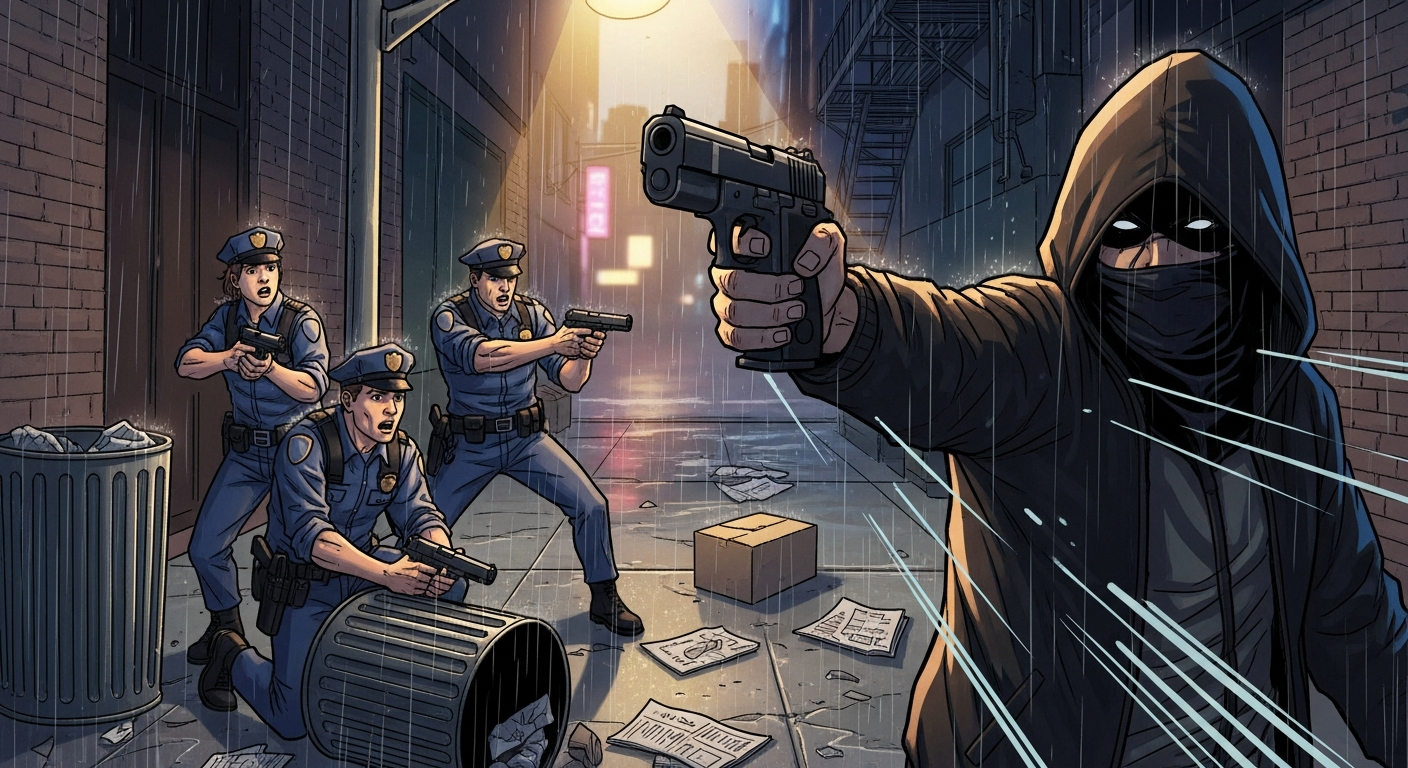
The recent police shooting in St. Paul involving a suspected car thief raises critical questions about law enforcement protocols, transparency, and the broader implications for community trust. While the Bureau of Criminal Apprehension (BCA) presents a seemingly straightforward narrative—suspect steals car, flees, points gun, officers shoot—we must look deeper at the patterns and practices that define these encounters.
This incident follows a familiar script we’ve seen repeatedly across America: suspected non-violent property crime escalates to a police shooting. The official narrative emphasizes officer safety and suspect threat, but often minimizes examination of alternative approaches that might have prevented the confrontation entirely.
The Escalation Problem in Property Crime Responses
Law enforcement’s approach to property crimes like auto theft frequently creates unnecessary risk. In this St. Paul case, officers pursued a disabled vehicle’s occupants on foot after OnStar had already immobilized it. This raises a fundamental question: Was immediate apprehension necessary when the vehicle was already disabled and could no longer pose a traffic danger?
The Minneapolis Police Department’s own pursuit policy was overhauled in 2022 after several fatal crashes during chases for non-violent offenses. Similarly, departments nationwide have increasingly adopted policies limiting pursuits for property crimes precisely because the public safety risk often outweighs the benefit of immediate apprehension.
Consider the 2019 UPS truck chase in Florida that ended with four deaths including a hostage and a bystander. Or the 2021 Houston case where a police chase for a stolen vehicle resulted in the death of an uninvolved motorist. These examples demonstrate how pursuit-based enforcement strategies for property crimes can create more danger than the original offense.
Body Cameras: Transparency or Controlled Narrative?
The BCA notes that body cameras captured the incident—a critical development in police accountability. However, the mere existence of footage doesn’t guarantee transparency. Minnesota law gives agencies considerable discretion in releasing footage, often resulting in selective disclosure that supports the official narrative while withholding potentially contradictory elements.
The Minneapolis Police Department’s handling of body camera footage in the Amir Locke case demonstrates this problem. Initial releases omitted crucial context, and full disclosure came only after sustained public pressure. Similarly, in Louisville, footage of David McAtee’s shooting was released only after significant public outcry.
Body cameras should serve as tools for accountability, not just evidence collection for prosecution. The public deserves prompt and complete access to footage in officer-involved shootings, particularly when lethal or potentially lethal force is used against citizens suspected of non-violent crimes.
The Asymmetry of Risk Assessment
Official narratives around police shootings often emphasize the split-second decisions officers must make when perceiving threats. This framing, while not invalid, creates an asymmetric standard: officers’ perception of threat justifies lethal force, while civilians’ fear-based reactions to armed officers can become evidence of criminal intent.
In this St. Paul incident, the suspect allegedly pointed a gun at officers. This action, if accurate, certainly justifies defensive measures. However, we must also consider that fear-based fight-or-flight responses are human reactions, especially in high-stress situations involving armed pursuit.
The Minneapolis Police Department’s own data shows that Black residents are disproportionately subjected to force compared to their population percentage. Similar patterns exist in St. Paul. These disparities create different baseline expectations for police interactions depending on one’s demographic profile, which in turn affects behavior during encounters.
Alternative Approaches and Prevention
The focus on the moment of shooting often obscures the more important question: how could this confrontation have been avoided entirely? Modern policing has numerous tools beyond immediate pursuit and apprehension.
The vehicle in this case had OnStar technology that allowed remote tracking and disabling. This technology creates opportunities for strategic, lower-risk apprehension plans. Officers could have maintained surveillance from a safe distance and coordinated an arrest in circumstances less likely to trigger flight or confrontation.
The Denver STAR program and Eugene’s CAHOOTS model demonstrate how non-police responses to certain situations can reduce confrontations. While armed response was likely appropriate once a weapon was involved, the initial approach to a disabled vehicle could have been handled differently.
Alternative Viewpoints
Some will argue that immediate pursuit was necessary to prevent the suspect from potentially harming others or committing additional crimes. This perspective has merit—officers cannot always know a suspect’s intentions or what other crimes they may have committed.
Others will contend that officers must respond decisively to any perceived threat, including a pointed weapon, and that second-guessing these split-second decisions undermines public safety. This view correctly acknowledges the genuine dangers officers face.
However, these perspectives focus too narrowly on the moment of confrontation rather than the systems and approaches that led to it. The question isn’t whether officers can use force when genuinely threatened, but whether our approach to property crime enforcement unnecessarily creates these threatening situations.
Conclusion
This St. Paul shooting—where a property crime suspect was shot in the leg rather than killed—will likely receive less scrutiny than fatal encounters. Yet these