
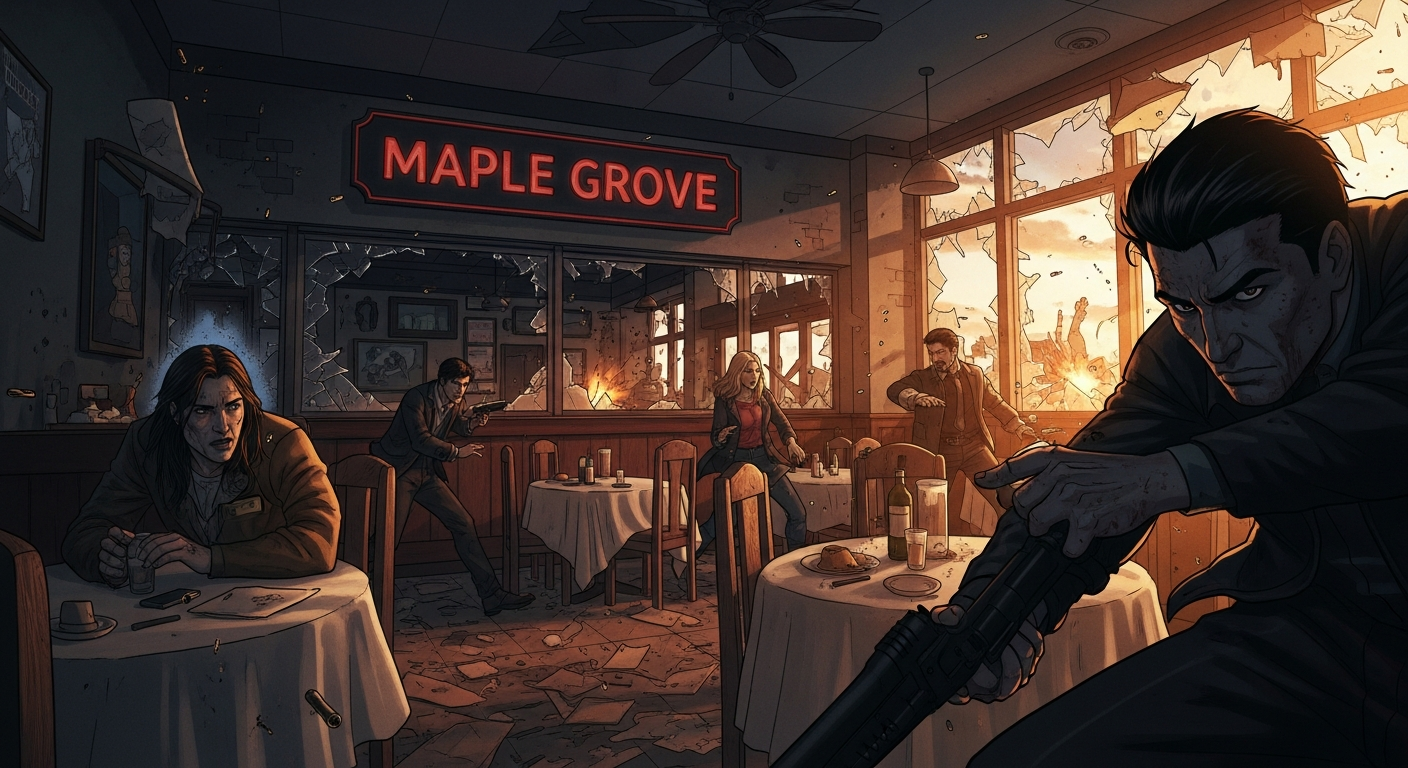
The recent shooting at a Benihana restaurant in Maple Grove represents a disturbing pattern of conflict resolution in America that demands our immediate attention. When verbal altercations in family restaurants escalate to gunfire within moments, we’ve crossed a dangerous threshold in public safety. This incident wasn’t a random act of violence but rather a calculated decision by an individual who chose a lethal weapon as his response to a disagreement in a public space where families gather to dine.
The normalization of public violence has reached crisis levels, with everyday locations becoming potential crime scenes. What’s particularly alarming about the Maple Grove case isn’t just the shooting itself, but how quickly the situation escalated from words to potentially deadly force.
The Epidemic of Dispute-Related Gun Violence
The Benihana shooting exemplifies a troubling national trend where minor disputes increasingly end in gunfire. According to data from the Gun Violence Archive, arguments are now the leading circumstance for gun homicides in the United States, accounting for approximately 70% of non-domestic shooting incidents. These aren’t primarily gang-related or drug-related shootings—they’re everyday disagreements that escalate because a firearm is readily available.
Consider the 2022 incident at a Miami-area restaurant where a disagreement over slow service led to a patron retrieving a gun from his vehicle and firing at staff. Or the 2021 case in Houston where a customer shot a restaurant manager over a mask dispute. These cases share a common thread with the Maple Grove incident: individuals resolving minor conflicts with potentially deadly force in public spaces.
The psychological threshold for using firearms in dispute resolution has dangerously lowered. When carrying a weapon becomes normalized, it fundamentally alters conflict dynamics—transforming what might have been a heated exchange or even a physical altercation into a life-threatening situation. The Benihana case demonstrates this exact pattern: surveillance footage showing the rapid progression from verbal dispute to weapon deployment.
The False Security of ‘People Who Know Each Other’
The police statement that the suspect and victim knew each other, suggesting this wasn’t a random shooting, offers little comfort. In fact, it highlights another troubling aspect of America’s gun violence epidemic. Familiarity between parties doesn’t reduce danger—it often increases it. Interpersonal conflicts between acquaintances frequently carry more emotional intensity and grudge-holding potential than random encounters.
The Bureau of Justice Statistics consistently finds that most violent crime victims know their offenders. In 2019, approximately 52% of all violent victimizations were committed by someone known to the victim. When these pre-existing tensions combine with easy access to firearms, public spaces become venues for settling personal scores.
The Maple Grove incident demonstrates how private disputes now endanger innocent bystanders. Dozens of uninvolved restaurant patrons were forced to take cover when gunfire erupted. This collateral risk extends the harm far beyond the intended target, creating trauma and public safety hazards for entire communities.
Inadequate Legal Deterrents
The second-degree assault charge in this case raises questions about whether our legal framework adequately addresses the severity of public shootings. While Minnesota law distinguishes between different degrees of assault based on intent and harm caused, the current charging approach may not sufficiently deter similar behavior.
Consider that Coney faces a charge carrying a potential 7-year sentence if convicted. Compare this to jurisdictions that have enhanced penalties specifically for discharging firearms in public places. New York, for example, imposes a mandatory minimum 3.5-year sentence just for illegal possession of a loaded firearm, with significantly higher penalties for actual use.
The legal response to public shootings must reflect their severity. When individuals discharge firearms in crowded restaurants, they’re not just assaulting their intended target—they’re endangering everyone present and violating the public’s right to safety in communal spaces. The current charging framework often fails to capture this broader harm.
Alternative Perspectives: The Self-Defense Argument
Some will inevitably argue that without knowing the full context of the dispute, we cannot dismiss the possibility of self-defense. Perhaps the shooter felt genuinely threatened during the altercation. This perspective deserves consideration—legitimate self-defense is a recognized legal justification for force.
However, the surveillance evidence described in court documents undermines this interpretation. The sequence of events—Coney approaching the victim with a bag and raising his arm—suggests offensive rather than defensive action. True self-defense typically involves responding to an imminent threat, not initiating an approach.
Even if one accepts the possibility of perceived threat, the choice to bring a firearm into a restaurant and use it during a verbal dispute represents a disproportionate response that endangered countless bystanders. Self-defense doctrine requires proportionality—the level of force used must reasonably match the threat faced. A verbal altercation rarely justifies lethal force under any reasonable standard.
The Community Impact of Public Violence
Beyond the immediate participants, incidents like the Benihana shooting create ripple effects throughout communities. Businesses suffer when customers fear dining out. Children present during such events experience trauma that can have lasting psychological impacts. Communities begin viewing public spaces through the lens of potential danger rather than connection.
The economic consequences are significant as well. A 2019 study by the Urban Institute found that each additional homicide in a census tract was associated with five fewer businesses and 80 fewer jobs the following year. While the Maple Grove incident thankfully didn’t result in death, the public perception of danger has similar economic effects.
The normalization of public space violence fundamentally alters community dynamics. When residents cannot reasonably expect safety in restaurants, shopping centers, and other gathering places, social cohesion deteriorates. The psychological impact extends far beyond those directly involved, creating a collective trauma that reshapes public behavior.
Moving Forward: Beyond Enforcement to Prevention
While apprehending and charging the suspect represents necessary justice, it addresses only the aftermath of violence, not its prevention. A comprehensive approach must include conflict resolution education, community intervention programs, and sensible gun safety measures that keep weapons out of volatile situations.
Communities that have implemented focused deterrence strategies—identifying those most likely to engage in violence and providing both clear consequences and support services—have seen significant reductions in gun violence. Cincinnati’s CIRV (Cincinnati Initiative to Reduce Violence) program reduced group-member-involved homicides by 41% through this approach.
The Maple Grove incident should catalyze community conversations about violence prevention. Restaurant owners, community leaders, and residents must collectively develop strategies that address the root causes of conflict escalation while establishing clear norms against violence as conflict resolution.
The shooting at Benihana represents not just an individual crime but a societal failure—a breakdown in our collective commitment to peaceful coexistence and conflict resolution. Until we address the underlying factors that make gun violence a go-to response for disputes, we’ll continue seeing everyday disagreements transform into potential tragedies.