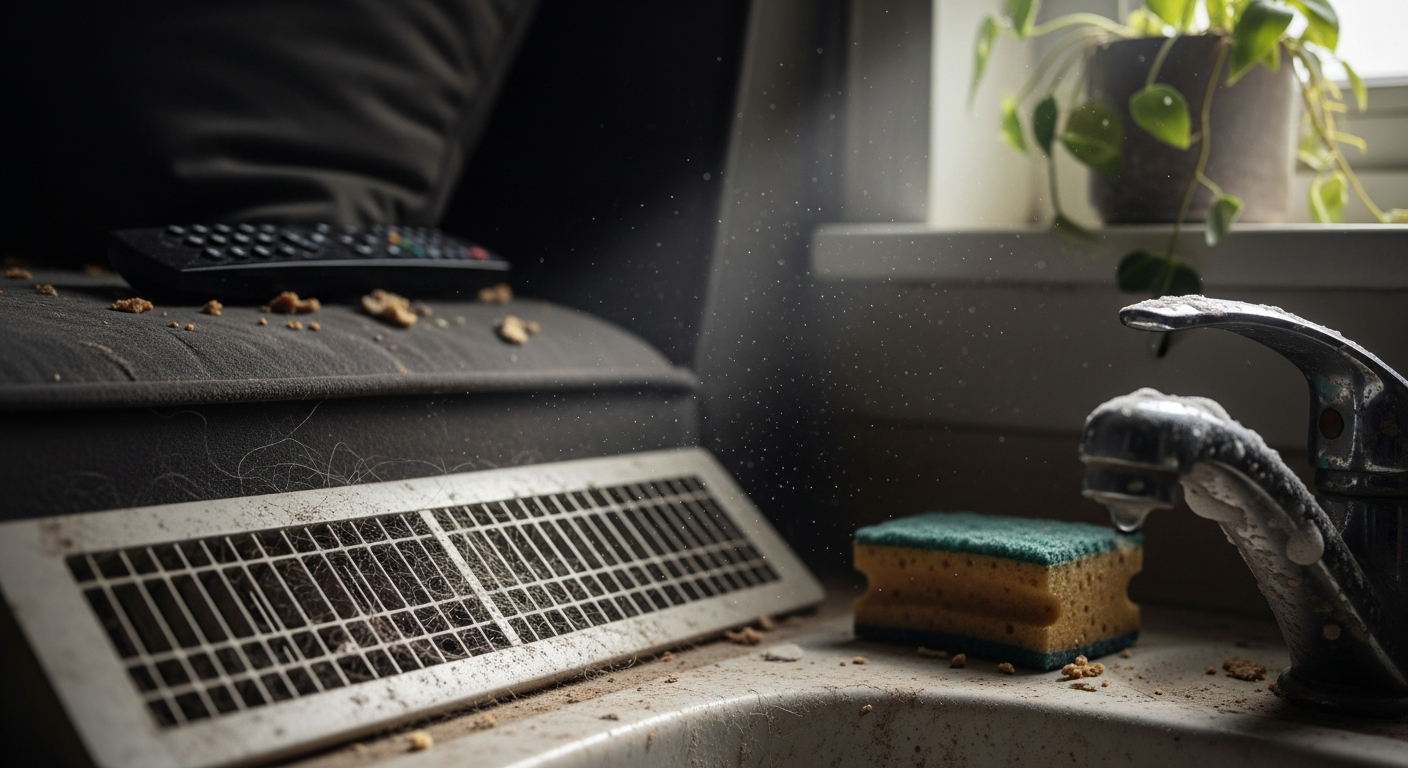
Your home is a biological battleground. The filth you see represents merely the visible front lines of a war that extends far beyond your perception. The real combat occurs in the shadowed corners and neglected crevices where bacteria multiply with impunity while you blissfully ignore their existence.
The average American spends 42 hours annually on basic cleaning rituals that accomplish virtually nothing of consequence. You wipe counters. You vacuum carpets. You congratulate yourself on maintaining a ‘clean’ home while colonies of pathogens flourish in locations you’ve conveniently forgotten exist.
The Invisible Enemies
Your refrigerator water dispenser harbors more bacteria than your toilet seat. This isn’t speculation—it’s documented fact. Research from NSF International confirms that the seemingly innocent water dispenser contains yeast, mold, and coliform bacteria at levels that would horrify any competent health inspector. You’re not just drinking water; you’re consuming a microbial cocktail cultivated in your own negligence.
Remote controls in American households test positive for staphylococcus aureus at rates that would warrant quarantine in medical facilities. The average remote contains 70 times more bacteria than your kitchen table. You obsessively sanitize your cooking surfaces while clutching a biological weapon during your evening entertainment.
Light switches, those innocuous plastic protrusions from your walls, serve as collection points for every pathogen transferred from unwashed hands. The typical switch plate hosts over 217 different bacterial species. You turn on lights with the casual confidence of someone who doesn’t realize they’re dipping their fingers into a microbial archive of every visitor who’s entered your home.
The Financial Consequences
Your neglect isn’t merely disgusting—it’s expensive. Mold developing in overlooked areas of your home silently deteriorates infrastructure at costs averaging $4,000 to remediate once detected. Your property value diminishes by approximately 3-5% with every year these conditions persist unaddressed.
HVAC systems operating with dust-clogged filters consume 15% more energy than necessary. You’re literally paying a premium to circulate contaminants throughout your living space. The average homeowner wastes $180 annually powering an appliance that functions primarily as a pathogen distribution network.
Medical expenses attributable to poor indoor air quality exceed $3.5 billion annually in the United States alone. Your ‘minor’ respiratory issues aren’t random biological events—they’re the predictable consequence of inhabiting an environment you’ve failed to properly maintain.
The Critical Zones
Your shower curtain hosts more biodiversity than a tropical rainforest floor. The warm, moist environment creates ideal conditions for the proliferation of sphingomonas and methylobacterium. These organisms don’t just exist on your curtain—they thrive, multiply, and eventually become airborne during your morning shower, entering your respiratory system with each breath.
Toothbrush holders rank as the third most contaminated household item in America. Fecal coliform bacteria occupy the very container holding the implement you place in your mouth twice daily. You’re not practicing oral hygiene; you’re engaging in a form of microbiological Russian roulette.
Door handles throughout your home serve as transmission vectors for everything from influenza to norovirus. The average handle contains 121 different bacterial colonies, yet receives cleaning attention approximately once every 28 days in typical households. You’re not opening doors; you’re exchanging pathogens with everyone who entered before you.
The Solution Protocol
Establish a cleaning hierarchy based on contamination risk rather than visibility. The areas requiring most frequent sanitation are precisely those you currently ignore. This isn’t a suggestion—it’s a biological imperative.
Implement a systematic disinfection schedule for high-touch surfaces using quaternary ammonium compounds or hydrogen peroxide-based solutions. Alcohol-based products provide the illusion of cleanliness while failing to eliminate spore-forming bacteria. Your current cleaning ritual is security theater, not sanitation.
Replace or thoroughly disinfect items that have exceeded their hygienic lifespan. Your dish sponge should be microwaved daily and replaced weekly. Your toothbrush requires replacement every 30 days without exception. Your shower curtain demands monthly cleaning with vinegar solutions to prevent biofilm development. These aren’t suggestions for the fastidious—they’re minimum standards for preventing your home from becoming a petri dish of pathogenic activity.
The Bottom Line
Your home isn’t clean. It merely appears clean to your untrained eye and compromised standards. The distinction matters not just aesthetically but medically and financially. The pathogens multiplying in your neglected spaces don’t care about your busy schedule or cleaning preferences—they recognize only the opportunity your negligence provides.
The question isn’t whether you can afford the time to clean these forgotten zones. The question is whether you can afford the consequences of continuing to ignore them. Your health, your finances, and your property value hang in the balance. The microbes are counting on your continued complacency. They rarely miscalculate.