
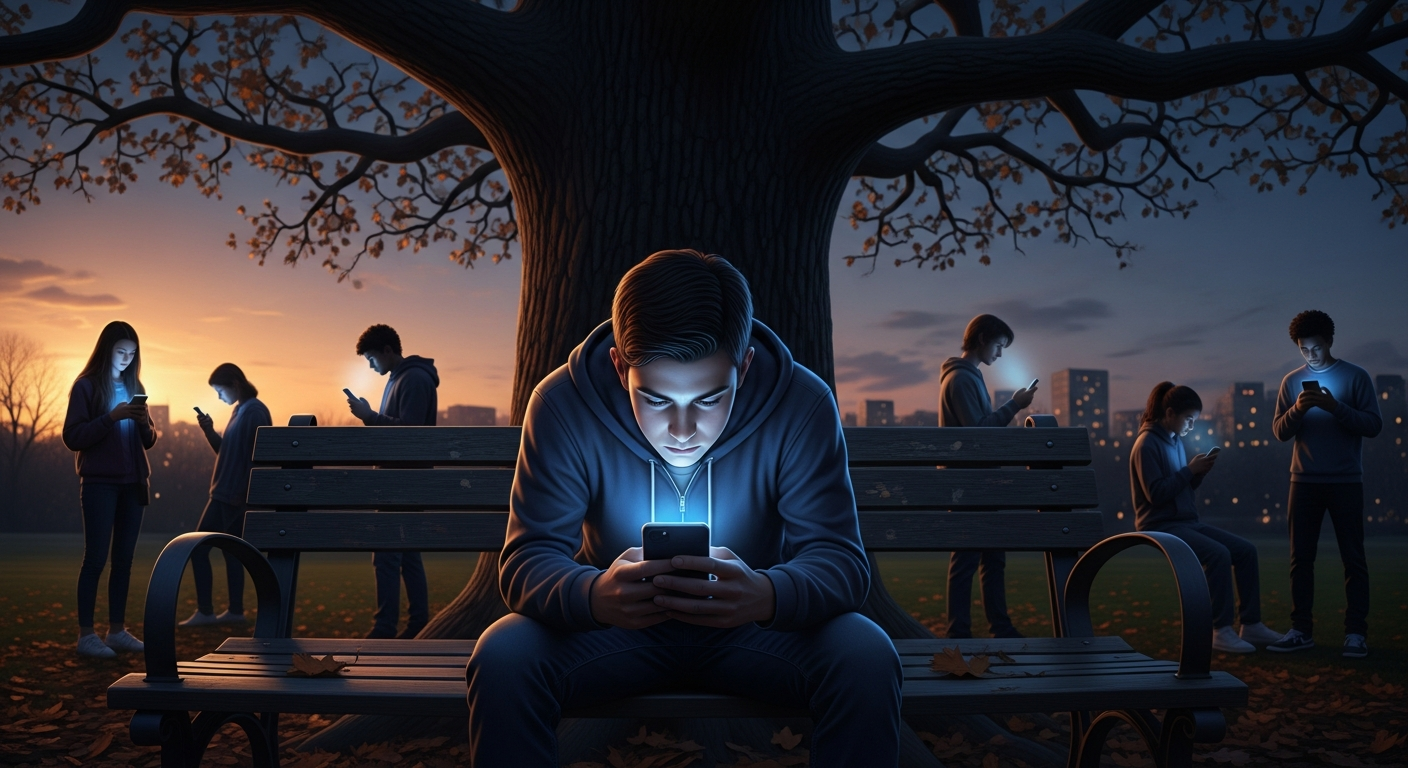
The latest Minnesota Student Survey reveals what many educators and parents have long suspected but couldn’t quantify: our teenagers are in the grip of a digital dependency crisis that’s robbing them of sleep, focus, and potentially their mental health. With 90% of high school students reporting daily social media use and over half admitting to late-night screen time during school nights, we’re witnessing the normalization of behavior that would have been considered alarming just a decade ago. This isn’t just teenage rebellion—it’s a public health emergency demanding coordinated intervention from parents, schools, and policymakers.
The Sleep Deprivation Epidemic Is More Serious Than We Acknowledge
The survey’s finding that nearly one in five students uses technology between midnight and 5 a.m. every school night should trigger immediate alarm bells. Sleep deprivation isn’t merely about feeling tired—it fundamentally impairs cognitive function, emotional regulation, and physical health. When teenagers admit to ‘death scrolling’ before tests, they’re describing a form of self-sabotage that’s become culturally acceptable.
Dr. Matthew Walker, neuroscientist and sleep expert at UC Berkeley, has demonstrated that even moderate sleep deprivation produces cognitive impairment equivalent to legal intoxication. Would we accept teenagers showing up to class drunk? Of course not—yet we’ve normalized the equivalent cognitive impairment from tech-induced sleep deprivation.
The consequences extend beyond academics. The American Academy of Pediatrics has linked inadequate sleep to increased risk of obesity, diabetes, accidents, depression, and suicidal ideation. Schools report attendance problems, reduced athletic performance, and classroom management issues stemming directly from sleep-deprived students. This isn’t just about poor grades—it’s about compromised development during critical neurological formation years.
Self-Awareness Is Growing, But Structural Solutions Remain Absent
The silver lining in the survey is the growing self-awareness among students. When 40% of 11th graders acknowledge potential problems with excessive social media use, they’re demonstrating a metacognitive awareness that could form the foundation for behavioral change. The students interviewed demonstrate this evolution—implementing screen time limits, prioritizing sports, and developing self-control strategies.
However, we cannot mistake individual awareness for structural solutions. The digital environment teenagers navigate is explicitly designed to maximize engagement through sophisticated psychological manipulation. Former Google design ethicist Tristan Harris has repeatedly exposed how platforms employ variable reward mechanisms—the same psychological principle that makes slot machines addictive—to keep users engaged.
Expecting teenagers to consistently resist algorithms designed by teams of behavioral psychologists with billions in research funding is unrealistic. Mounds View High School’s principal accurately assessed that approximately 80% of students use phones unhealthily despite growing awareness. Individual willpower alone cannot overcome systems designed specifically to override it.
School-Based Restrictions Are Necessary But Insufficient
Mounds View’s approach to restricting cell phone use during school hours represents a necessary intervention that more schools should adopt. Research from the Centre for Economic Performance found that schools with phone bans saw student test scores improve by 6.4%, with the most significant gains among previously underachieving students.
However, school-based restrictions address only a fraction of the problem. The survey reveals that the most problematic usage occurs outside school hours—between midnight and 5 a.m.—when students should be sleeping. This highlights the critical role parents must play in establishing and enforcing digital boundaries at home.
The parental abdication of responsibility in this domain is particularly troubling. Many parents who would never allow their teenagers unrestricted access to alcohol provide unrestricted access to platforms specifically engineered to be addictive. Some parents even model problematic digital behavior themselves, making it nearly impossible for teenagers to develop healthy habits.
The Role of Technology Companies Cannot Be Ignored
While personal responsibility matters, we must acknowledge the fundamental power imbalance between individual teenagers and trillion-dollar technology companies. These platforms employ sophisticated psychological manipulation techniques that would be considered unethical in other contexts, particularly when directed at minors.
Meta (formerly Facebook) faced significant backlash when internal documents revealed the company knew Instagram was harmful to teenage girls’ body image but continued promoting the platform to them anyway. TikTok’s algorithm has been engineered to maximize