
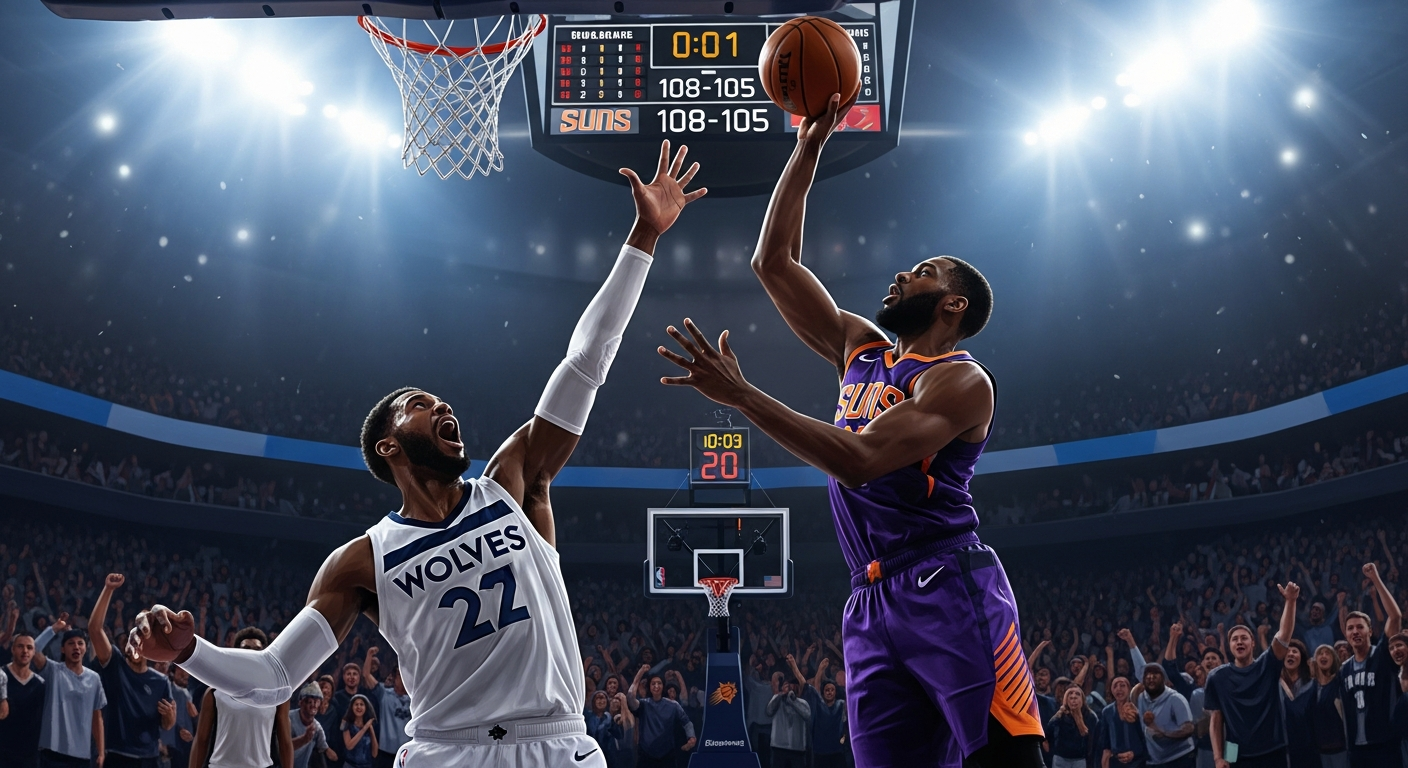
Anthony Edwards dropped 40 points on an efficient 15-for-21 shooting against the Phoenix Suns, yet the Minnesota Timberwolves still lost 108-105, snapping their five-game winning streak. This performance perfectly encapsulates the fundamental problem facing Minnesota this season: an over-reliance on Edwards’ individual brilliance while the supporting cast consistently underperforms in critical moments.
The Timberwolves have assembled what appears to be a championship-caliber roster on paper, but Monday’s loss to Phoenix exposed glaring issues that could derail their title aspirations if left unaddressed.
Minnesota’s Supporting Cast Is Failing Edwards
The numbers from Monday’s game tell a damning story. While Edwards and Julius Randle (21 points) showed up, the rest of Minnesota’s rotation delivered abysmal performances. Naz Reid shot a dismal 2-for-12. Jaden McDaniels and Donte DiVincenzo both went 1-for-7. These aren’t just bad shooting nights; they represent a pattern of inconsistency that’s becoming impossible to ignore.
Compare this to Phoenix’s balanced attack: Mark Williams (22 points), Collin Gillespie (19 points), and Dillon Brooks (18 points) all contributed meaningfully. The Suns demonstrated that team basketball still trumps individual heroics in today’s NBA.
This isn’t an isolated incident. Earlier this season against these same Suns, Minnesota collapsed in the final minute despite holding an eight-point lead. Championship teams simply don’t make these mistakes repeatedly. The Golden State Warriors dynasty thrived because when Stephen Curry faced defensive pressure, Klay Thompson and others consistently stepped up. Edwards isn’t getting that same support.
Gobert’s Ejection Highlights Discipline Issues
Rudy Gobert’s ejection for a flagrant foul in the third quarter represents another concerning trend. Before his exit, Gobert was having a productive night with 15 points and 8 rebounds. His absence during Phoenix’s decisive 14-3 run to start the fourth quarter proved catastrophic.
Elite teams maintain composure in crucial moments. The 2023 Denver Nuggets championship run featured remarkable discipline from their core players. Meanwhile, the Timberwolves continue to sabotage themselves with mental lapses. Gobert, a veteran and defensive anchor, should know better than to commit the kind of foul that warrants an ejection in a close game.
This lack of discipline extends beyond Gobert. Minnesota’s fourth-quarter execution has been questionable all season. Against Phoenix, they allowed a 14-3 run to start the final frame, turning a tied game into an 11-point deficit. Championship teams don’t surrender momentum so easily.
The Edwards Paradox: Brilliance That Masks Deeper Issues
Edwards’ spectacular performances might actually be hindering the Timberwolves’ long-term development. His ability to single-handedly keep Minnesota competitive masks fundamental problems with roster construction and role definition.
We’ve seen this scenario play out before. LeBron James’ early Cleveland teams featured a superstar carrying an underwhelming supporting cast, resulting in regular season success but playoff disappointment. The Philadelphia 76ers experienced similar issues with Joel Embiid’s brilliance masking roster imbalances.
Edwards is developing into a generational talent, but Minnesota risks wasting his prime years if they can’t build a more reliable supporting cast. His 40-point performance against Phoenix should have guaranteed a victory. Instead, it became another example of individual excellence lost in collective mediocrity.
Alternative Viewpoint: Growing Pains of a Contender
Some might argue that Minnesota’s struggles represent the natural evolution of a contending team. The 2022 Boston Celtics faced similar midseason challenges before making their NBA Finals run. Teams with championship aspirations often experience setbacks as they integrate new pieces and establish identity.
Julius Randle is still adjusting to his role alongside Edwards and Gobert. The Timberwolves’ five-game winning streak prior to Monday’s loss suggests they’re capable of sustained excellence. Perhaps these occasional lapses are simply growing pains rather than fundamental flaws.
However, this perspective ignores the alarming inefficiency of Minnesota’s role players. Championship teams don’t have rotation players shooting 2-for-12 and 1-for-7 in critical games. The Timberwolves’ issues run deeper than simple chemistry challenges.
The Path Forward
Minnesota’s front office faces difficult decisions. The current roster clearly has the talent to contend, but mental lapses and inconsistent performances from the supporting cast threaten to waste Edwards’ brilliance.
Coach Chris Finch must establish clearer offensive hierarchies beyond Edwards. The Timberwolves need defined roles and accountability, particularly for players like McDaniels and Reid who have shown flashes of excellence but lack consistency.
The upcoming matchup against Golden State presents an opportunity for redemption. The Warriors have long exemplified the team-first approach Minnesota desperately needs to adopt. A strong performance would suggest Monday’s loss was an anomaly rather than a troubling pattern.
For Minnesota fans, Edwards’ development into a superstar provides hope. But as Monday’s loss painfully demonstrated, even 40 points from your best player isn’t enough when the supporting cast fails to show up. The Timberwolves have championship potential, but until they address these fundamental issues, they’ll remain frustratingly short of their ceiling.