
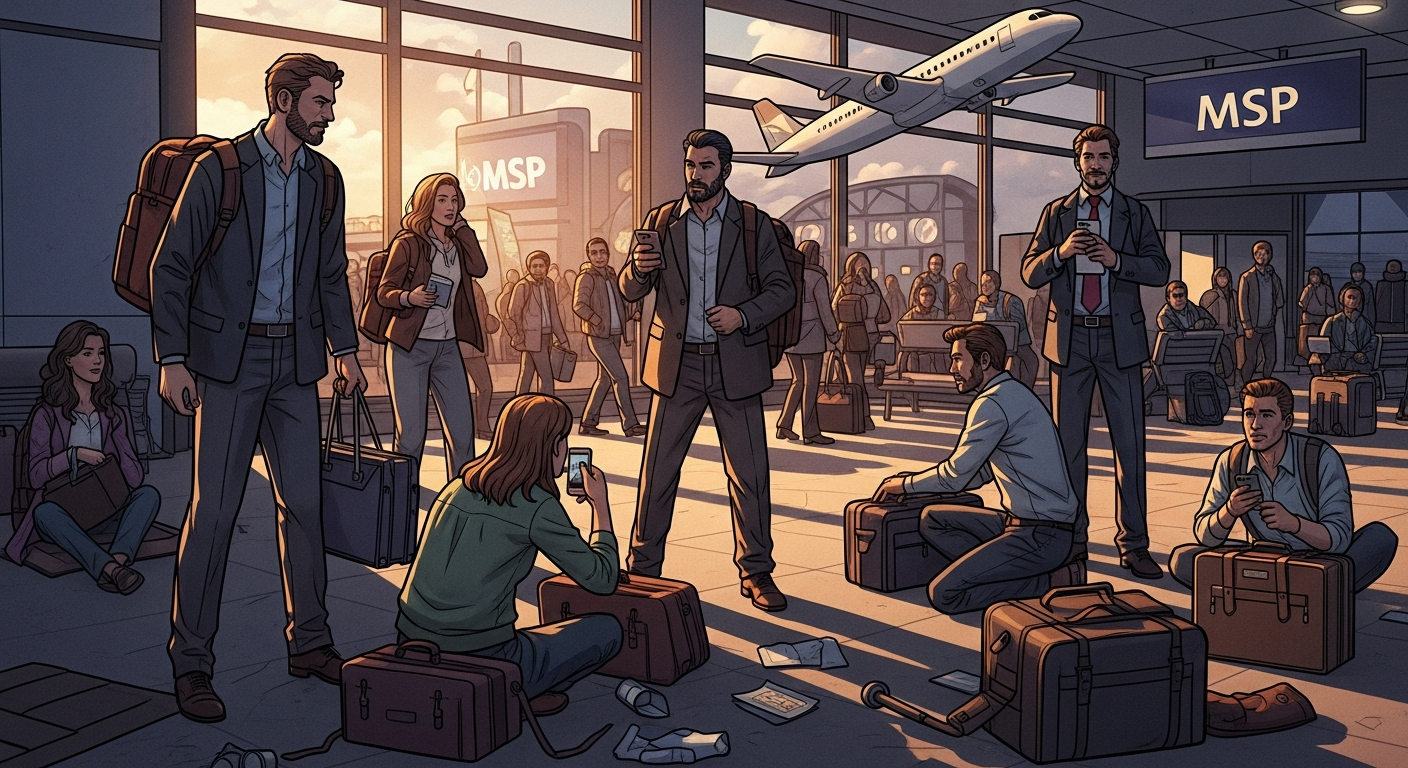
As Minneapolis-St. Paul International Airport grinds to a near halt with 189-minute delays and over 50 flight cancellations, we’re witnessing more than just another winter storm disruption. This predictable seasonal chaos reveals a deeper systemic failure in how American infrastructure responds to entirely foreseeable weather events. While Minnesota winters are notorious, our continued inability to maintain reliable transportation systems during snowstorms represents a policy failure with economic consequences that ripple far beyond inconvenienced travelers.
America’s Weather Resilience Gap Is a Choice, Not an Inevitability
The disruption at MSP Airport follows a pattern so predictable it borders on tradition: winter arrives, transportation systems collapse, and we collectively shrug as if this outcome were unavoidable. This acceptance of failure stands in stark contrast to how other cold-weather regions handle similar conditions. Helsinki Airport in Finland, which faces comparable winter conditions, maintains an average delay time of just 12 minutes during snowstorms through investment in specialized equipment and coordinated response protocols. Stockholm’s Arlanda Airport similarly keeps planes moving through sophisticated snow management systems that clear runways continuously rather than reactively.
The difference isn’t weather severity but preparation philosophy. American airports typically adopt a minimalist approach to winter preparedness, purchasing just enough equipment and staffing to handle average conditions. When storms exceed these arbitrary thresholds, the system collapses. Finnish transport authorities, conversely, design systems for worst-case scenarios, recognizing that the economic cost of disruption far exceeds the investment in resilience.
The Hidden Economic Impact Exceeds Visible Costs
The economic consequences of these weather disruptions extend far beyond the visible costs of delayed flights. When MSP experiences 189-minute average delays, the ripple effects create exponential disruption. A 2019 FAA study estimated that flight delays cost the U.S. economy approximately $33 billion annually in lost productivity, increased airline operating costs, and passenger time value. Winter weather accounts for approximately 25% of all delay minutes, making it one of the most expensive infrastructure vulnerabilities in our transportation system.
Consider the case of JetBlue’s 2007 ice storm response, where a cascade of delays stranded passengers for up to 11 hours and ultimately cost the airline over $30 million in direct costs plus immeasurable reputation damage. More recently, Southwest Airlines’ December 2022 operational meltdown during winter weather resulted in nearly 17,000 canceled flights and a financial impact exceeding $825 million. These catastrophic failures weren’t caused by unprecedented weather but by systems designed with insufficient redundancy and resilience.
Climate Change Makes Weather Resilience More Critical, Not Less
Some argue that investing heavily in snow removal equipment makes less sense as climate change potentially reduces snowfall in certain regions. This perspective dangerously misunderstands both climate science and infrastructure planning. Climate change doesn’t eliminate extreme weather – it makes it more unpredictable and often more severe. The