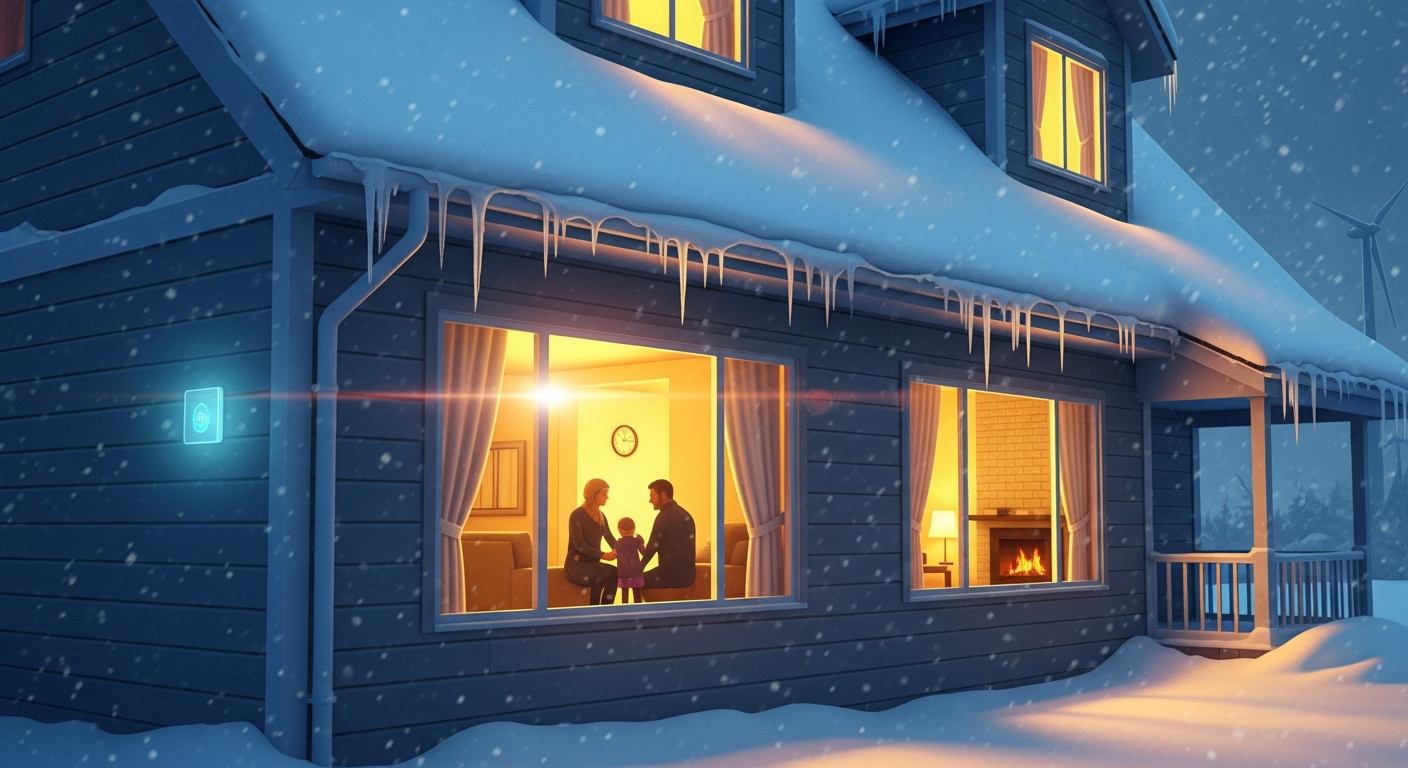
As arctic blasts become more frequent and extreme across the northern United States, the traditional advice about weatherproofing homes has evolved from mere comfort suggestions to economic necessities. The recent guidance from energy companies and HVAC professionals in Minnesota reveals a troubling reality: our housing infrastructure remains woefully unprepared for climate extremes, and the financial burden falls disproportionately on homeowners who can least afford it.
The standard recommendations—checking filters, sealing drafts, adjusting thermostats—represent band-aid solutions to a much deeper problem. Our national housing policy has consistently prioritized rapid construction over energy efficiency, creating millions of homes that hemorrhage heat during winter months and force residents to choose between financial stability and basic comfort.
The Hidden Economics of Home Heating
The advice to lower thermostats by 7-10 degrees to save 10% on heating bills exposes the harsh mathematics of home energy inefficiency. This recommendation essentially asks residents to endure discomfort to offset the failures of building design and energy policy. Consider that a modest 1,500 square foot home in Minnesota might face heating bills exceeding $300 monthly during winter. A 10% savings represents $30—hardly transformative for a struggling household, yet the temperature reduction significantly impacts quality of life, particularly for elderly residents and families with young children.
The suggestion to replace filters monthly exemplifies how routine maintenance costs accumulate for homeowners. Quality HVAC filters range from $15-40 each, meaning conscientious homeowners might spend $60-160 during a four-month winter period just on filters. For a household earning minimum wage, this represents hours of labor dedicated solely to maintaining basic heating infrastructure.
Technology Solutions Mask Systemic Problems
The article’s mention of new thermostat technology with averaging sensors highlights how innovation often targets symptoms rather than causes. These devices, which can cost $150-300, offer incremental improvements to heating efficiency but do nothing to address fundamental issues like inadequate insulation, outdated HVAC systems, or poorly designed building envelopes.
Smart home technology company Ecobee claims their thermostats save users 23% on heating and cooling costs, but these statistics come from homes that already have functioning, modern HVAC systems. For residents in older housing stock—particularly in lower-income neighborhoods where homes may be 50+ years old—the return on investment from such technology is significantly lower because the primary energy losses come from structural deficiencies, not thermostat management.
The False Economy of Homeowner Responsibility
Perhaps most troubling is how energy efficiency has been framed as individual responsibility rather than systemic failure. The recommendation to use towels and blankets to block drafts represents a startling admission: our housing stock is so poorly designed that residents must improvise with household items to perform functions that proper construction should provide.
The Lawrence Berkeley National Laboratory estimates that air leakage accounts for 25-40% of heating and cooling costs in typical homes. Yet rather than establishing and enforcing meaningful efficiency standards for new construction and renovations, policy continues to place the burden on homeowners to retrofit inadequate structures at their own expense.
In Germany, the KfW development bank provides substantial subsidies for energy-efficient renovations, covering up to 40% of costs when homeowners upgrade to the highest efficiency standards. This approach recognizes that energy efficiency is a public good with benefits extending beyond individual homeowners to include reduced grid demand and lower carbon emissions.
Alternative Viewpoints: The Cost of Regulation
Critics of stricter building codes and energy efficiency requirements argue that additional regulations increase housing costs and exacerbate affordability challenges. The National Association of Home Builders estimates that regulatory costs add approximately $93,870 to new home prices, contributing to housing shortages and accessibility issues.
However, this argument presents a false dichotomy between affordability and efficiency. Research from the Rocky Mountain Institute demonstrates that high-performance buildings can be constructed at cost parity with conventional buildings when integrated design approaches are used from project inception. The real barrier isn’t cost—it’s institutional inertia and fragmented approaches to building design and construction.
Additionally, the focus on initial construction costs ignores the lifetime operational expenses of inefficient homes. A study by the American Council for an Energy-Efficient Economy found that energy-efficient homes have default rates 32% lower than standard homes, indicating that efficiency actually improves affordability over time through reduced operating costs.
Beyond Individual Action: Systemic Solutions
The advice provided by energy companies and HVAC professionals, while practical, ultimately diverts attention from the policy failures that have created our energy-inefficient housing stock. Meaningful progress requires intervention at multiple levels:
First, building codes must be updated nationwide to require significantly higher energy performance standards for new construction. California’s Title 24 energy code demonstrates that progressive standards can be implemented successfully, resulting in homes that use 53% less energy than those built to previous standards.
Second, retrofit programs must be funded at scale to address existing housing stock. The federal Weatherization Assistance Program serves only a fraction of eligible households due to funding limitations. Expanding this program could create jobs while reducing energy poverty among vulnerable populations.
Third, utility rate structures need reform to incentivize efficiency rather than consumption. Progressive rate structures that increase costs for higher usage levels would drive conservation while protecting essential energy needs.
The Path Forward
The well-intentioned advice from energy companies about checking filters and adjusting thermostats must be recognized for what it is: a stopgap measure in the absence of meaningful policy. The real solution to home energy efficiency doesn’t lie in individual behavior changes but in transforming how we design, build, and renovate our housing infrastructure.
Until we address these fundamental issues, millions of Americans will continue to face the impossible choice between financial stability and basic comfort during extreme weather events. And as climate change intensifies, these choices will only become more frequent and more dire.