
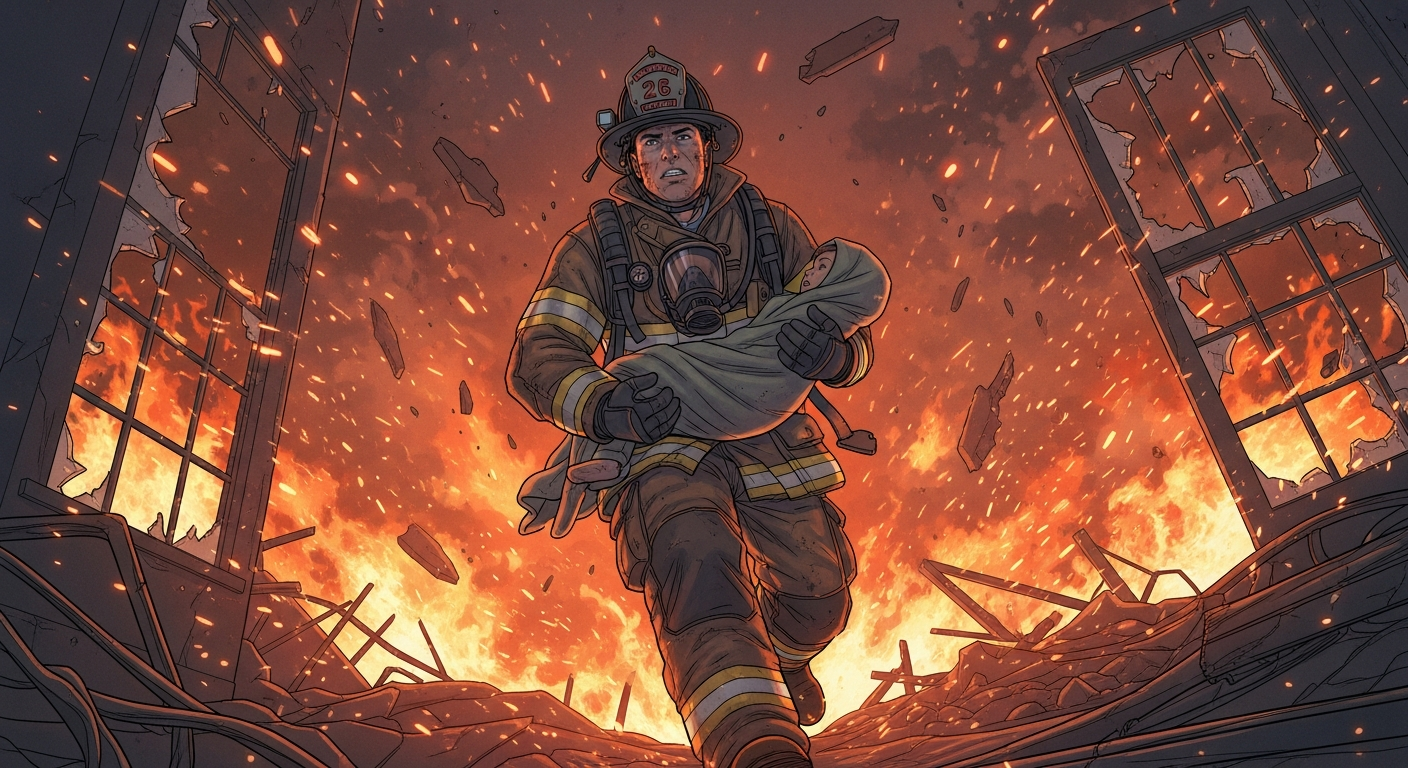
In a society that often celebrates individual achievement and personal gain, Tim Bertz’s life and death offer a profound counternarrative about what true service means. The 52-year-old Saint Paul firefighter who passed away just days after achieving his dream job didn’t simply serve in life – he ensured his service would continue even after death through organ donation. This extraordinary commitment forces us to examine our own definitions of service and legacy in an increasingly self-centered world.
The Extraordinary Nature of Ordinary Service
What makes Bertz’s story particularly compelling isn’t just the dramatic elements – his military background as a Navy SEAL or his perseverance in joining the fire academy at twice the age of his peers. Rather, it’s the quiet, consistent commitment to service that defined his entire existence. At 52, when many are contemplating retirement or career wind-downs, Bertz was just beginning what his father called his ‘dream job’ with the Saint Paul Fire Department.
This challenges our contemporary understanding of career trajectories. The standard narrative suggests that by mid-life, we should be harvesting the fruits of earlier labor, not planting new seeds of service. Bertz’s choice reveals something deeper about vocation versus occupation. For him, firefighting wasn’t merely a job but a calling – something that, as his father noted, was ‘in his DNA.’
Consider the contrast with prevailing workplace attitudes. A 2023 Gallup poll found that only 32% of American workers feel engaged at work, with the majority viewing their jobs primarily as sources of income rather than purpose. Bertz represents the counterpoint – someone who pursued meaningful service even when it meant starting over at an age when society expects career stability.
The Ripple Effects of Organ Donation
The decision to become an organ donor – whether made by Bertz himself during life or by his family after his passing – extends his service legacy in measurable ways. As noted in the article, his donations will save four lives directly, with tissue donations helping countless others. This represents a profound multiplication of impact that transcends the boundaries of life itself.
The statistics around organ donation underscore both its importance and the gap between need and availability. With 2,275 Minnesotans currently awaiting life-saving transplants, each donation decision carries immense weight. Yet only about 58% of American adults are registered organ donors, according to Donate Life America, despite polls showing that over 95% support the concept.
This disconnect between stated values and registered actions points to a broader societal reluctance to confront mortality and make concrete plans for our final acts of service. Bertz’s story challenges this avoidance by demonstrating that end-of-life decisions can be among our most impactful contributions to community welfare.
The Multi-Generational Impact of Service-Oriented Lives
Perhaps the most subtle but significant aspect of Bertz’s story is how service creates intergenerational connections. Fire Chief Butch Inks mentioned that his own son worked with Bertz at the Harris Fire Department and ‘could say nothing but good things about him.’ This casual mention reveals how service-oriented individuals create ripple effects across professional networks and family systems.
Research from the Corporation for National and Community Service shows that children who witness service-oriented behavior in adults are significantly more likely to volunteer and engage civically as adults themselves. By modeling commitment to community welfare, individuals like Bertz help perpetuate cycles of service that extend far beyond their immediate impact.
The Saint Paul Fire Department graduation ceremony on December 17th, where Chief Inks handed Bertz his badge, represents more than a personal milestone. It marks the continuation of institutional values and the passing of service traditions to new generations. That Bertz was called ‘grandpa’ by younger recruits wasn’t just a joke about age differences – it inadvertently acknowledged his role in bridging generational divides within service professions.
Alternative Viewpoints: The Limits of Individual Service
Some might argue that celebrating individual acts of service like Bertz’s distracts from addressing systemic issues that necessitate such sacrifice in the first place. Critics could point out that glorifying individual heroism sometimes prevents us from questioning why our systems require heroes at all.
This perspective has merit. Celebrating individual organ donors without addressing the systemic shortcomings in our organ donation systems – including opt-out versus opt-in policies that could dramatically increase donation rates – may perpetuate problems. Similarly, honoring the sacrifice of first responders without addressing their working conditions, mental health needs, and compensation could be seen as exploitative.
However, this critique misses an essential point: individual examples of extraordinary service often serve as catalysts for systemic change. Stories like Bertz’s don’t just celebrate personal heroism – they establish new norms and expectations that can drive policy changes and institutional reforms. His story doesn’t just honor one man’s choices; it challenges all of us to reconsider our own relationship with service and community.
The Challenge to Our Own Legacy Planning
Bertz’s story ultimately presents a challenging question to every reader: How are we planning for our own legacy of service? His life demonstrates that service isn’t limited by age, career stage, or even the boundaries of life itself. This reframes legacy planning from a financial exercise to a service-oriented one.
Most Americans approach end-of-life planning primarily in financial terms. According to a 2023 Gallup survey, while 76% of Americans have some form of will or estate plan, only about 30% have made specific plans regarding organ donation or other forms of posthumous service. Bertz’s example challenges this narrow conception of legacy.
The statement from his father that ‘knowing that this is what Tim was doing all his life, and now he’s doing it in death’ offers a profound framework for considering how our values can transcend our lifespans. It suggests that consistency between how we live and how we die represents a form of integrity that brings comfort even in grief.
Conclusion: Service as a Continuous Thread
Tim Bertz’s story reveals that true service isn’t a discrete activity but a continuous thread running through all aspects of life – and beyond. From his military service to his work with multiple fire departments to his final gift as an organ donor, Bertz demonstrated that service isn’t what we do; it’s who we are.
This perspective challenges the compartmentalization that characterizes much of modern life, where service is often relegated to volunteer hours or charitable donations rather than integrated into our fundamental identity. Bertz’s example suggests a more holistic approach where the boundaries between personal and professional life, between career and calling, between life and death, become permeable in service to others.
As communities across America face increasing polarization and fragmentation, stories like Bertz’s remind us that service creates connections that transcend our differences. His legacy isn’t just about the lives he saved as a firefighter or through organ donation – it’s about modeling a way of being that prioritizes community welfare over individual gain. The question isn’t whether we can all be heroes like Tim Bertz, but whether we can integrate his service ethic into our own lives in ways both large and small.