
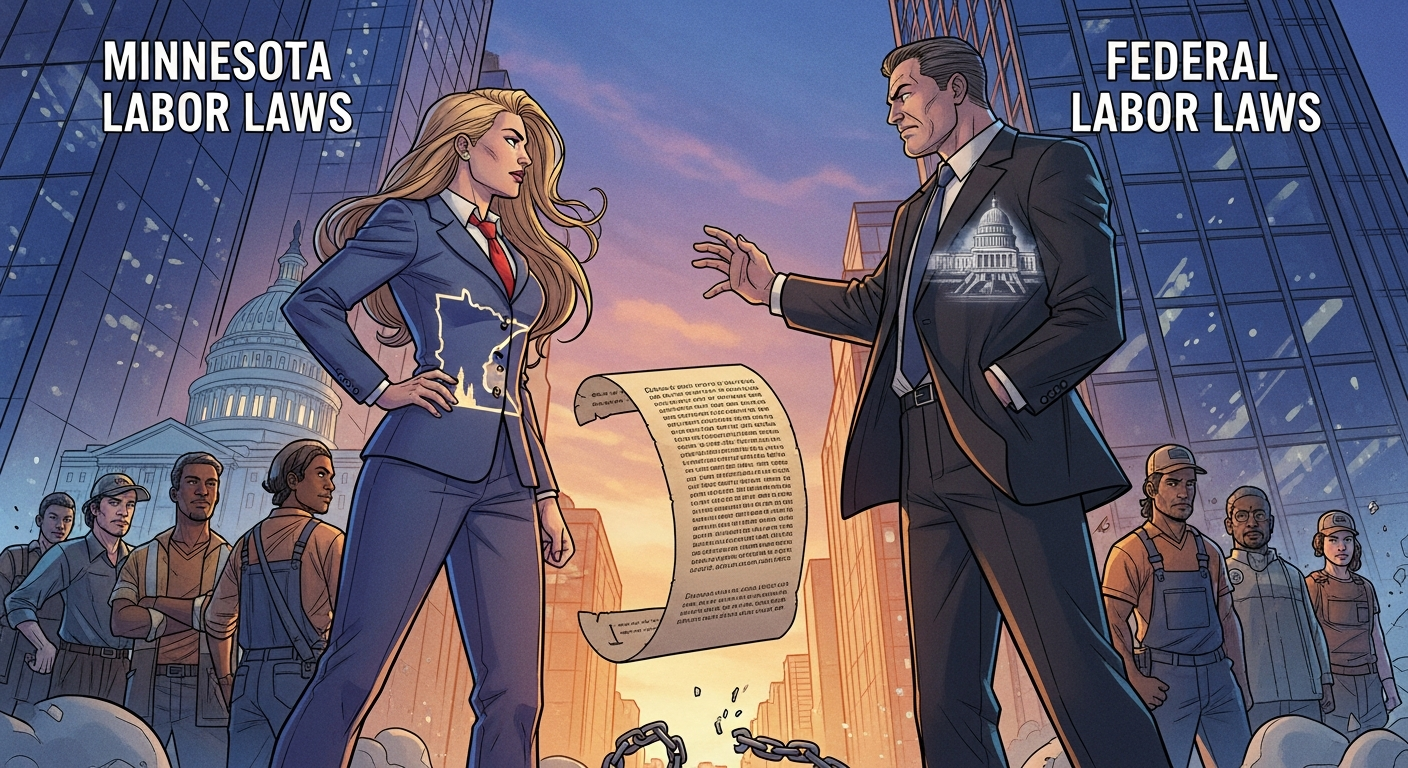
Minnesota’s upcoming minimum wage increase to $11.41 per hour represents a modest step forward for workers, but falls woefully short of addressing the growing economic inequality in the state. The adjustment, which takes effect January 1, 2026, fails to restore the purchasing power workers once had. According to the Minnesota Department of Labor and Industry’s own data, the minimum wage between 1960 and 1981 was equivalent to $12.68 in today’s dollars – meaning the ‘increase’ actually leaves workers with less economic power than their counterparts had decades ago.
The Reality of Living on Minimum Wage in Minnesota
The mathematics of survival on $11.41 per hour are simply untenable for Minnesota families. A full-time worker earning this wage would make approximately $23,732 annually before taxes. According to the MIT Living Wage Calculator, a single adult with no children in Hennepin County needs at least $36,918 annually to cover basic expenses. For a single parent with one child, that figure jumps to $76,128. The gap between minimum wage and living wage has created a class of working poor who must often choose between necessities like healthcare, adequate housing, and nutrition.
This economic reality explains why Minneapolis and St. Paul have implemented higher minimum wages ($15.97 in both cities for large businesses). These municipal governments recognized what the state has not: $11.41 is insufficient for urban residents facing skyrocketing housing costs. The Twin Cities housing market has seen median rents increase by over 30% in the past decade, while the state minimum wage has failed to keep pace.
The Business Argument Falls Apart Under Scrutiny
Critics of higher minimum wages invariably argue that businesses cannot afford to pay more without cutting jobs or raising prices. However, empirical evidence consistently contradicts this claim. When Seattle implemented its $15 minimum wage, researchers at the University of Washington found no significant negative employment effects. More tellingly, states with higher minimum wages have not experienced greater unemployment than their low-wage counterparts.
Minnesota’s own economic data supports this conclusion. Despite Minneapolis and St. Paul having significantly higher minimum wages than the rest of the state, both cities maintain lower unemployment rates than the state average. Businesses have adapted through modest price adjustments, improved efficiency, and reduced turnover – which itself generates significant cost savings by reducing training expenses and improving productivity.
The Meal and Rest Break Provisions: Long Overdue Protections
The new meal and rest break provisions represent a genuine improvement in worker protections. Guaranteeing a 15-minute paid break every four hours and a 30-minute unpaid meal break for shifts of six or more hours establishes basic standards of humane treatment in the workplace. These provisions acknowledge that worker productivity and wellbeing are interconnected.
However, these protections are merely catching Minnesota up to standards that have existed for decades in states like California, Washington, and New York. The fact that such basic protections are only now being implemented in 2026 highlights how far behind Minnesota has fallen in worker protections. Without robust enforcement mechanisms and penalties for violations, these provisions may prove meaningless for vulnerable workers who fear retaliation for asserting their rights.
The Geographic Wage Disparity Problem
The two-tier minimum wage system between the Twin Cities and the rest of Minnesota creates problematic geographic inequities. While cost of living is generally higher in urban areas, the gap between $15.97 and $11.41 creates a situation where workers performing identical jobs just miles apart can have dramatically different economic outcomes. This disparity incentivizes businesses to locate just outside city limits to access cheaper labor, potentially reducing economic opportunities in the cities themselves.
Consider the case of retail workers at identical stores – one in Minneapolis paying $15.97 and another in a suburb paying $11.41. This $4.56 hourly difference amounts to approximately $9,500 annually for full-time workers. This geographic lottery effectively determines whether a worker can afford stable housing or must rely on public assistance despite full-time employment.
Alternative Viewpoints: The Gradualist Approach
Some economists and business advocates argue that gradual minimum wage increases allow businesses to adapt without disruption. They point to potential inflation risks and argue that market forces should primarily determine wages. This perspective suggests that workforce development and education represent better long-term solutions than wage mandates.
This gradualist approach has merit in theory but fails to address the immediate economic crisis facing low-wage workers. While education and skill development are important long-term strategies, they do not help the adult working full-time who cannot afford rent today. Furthermore, the