The carpet cleaning industry operates on a foundation of half-truths and calculated deception that would make Wall Street blush. After fifteen years dismantling the filth beneath America’s feet, I’ve compiled intelligence that separates the informed from the exploited. Consider this your briefing.
The Chemical Warfare You’re Losing
That bottle of carpet cleaner sitting in your utility closet? A magnificent fraud. Consumer-grade solutions contain precisely enough active ingredient to justify the label, nothing more. Manufacturers dilute commercial formulations by factors of ten to twenty before bottling them for retail—a profit strategy disguised as convenience.
Professional-grade solutions cut through pet urine, wine, and ground-in soil with industrial efficiency because they contain concentrations of surfactants and enzymes that would obliterate retail profit margins. The math is brutally simple: what cleans effectively costs more to produce.
When selecting cleaning agents, ignore marketing poetry about “gentle cleaning power” and “fresh scents.” These are linguistic distractions engineered to mask ineffectiveness. Demand products with disclosed surfactant percentages above 15% or accept your role as a voluntary participant in planned obsolescence.
Your Vacuum Is Pathetically Inadequate
The average household vacuum operates at suction levels that professional cleaners find laughable. Your $300 bagless marvel generates approximately 70 inches of water lift. Professional truck-mounted systems deliver 400-500 inches. This isn’t a minor difference—it’s different technology operating in different universes.
Residential carpets accumulate approximately one pound of soil per square yard annually before appearing visibly dirty. Your vacuum removes the surface layer—a cosmetic adjustment that allows particulates to continue their migration into fiber bases. This isn’t cleaning; it’s rearranging evidence.
The underpowered motor in your upright model isn’t just insufficient—it’s counterproductive. The agitation without adequate extraction drives particulates deeper into pile bases, accelerating wear patterns and creating permanent traffic lanes. You’re not maintaining your carpet; you’re documenting its destruction in slow motion.
The Hot Water Extraction Conspiracy
The industry term “steam cleaning” represents perhaps the most successful linguistic misdirection in home maintenance history. No professional cleaner uses actual steam on residential carpets—the temperature would destroy fiber integrity and melt adhesives. We use hot water extraction, typically at 150-200°F, well below steam temperature.
This distinction matters because the cleaning mechanism isn’t steam but rather the temperature-activated chemical reactions between solutions and soil compounds. Every 10-degree drop below optimal temperature reduces cleaning effectiveness by approximately 15%. Your rental machine that barely reaches 110°F operates at roughly half the effectiveness of professional equipment.
When professionals quote prices dramatically higher than rental options, they’re not merely covering labor and profit margins. They’re accounting for the exponential difference between equipment that cleans and equipment that performs a theatrical simulation of cleaning.
The Protectant Racket
Carpet protectants represent the industry’s most profitable upsell and its most misrepresented service. The fluoropolymer compounds in products like Scotchgard and Teflon have legitimate soil-resistant properties, but their application and performance rarely match consumer expectations.
Factory-applied protectants integrate with fibers during manufacturing. Aftermarket applications merely coat fiber surfaces, delivering 30-40% of factory protection at best. The industry standard of reapplication every 12-18 months isn’t based on performance degradation but on profit cycle optimization.
If you choose to invest in protectants, demand specific performance guarantees and documentation of application rates. Most technicians apply at half the manufacturer’s recommended coverage to preserve margins. This isn’t protection; it’s a placebo with a premium price tag.
The Rapid Dry Deception
Companies advertising “quick-dry” processes are selling you enhanced evaporation, not enhanced cleaning. Proper hot water extraction requires adequate dwell time for chemicals to dissolve soil compounds. Accelerated processes universally sacrifice cleaning effectiveness for convenience.
Professional equipment removes approximately 95% of moisture during extraction. Remaining dampness should dissipate within 6-12 hours depending on ambient conditions. Companies promising dry times under four hours are either using insufficient water (undermining cleaning) or employing secondary drying equipment (at premium pricing).
The physics of proper extraction cannot be circumvented without compromise. Companies promising both superior cleaning and rapid drying are lying about at least one of these claims, possibly both.
The Pricing Structure You Don’t Understand
The industry’s pricing opacity isn’t accidental; it’s strategic. The advertised “per room” rate represents the absolute minimum service level, often excluding essential components of effective cleaning. Pre-conditioning, spot treatment, and proper extraction passes are frequently categorized as “upgrades” rather than standard procedure.
Legitimate professionals calculate true costs based on square footage, soil levels, and fiber types. Companies advertising flat rates regardless of room size operate on volume-based models that necessitate rushed service and inadequate cleaning. The business mathematics are unforgiving: quality cleaning requires time, and time costs money.
When comparing quotes, demand itemized breakdowns of included services and time allocations. A proper cleaning of an average living room (300 sq ft) requires 45-60 minutes of active work. Companies allocating less time are selling the appearance of cleaning rather than actual soil removal.
The Maintenance Schedule That Actually Works
The industry recommendation of professional cleaning every 12 months represents a compromise between carpet longevity and consumer tolerance for expense. The optimal maintenance schedule for maximum carpet life is significantly more aggressive.
High-traffic areas accumulate soil at rates requiring professional intervention every 4-6 months. Waiting for visible soiling means accepting permanent fiber damage. By the time carpeting appears dirty to the naked eye, abrasive particles have already begun cutting fiber strands at the microscopic level.
Effective maintenance requires professional cleaning at 6-month intervals, supplemented by weekly vacuuming using machines with HEPA filtration and adequate suction. This schedule isn’t a luxury—it’s the minimum intervention required to preserve your investment beyond 50% of its potential lifespan.
The Truth About Stain Removal
The window for complete stain removal is measured in minutes, not hours. Once chromogens penetrate fiber structures and oxidize, complete removal becomes chemically impossible without risking fiber damage. Consumer beliefs about removing “old stains” reflect marketing fiction rather than chemical reality.
Professional spotting kits contain specialized reducing agents, oxidizers, solvents, and pH-specific solutions because different stains require fundamentally different chemical approaches. The all-purpose spot removers sold at retail represent compromise formulations that adequately address none of these categories.
When addressing fresh spills, blot—don’t rub—and apply only water until professional help arrives. Every consumer product you apply before professional treatment complicates the chemistry and diminishes the probability of complete removal.
The Bait-and-Switch Standard Operating Procedure
The carpet cleaning industry’s advertising model relies on psychological manipulation refined over decades. The advertised price creates the appointment opportunity; the in-home “inspection” reveals “unexpected conditions” requiring service upgrades. This isn’t occasional unethical behavior—it’s the fundamental business model for approximately 70% of the market.
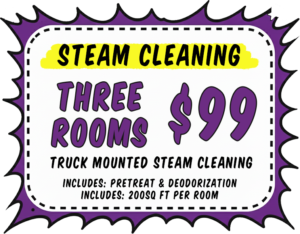
Companies can offer $99 whole-house specials because they’ve calculated the average upsell value at $300-400. The initial price represents a loss-leader intended to secure access to your property. What follows is a sophisticated pressure selling system disguised as professional recommendation.
Legitimate companies provide detailed, binding quotes based on accurate measurements and specific service descriptions. Any company unwilling to commit to final pricing before arrival is structured around the upsell model and should be avoided categorically.
The Equipment Hierarchy You’re Ignoring
The industry operates with a clearly defined equipment hierarchy that directly correlates with cleaning effectiveness. At the bottom: consumer rental machines operating at approximately 20% the effectiveness of professional equipment. Above this: portable professional units reaching 40-60% effectiveness. At the top: truck-mounted systems delivering full-specification cleaning.
This hierarchy isn’t subjective or marketing-driven—it’s based on measurable performance metrics including water temperature, solution flow rates, vacuum lift, and extraction efficiency. The price differential between service levels reflects this performance gap.
When selecting service providers, demand specific information about equipment specifications rather than accepting vague assurances about “professional-grade” machines. The difference between a high-end portable unit and an entry-level truck mount exceeds the difference between your household vacuum and the portable unit.
The Environmental Impact Nobody Discusses
The carpet cleaning industry generates wastewater containing detergents, solvents, dissolved soils, and biological contaminants. Most municipalities lack specific regulations governing disposal, resulting in widespread dumping of untreated waste directly into residential drainage systems.
Responsible companies utilize water reclamation systems that filter wastewater before disposal, capturing contaminants for proper handling. This equipment represents additional investment that necessarily affects pricing. Companies offering bargain rates universally skip this step, effectively externalizing environmental costs.
When selecting service providers, inquire specifically about wastewater handling protocols. Companies unwilling or unable to describe specific reclamation procedures are operating at substandard environmental compliance levels, regardless of their “eco-friendly” marketing claims.
The carpet beneath your feet holds more than just visible soil—it contains the accumulated evidence of an industry built on information asymmetry and calculated misrepresentation. Consider yourself briefed. The decisions that follow are yours alone.