
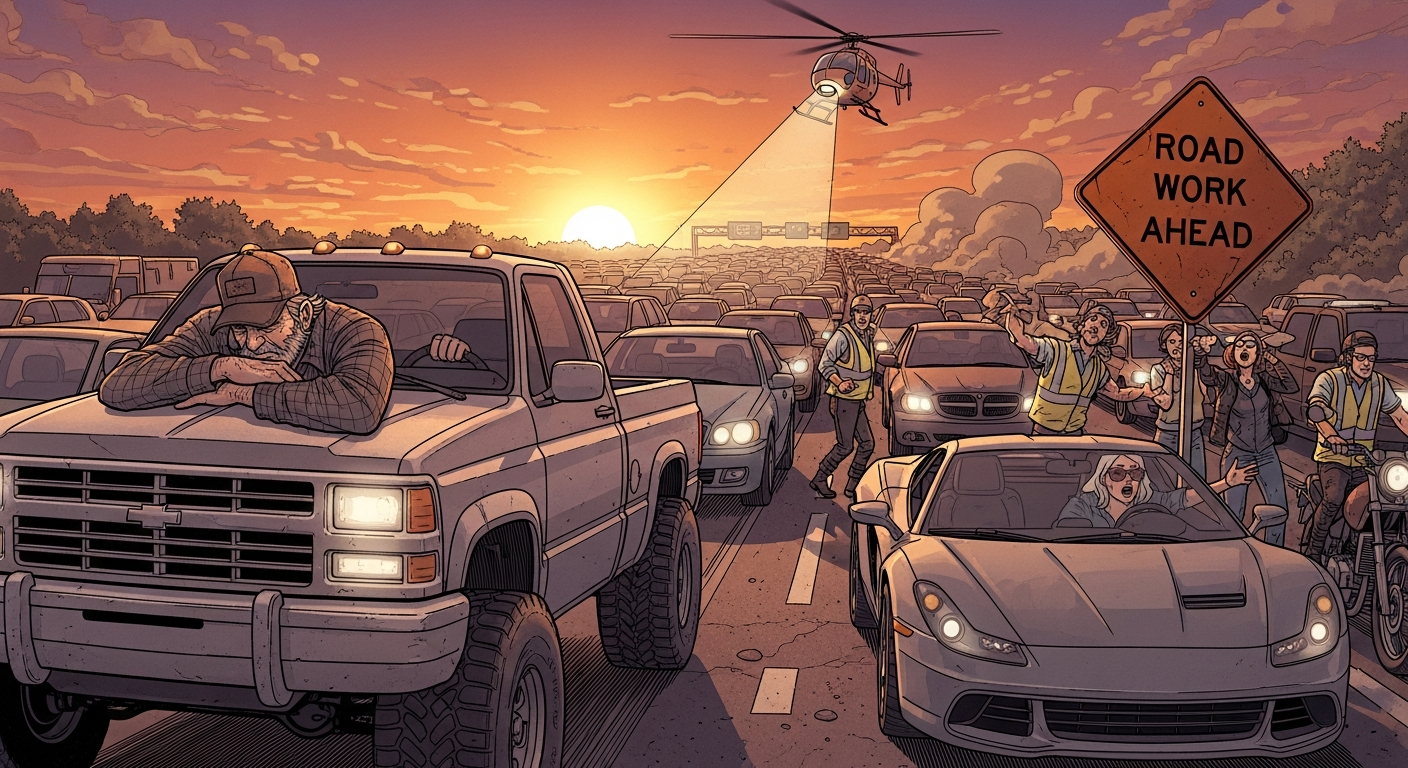
The recent winter storm that paralyzed I-35 and stranded hundreds of vehicles isn’t just another weather event—it’s a stark reminder of our infrastructure vulnerabilities and the increasing unpredictability of severe weather patterns. When a major interstate corridor remains closed for nearly 24 hours, affecting commerce, safety, and mobility across state lines, we must ask harder questions about preparedness and resilience.
The closure of I-35 southbound until 2 p.m. Monday represents more than just an inconvenience. It signals a transportation system struggling to adapt to increasingly severe weather events, with profound economic consequences rippling through supply chains. Meanwhile, the 386 vehicles that ended up off-road and 23 jackknifed semis indicate both infrastructure limitations and the human factors that complicate winter driving safety.
Infrastructure Resilience Demands More Than Reactive Measures
The repeated closures of critical transportation corridors during winter weather events points to systemic weaknesses rather than isolated incidents. Minnesota’s transportation infrastructure, like much of America’s northern road network, was designed for weather patterns that are increasingly outdated. The current approach—waiting for storms to hit, closing roads, and then scrambling to clear them—creates a predictable cycle of disruption that costs millions in economic activity.
Consider the economic impact: Each hour a major trucking route like I-35 remains closed costs approximately $100,000 per mile in delayed shipments, spoiled goods, and productivity losses. The 24-hour closure likely resulted in millions of dollars in economic impact. The Minnesota Department of Transportation has increased its winter maintenance budget by 15% over the past decade, yet road closures during major storms remain common, suggesting that merely throwing more resources at the same approach isn’t working.
Forward-thinking states like Colorado have invested in roadbed heating technology on critical mountain passes, reducing closure times by up to 70% during similar conditions. Minnesota should be exploring similar innovations rather than accepting regular winter paralysis as inevitable.
The Hidden Heroes: Truck Drivers Navigate Impossible Choices
Francine McNabb’s experience highlights the impossible choice professional drivers face during severe weather: risk your life and cargo by continuing, or accept delays that ripple through already-strained supply chains. Her decision to stop in Northfield rather than press on demonstrates the professional judgment that experienced drivers exercise daily, yet our transportation policies rarely account for these realities.
The trucking industry loses approximately $5 billion annually to weather-related delays, with winter storms accounting for nearly half that amount. Yet truck stops and safe havens remain woefully inadequate along major corridors like I-35. During this recent storm, parking areas reached capacity hours before the worst conditions hit, forcing many drivers to make dangerous choices.
States like Iowa have implemented