
On a sweltering August afternoon in Phoenix, Eleanor Mendez watched her electricity bill climb in tandem with the mercury. Despite investing in a top-of-the-line HVAC system just three years prior, her home remained uncomfortably warm, and her energy costs had inexplicably risen by nearly 30 percent. The HVAC technician she finally called delivered a verdict that surprised her: the problem wasn’t her expensive unit but rather the labyrinthine network of ducts hidden behind her walls. ‘It’s like buying a Ferrari and then trying to run it on a dirt road,’ he explained.
Mendez’s experience is far from unique. Across America, homeowners are unwittingly sabotaging their heating and cooling efficiency through a single overlooked culprit: neglected ductwork. While we’ve grown accustomed to changing filters and scheduling annual maintenance for our HVAC units, the actual pathways that deliver that precisely conditioned air throughout our homes remain largely ignored until catastrophic failure occurs.
The Hidden Infrastructure of Home Comfort
The ductwork in a typical American home resembles a miniature version of our national infrastructure—essential, aging, and chronically underfunded. These networks of metal passages, often installed during initial construction and then forgotten, transport the heated or cooled air that makes indoor living comfortable. Yet according to the Department of Energy, the average duct system leaks between 25 and 40 percent of the air passing through it, representing one of the largest energy inefficiencies in modern homes.
‘People don’t think about their ducts because they can’t see them,’ explains Dr. Jeffrey Siegel, a professor of civil engineering who specializes in indoor air quality at the University of Toronto. ‘The psychological aspect is fascinating—we tend to maintain what we can observe. When something is concealed behind drywall or above ceiling tiles, it becomes conceptually non-existent until a problem manifests.’
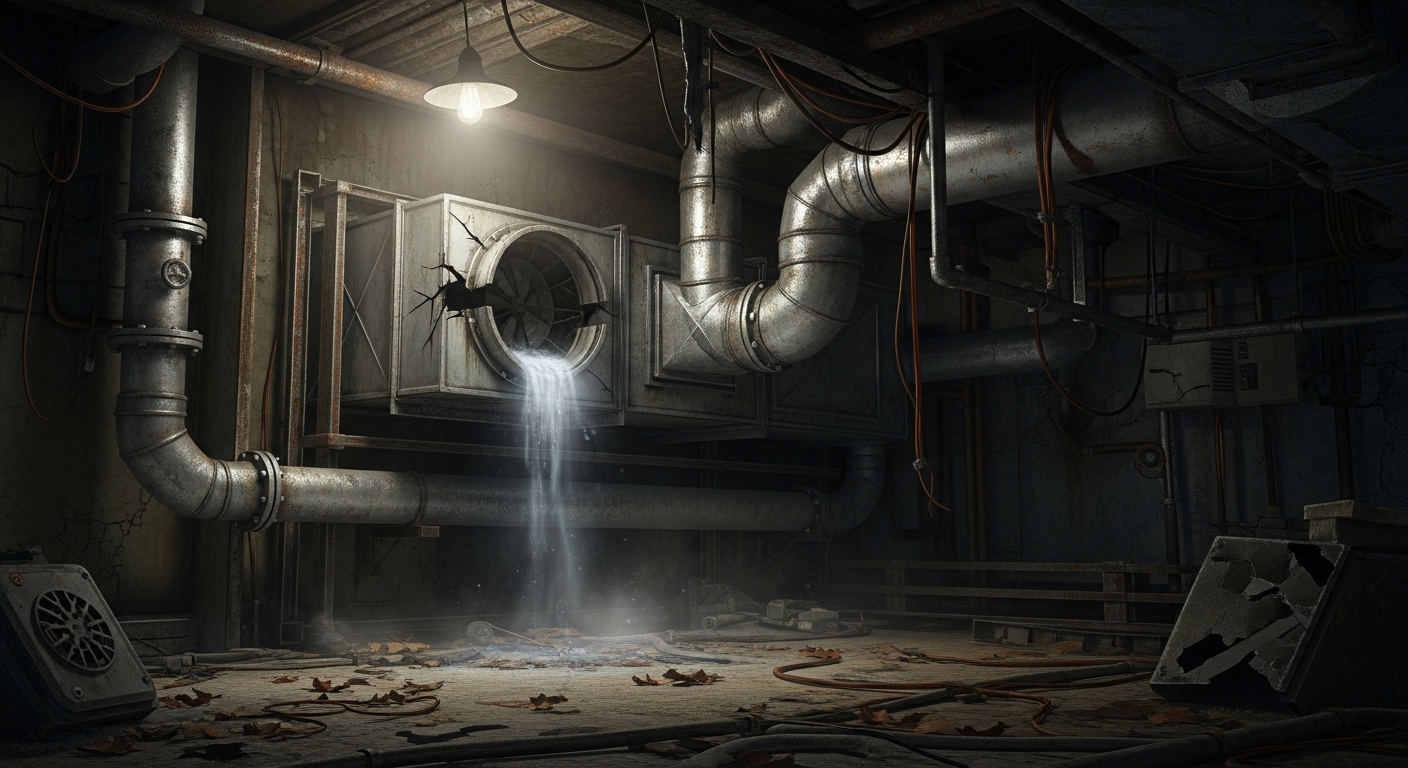
This invisibility creates a perfect storm for efficiency decline. Ducts develop leaks at seams, accumulate layers of dust and debris that restrict airflow, and in some cases, become partially disconnected altogether. The result is a system that works increasingly harder to deliver less comfort at greater cost—the mechanical equivalent of trying to breathe through a straw while running a marathon.
The Compounding Effects of Neglect
When ducts begin to deteriorate, the effects cascade throughout the entire HVAC system. Modern high-efficiency furnaces and air conditioners are precision instruments designed to operate within specific parameters. When forced to compensate for duct inefficiencies, they enter cycles of overwork that dramatically reduce their operational lifespan.
‘It’s a domino effect,’ says Manuel Gonzalez, who has provided air duct cleaning services for over two decades in the Midwest. ‘First, you notice certain rooms aren’t as comfortable. Then your system runs longer cycles. Your filter clogs faster. Eventually, components start failing years before they should.’ Gonzalez notes that many homeowners mistakenly replace entire HVAC systems when a thorough duct inspection and cleaning might have resolved their issues at a fraction of the cost.
The environmental impact extends beyond individual homes. Residential heating and cooling account for approximately 441 million tons of carbon dioxide emissions annually in the United States alone. Duct inefficiencies potentially contribute tens of millions of tons to this figure—a climate impact that remains largely unaddressed in environmental policy discussions.
The Diagnostic Revolution
Until recently, evaluating duct performance remained surprisingly primitive. Technicians relied largely on temperature differentials and visual inspections of accessible sections. Today, however, the industry has embraced sophisticated diagnostic tools that bring scientific precision to duct assessment.
Aeroseal, a technology developed at Lawrence Berkeley National Laboratory, has revolutionized how professionals approach duct leakage. The system pressurizes ductwork with a non-toxic aerosol that automatically seals leaks from the inside. ‘It’s like having a road crew that can simultaneously find and repair every pothole in a city without digging up a single street,’ explains thermal efficiency consultant Elaine Paterson.
For homeowners seeking insights without professional intervention, smart home technology now offers partial solutions. Networked temperature sensors can identify problematic temperature differentials between rooms, often the first indicator of duct issues. Some advanced smart thermostats can even detect when systems are working harder than historical baselines to maintain temperatures, triggering maintenance alerts before problems become severe.
The Maintenance Imperative
The conventional wisdom that ducts require minimal maintenance has proven costly for homeowners. Industry experts now recommend inspection every two to five years, with cleaning scheduled based on those assessments rather than arbitrary timelines.
‘The trick isn’t to clean on a rigid schedule,’ advises Gonzalez. ‘It’s understanding your specific home’s needs. Homes with pets, in dusty climates, or with residents who have respiratory sensitivities might need service every few years. Other homes might go longer.’ He emphasizes that proper cleaning involves more than just removing visible dust—it includes addressing microbial growth, sealing leaks, and ensuring proper insulation.
For the budget-conscious, several DIY approaches offer partial benefits. Regularly replacing filters prevents additional debris from entering ductwork. Removing and cleaning vent covers can address localized buildup. However, these measures address only the periphery of the system, not the main trunk lines where most serious issues develop.
The most valuable DIY activity might simply be awareness—regularly checking for uneven temperatures, listening for unusual sounds in ductwork, and monitoring energy consumption patterns can identify problems before they become emergencies.
Beyond Efficiency: The Health Dimension
The conversation around ductwork has expanded beyond mere efficiency to encompass health concerns. Ducts can harbor allergens, mold spores, and particulate matter that continuously recirculate through living spaces. For the approximately 50 million Americans who suffer from allergies, compromised ductwork potentially transforms homes into symptom generators rather than sanctuaries.
‘We’re increasingly understanding that indoor air quality often has greater health impacts than outdoor pollution,’ notes Dr. Siegel. ‘Most Americans spend upwards of 90 percent of their time indoors. When ductwork becomes contaminated, it effectively creates a closed-loop system for continuous exposure to irritants.’
This health dimension has transformed what was once considered optional maintenance into an essential component of home healthcare for many families. The pandemic further accelerated this shift, as heightened awareness of airborne transmission mechanisms made many homeowners reconsider their indoor air management strategies.
For Eleanor Mendez, the Phoenix homeowner, addressing her duct issues ultimately involved more than just efficiency. ‘After they cleaned and sealed everything properly, yes, my energy bills dropped,’ she recounts. ‘But the real difference was how much better everyone felt. My husband’s allergies improved dramatically. We hadn’t realized how much our air quality had deteriorated until it was fixed.’
As climate change intensifies weather extremes and energy costs continue their upward trajectory, the humble duct system—long overlooked in conversations about efficiency and sustainability—may finally receive the attention it deserves. The pathways through which comfort flows remain as essential as the machines that generate it, a lesson homeowners like Mendez are learning one system at a time.