
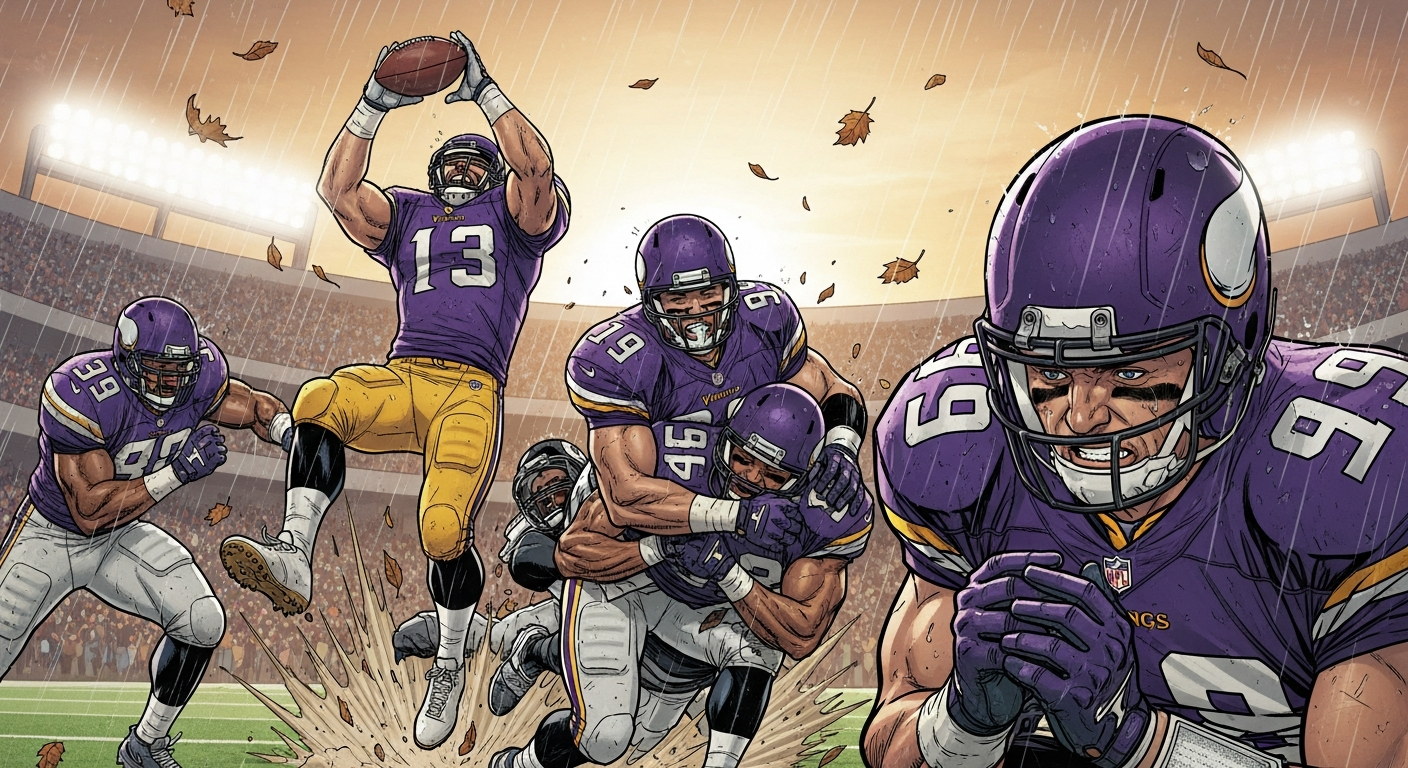
The Minnesota Vikings’ mounting injury woes ahead of their critical Thursday matchup against the Detroit Lions highlights a fundamental problem in the NFL’s scheduling structure and roster management philosophy. With T.J. Hockenson, Jordan Mason, Ryan Kelly, and J.J. McCarthy all sidelined, the Vikings aren’t just facing personnel challenges – they’re victims of a system that prioritizes television revenue over player health and game quality.
Thursday Night Games Create Unnecessary Player Risk
The Vikings’ injury report for Thursday’s game reads like a who’s who of critical playmakers, with their starting tight end, leading rusher, center, and quarterback all unavailable. This isn’t coincidence – it’s the predictable outcome of forcing teams to play two games in five days. The NFL’s insistence on Thursday night games creates a recovery timeline that defies sports medicine best practices. Research published in the American Journal of Sports Medicine found that injury risk increases by nearly 20% when players have less than seven days to recover between games.
The case of Ryan Kelly is particularly troubling. His third reported concussion this season raises serious questions about player safety protocols. The NFL’s concussion management has improved, but the compressed schedule between Sunday and Thursday games directly contradicts the league’s supposed commitment to brain health. The Buffalo Bills experienced similar challenges in 2022 when Josh Allen’s elbow injury was exacerbated by a short week, affecting their playoff positioning.
Roster Construction Flaws Exposed Under Pressure
The Vikings’ predicament also exposes fundamental flaws in how NFL teams construct their rosters. While injuries are inevitable, the Vikings’ depth chart has proven woefully inadequate. Jordan Mason leads the team in rushing yards and touchdowns, yet the Vikings’ backup plan involves activating Ty Chandler, who hasn’t played since Week 1. This represents a strategic failure in roster construction.
Successful NFL franchises build depth through strategic draft choices and targeted free agency. The Kansas City Chiefs, for example, maintained offensive production despite injuries to key receivers in 2022 because they had invested in versatile depth players. Similarly, the Philadelphia Eagles’ offensive line depth has been crucial to their sustained success despite injuries.
The Vikings, conversely, find themselves with a makeshift offensive line, no established backup for their leading rusher, and uncertainty at the tight end position – all in a must-win game for their playoff hopes. This isn’t bad luck; it’s poor planning.
The Economic Incentives Behind Player Risk
The NFL’s Thursday night package, worth approximately $1 billion annually through Amazon’s broadcasting rights, creates a perverse incentive structure that prioritizes content creation over competitive integrity. While the league publicly champions player safety, its scheduling practices tell a different story. The NFL has created a system where teams must choose between proper player recovery and competitive readiness.
When the NFLPA surveyed players in 2022, 80% reported feeling more sore and less recovered when playing on Thursday nights compared to normal Sunday games. Yet the NFL continues this practice because the financial incentives are too lucrative to ignore. The San Francisco 49ers experienced similar challenges in 2021 when they lost four starters to injury during a Thursday night game after playing the previous Sunday.
Alternative Viewpoints: The Case for Thursday Games
Defenders of the Thursday night schedule point to several benefits. The NFL argues that the additional rest following Thursday games (ten days until the next game) compensates for the shortened preparation time. League officials also note that season-long injury rates don’t show statistically significant differences between teams playing Thursday games versus those on normal schedules.
Some coaches, including New England’s Bill Belichick, have even suggested that Thursday games can create positive momentum and team cohesion through focused, abbreviated preparation. The condensed game planning forces efficiency and can sometimes yield innovative strategic adjustments.
While these arguments have merit, they fail to address the fundamental issue: player recovery isn’t negotiable physiologically. The human body requires a minimum recovery time that doesn’t align with the NFL’s current Thursday night model. The marginal benefit of extended rest after Thursday games doesn’t offset the increased injury risk created by insufficient recovery before them.
A Better Path Forward
The Vikings’ situation demonstrates the need for structural changes to the NFL schedule. Rather than eliminating Thursday games entirely, the league could require teams playing Thursday night to have their bye week the previous Sunday. This would ensure adequate recovery time while preserving the broadcast package.
Teams must also adapt their roster construction philosophy to the reality of the NFL schedule. The Baltimore Ravens provide an instructive model, consistently building depth through compensatory draft picks and developing versatile players who can fill multiple roles. Their ability to withstand injuries to key players while maintaining competitive performance demonstrates the value of depth-focused roster building.
The Vikings’ performance against Detroit will likely suffer not because of coaching or player effort, but because the system is designed to prioritize content creation over competitive equity. As fans, we should demand better – not just for the Vikings, but for the integrity of the game itself.