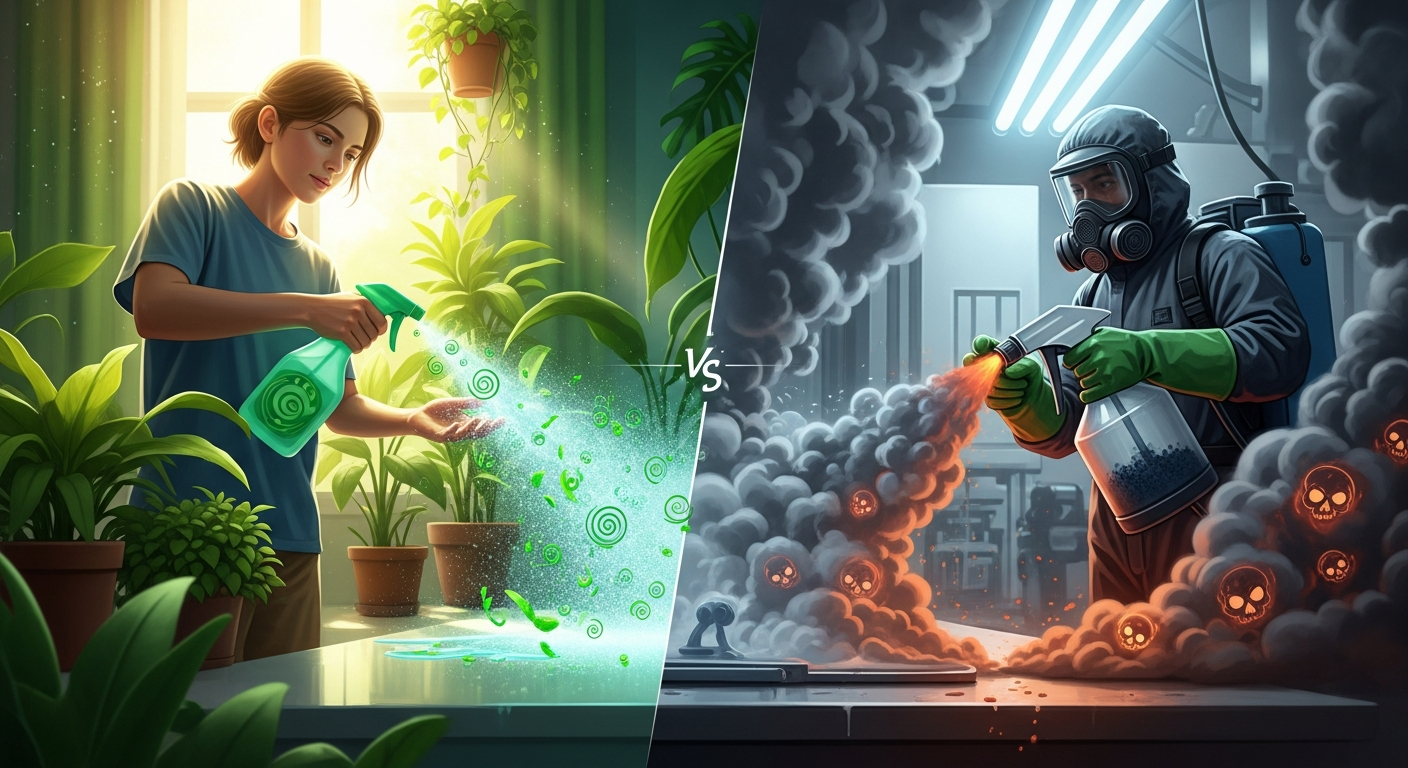
Mrs. Henderson, my childhood neighbor, kept a home so pristine it bordered on clinical. The sharp scent of bleach announced her weekly cleaning ritual—windows flung open despite Michigan winters, rubber-gloved hands raw from scrubbing. ‘Nothing cleans like chemicals,’ she’d insist, eyeing my mother’s vinegar solutions with thinly veiled skepticism. Three decades later, as consumers navigate cleaning aisles divided between traditional disinfectants and plant-derived alternatives, Mrs. Henderson’s certainty feels like a relic from a simpler time. The debate between green and chemical cleaning has evolved beyond mere preference into contested territory where science, marketing, health concerns, and environmental ethics collide.
The Chemistry Behind the Clean
The distinction between ‘green’ and ‘chemical’ cleaning represents a false dichotomy that chemists find particularly frustrating. ‘Everything is chemicals,’ explains Dr. Cassandra Hayne, environmental chemist at MIT. ‘Vinegar is acetic acid. Baking soda is sodium bicarbonate. The question isn’t whether we’re using chemicals—we always are—but rather which specific compounds best serve our purposes with minimal collateral damage.’ This fundamental misunderstanding pervades discussions about home cleaning, where ‘chemical-free’ labels adorn products composed entirely of chemicals, albeit different ones than their conventional counterparts.
Conventional cleaners typically rely on synthetic surfactants, solvents like 2-butoxyethanol, quaternary ammonium compounds (‘quats’), and chlorine bleach. These formulations have decades of performance data behind them and unquestionable efficacy against pathogens. Their green counterparts generally substitute plant-derived surfactants, enzymes, organic acids like citric and lactic acid, and essential oils with antimicrobial properties. The efficacy gap between these approaches has narrowed dramatically in recent years, though context matters enormously.
Laboratory testing by Consumer Reports and independent research at University of California Davis suggest that for routine cleaning of non-porous surfaces, many green alternatives perform comparably to conventional products. However, scenarios involving specific pathogens, porous materials, or stubborn soils reveal more significant performance differences. ‘Keeping a clean home isn’t one-size-fits-all,’ notes microbiologist Dr. Elena Ferrer. ‘Different cleaning challenges require different chemical approaches.’
Health Considerations: The Body Burden
The appeal of green cleaning extends beyond environmental concerns to the immediate environment of our homes. Conventional cleaning products frequently contain volatile organic compounds (VOCs) that contribute to indoor air pollution—often making indoor air significantly more contaminated than outdoor air in urban environments. For the 25 million Americans with asthma, these compounds can trigger attacks and respiratory distress.
Studies from the University of Washington found that scented conventional cleaning products emitted an average of 17 VOCs per product, including carcinogens like formaldehyde and chloroform that weren’t listed on labels. Pediatric research increasingly suggests connections between household chemical exposure and childhood developmental issues, though causation remains difficult to establish conclusively.
Green cleaning advocates point to these health concerns as paramount, while skeptics note the essential protective role that disinfectants play in preventing disease transmission. The COVID-19 pandemic complicated these discussions further, as many households returned to bleach and alcohol-based products recommended by health authorities, temporarily setting aside concerns about gentler alternatives.
‘The topics of safety and efficacy have become unnecessarily polarized,’ observes Dr. Martin Keller, toxicologist at Johns Hopkins University. ‘Some conventional products contain unnecessary irritants and sensitizers, while some green products make unsupported claims. Consumers deserve better than marketing that exploits their fears.’
Environmental Footprints Beyond the Bottle
The environmental calculus extends far beyond a product’s biodegradability. Manufacturing processes, packaging decisions, shipping weight, water consumption during use, and energy requirements throughout the product lifecycle all contribute to environmental impact. Green products sometimes substitute larger quantities of less effective ingredients, potentially negating environmental benefits through increased packaging and transportation emissions.
Some conventional cleaning companies have reformulated products to remove the most problematic ingredients while maintaining efficacy, blurring the once-clear lines between categories. Meanwhile, concentrated formulas and refill systems have reduced packaging waste across both conventional and green product lines. The emergence of ultraconcentrated tablets that consumers dissolve in reusable bottles represents a promising development that dramatically reduces shipping emissions.
The most sustainable approach often involves using the right cleaner for each specific task rather than defaulting to either all-green or all-conventional solutions. For daily cleaning tasks and surface maintenance, green products generally provide sufficient cleaning power with reduced environmental and health impacts. For periodic deep cleaning or disinfection needs, judicious use of conventional products may deliver superior results.
The Wisdom of Grandmothers
Perhaps the most overlooked aspect of this debate is the efficacy of traditional cleaning methods that predate both modern green and conventional products. Our grandmothers knew that sunshine is a powerful disinfectant, that mechanical action (scrubbing) removes more soil than chemicals alone, and that prevention is easier than remediation. Many modern cleaning products—both green and conventional—are designed to compensate for insufficient elbow grease.
‘The most effective cleaning system combines appropriate products with proper technique,’ explains Melissa Homer, chief cleaning officer for MaidPro. ‘A microfiber cloth with plain water can remove 99% of bacteria from a smooth surface through mechanical action alone. Many cleaning products simply make the process easier or faster, not necessarily more effective.’
The most practical approach for keeping a clean home might involve returning to fundamentals: frequent maintenance cleaning with minimal products, strategic use of specific cleaners for specific challenges, and renewed emphasis on preventative measures like removing shoes at the door and promptly addressing spills before they become stains. The green versus chemical debate oversimplifies a complex set of tradeoffs that vary by household, by surface, and by cleaning objective.
Mrs. Henderson’s immaculate home and my mother’s vinegar-cleaned counters both achieved cleanliness through different means, reflecting different priorities and different understandings of what ‘clean’ truly means. As we navigate today’s overwhelming array of cleaning options, perhaps the most valuable insight is that cleanliness itself exists on a spectrum—one where effectiveness, health impacts, environmental considerations, and practicality must all find their proper balance. The question isn’t which approach is universally superior, but rather which approach best serves each specific cleaning need while aligning with our broader values and concerns.