
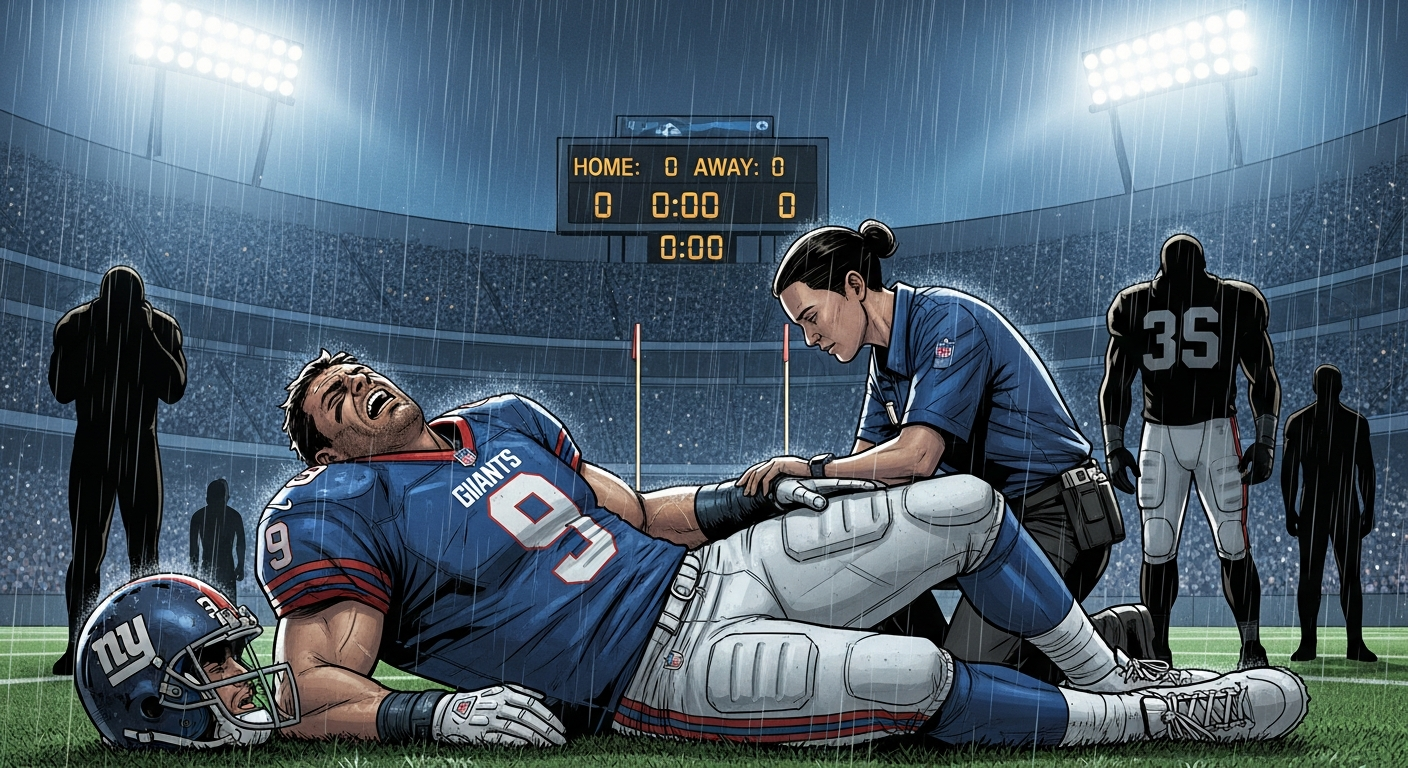
The Minnesota Vikings’ 16-13 victory over the Giants revealed something far more significant than just another win in a non-playoff season. It exposed the organization’s precarious quarterback situation while simultaneously showcasing an underappreciated resilience that could serve them well in 2025 and beyond. When J.J. McCarthy exited with a hand injury – adding to his growing list of health concerns this season – it highlighted the inherent risk in Minnesota’s quarterback strategy. Yet the team’s ability to overcome adversity, from travel chaos to losing their starting quarterback, demonstrates a cultural foundation that many struggling franchises lack.
McCarthy’s Injury History Raises Legitimate Long-Term Concerns
J.J. McCarthy’s latest injury isn’t just a minor setback – it’s part of a concerning pattern that demands serious scrutiny. Since being selected 10th overall, McCarthy has now dealt with a torn meniscus that wiped out his rookie year, a concussion, a sprained ankle, and now a hand injury. This isn’t simply bad luck; it raises fundamental questions about his durability at the professional level.
The NFL’s history is littered with promising quarterbacks whose careers were derailed by persistent injuries. Sam Bradford, Robert Griffin III, and most recently Tua Tagovailoa all serve as cautionary tales of talent undermined by physical fragility. McCarthy’s slender frame (6’3″, 202 pounds) and willingness to use his legs (as evidenced by his rushing touchdown against the Giants) compound these concerns.
The Vikings invested significant draft capital in McCarthy, passing on opportunities to select J.J. McCarthy or Bo Nix, both of whom have shown more durability this season. While McCarthy has flashed potential when healthy, availability remains the best ability for NFL quarterbacks. The Seattle Seahawks learned this lesson with oft-injured quarterback Sam Bradford, who signed a $23 million contract in 2018 only to be released after appearing in just three games.
Minnesota’s Organizational Resilience Deserves Recognition
Despite these quarterback concerns, the Vikings’ ability to navigate adversity reveals an organizational strength that deserves more attention. Consider the circumstances surrounding this victory: mechanical issues with their team plane forced a return and delay, they lost their starting quarterback mid-game, and they were playing in a meaningless late-season contest that many teams would mentally check out of.
Yet the Vikings found a way to win their third straight game with undrafted rookie Max Brosmer stepping in effectively. This resilience stems directly from Kevin O’Connell’s leadership culture. Unlike many coaches who lose their team once playoff hopes evaporate, O’Connell has maintained buy-in from veterans like Justin Jefferson, who specifically noted the team “doesn’t lay our heads down and we definitely don’t give up.”
Compare this to the Giants, who have completely collapsed with nine straight losses. The Vikings’ ability to maintain competitive standards despite elimination from playoff contention stands in stark contrast to many NFL teams who mail it in once mathematically eliminated. The Philadelphia Eagles’ late-season collapse in 2023 demonstrates how quickly even talented teams can unravel without proper leadership and cultural foundation.
The Max Brosmer Factor Cannot Be Dismissed
Max Brosmer’s performance deserves more than a passing mention. Just weeks after throwing four interceptions against Seattle, the undrafted rookie from New Hampshire showed remarkable mental toughness by completing 7 of 9 passes and leading a critical fourth-quarter scoring drive. This represents both excellent coaching and impressive individual resilience.
The development of backup quarterbacks often goes unnoticed until absolutely necessary, but it’s a crucial aspect of organizational competence. The San Francisco 49ers’ ability to develop Brock Purdy from “Mr. Irrelevant” to Super Bowl quarterback demonstrates the value of quarterback development beyond the starter. Similarly, the Detroit Lions’ investment in backup Hendon Hooker shows a forward-thinking approach to quarterback depth.
The Vikings’ ability to get productive play from Brosmer in a high-pressure situation suggests their quarterback development program deserves more credit than it’s received. This organizational strength could prove valuable regardless of McCarthy’s long-term durability.
Alternative Viewpoint: McCarthy’s Injuries Are Simply Bad Luck
Some would argue McCarthy’s string of injuries represents nothing more than unfortunate timing rather than a legitimate durability concern. After all, many successful NFL quarterbacks have overcome early career injuries to have sustained success. Matthew Stafford dealt with injuries his first two seasons before developing into one of the league’s most durable passers. Joe Burrow suffered a devastating knee injury as a rookie before leading Cincinnati to a Super Bowl appearance.
Furthermore, McCarthy’s willingness to play through discomfort (running for a touchdown after already injuring his hand) demonstrates the toughness required to succeed at the position. His injuries have been varied rather than recurring to the same body part, suggesting they may indeed be isolated incidents rather than chronic concerns.
However, this perspective fails to account for the cumulative effect of multiple injuries and the potential for compensatory mechanics that often lead to secondary injuries. The sample size of McCarthy’s health issues is becoming too large to dismiss as mere coincidence, particularly given the premium draft capital invested in him.
The Vikings’ Path Forward Requires Flexibility
The Vikings’ front office faces a delicate balancing act moving forward. They must continue developing McCarthy as their presumptive franchise quarterback while simultaneously maintaining contingency plans that acknowledge his injury history. This likely means investing more resources in the backup quarterback position than many teams with established starters.
The Buffalo Bills’ approach with Josh Allen provides an instructive model. Despite Allen’s durability, they’ve consistently invested in quality backup options (Case Keenum, Kyle Allen, Mitchell Trubisky) to ensure organizational stability. The Vikings would be wise to follow this template rather than hoping McCarthy’s injury concerns magically disappear.
What’s most encouraging is that Minnesota appears to have the cultural foundation necessary to navigate these challenges. Unlike teams that collapse at the first sign of adversity, the Vikings have demonstrated resilience and adaptability that will serve them well regardless of who’s under center.