
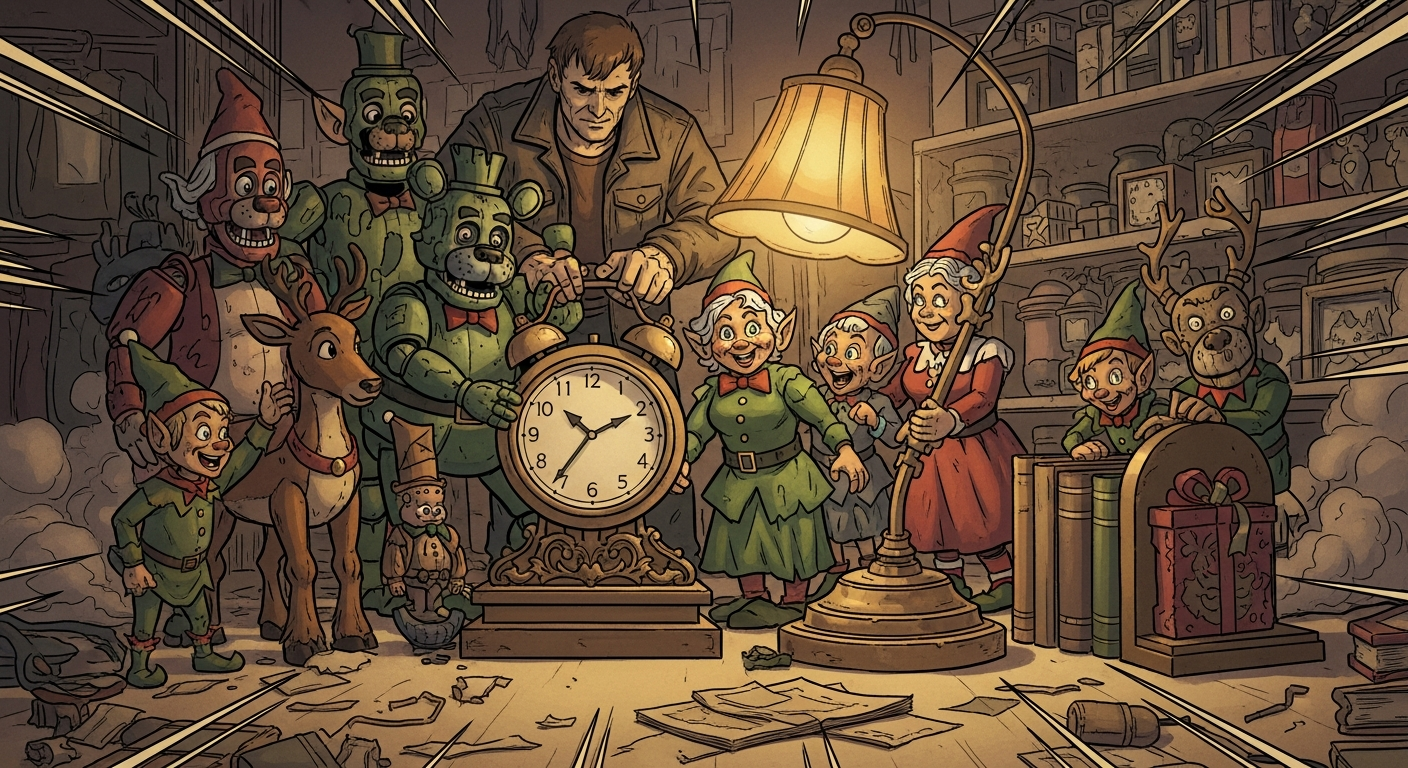
In an era where digital experiences increasingly dominate our attention, John Pihaly’s rescue and restoration of Dayton’s iconic Christmas animatronics represents something far more significant than mere holiday decoration. His project stands as a powerful example of cultural preservation that bridges generations and creates authentic community connections in ways that our screen-dominated world rarely achieves anymore.
When Macy’s shuttered its downtown Minneapolis location in 2016, these beloved animatronic displays could easily have been relegated to landfills or forgotten in storage – physical casualties of retail’s digital transformation. Instead, through Pihaly’s dedication, these mechanical marvels have found new life and purpose, drawing thousands of visitors annually to experience a piece of Minnesota’s shared cultural heritage.
Cultural Artifacts Deserve Preservation Beyond Museums
The Dayton’s Christmas displays represent more than nostalgic decorations – they embody shared cultural experiences that shaped Minnesota’s collective memory for generations. These animatronic figures served as the backdrop for countless family traditions, first dates, and childhood memories. Unlike static museum pieces locked behind glass, Pihaly’s restoration maintains these artifacts in their intended working state, preserving not just their appearance but their movement, sound, and interactive qualities.
This approach to preservation stands in stark contrast to how we typically safeguard cultural artifacts. Consider how the American Museum of Natural History controversially removed its iconic dioramas rather than contextualizing them, or how the Metropolitan Museum of Art keeps historical objects pristine but untouchable. Pihaly’s project demonstrates a third path – one where historical objects remain functional and accessible to the public in settings that honor their original purpose.
The restoration process itself deserves recognition. Collaborating with original Dayton’s artists, Pihaly undertook extensive mechanical repairs, welding, airbrushing, and technical rehabilitation. This comprehensive restoration approach preserves not just the physical objects but the craftsmanship and technical knowledge behind them – skills increasingly rare in our digital age.
Community Building Through Shared Experience
The 9,000+ annual visitors to Pihaly’s display reveal something crucial about human connection. In an age where social media dominates our interactions, this physical installation draws people away from screens and into shared physical spaces. The success of this display challenges the notion that modern audiences only value digital entertainment.
Similar community-building success stories can be found in other preservation efforts. The restoration of Detroit’s Michigan Central Station by Ford Motor Company has transformed a decaying landmark into a community hub that draws visitors while honoring the city’s history. Likewise, the grassroots preservation of Philadelphia’s Eastern State Penitentiary turned what could have been demolished into a historical site that educates visitors about prison reform while generating tourism revenue.
What makes Pihaly’s effort particularly remarkable is its accessibility. Unlike institutional preservation efforts that often charge admission or limit access, The Dayton’s Elves display remains free and open to all. This democratic approach to cultural preservation ensures these artifacts remain part of living community experience rather than becoming exclusive attractions.
Private Citizens Filling Preservation Gaps
Perhaps the most important aspect of this story is how private individuals like Pihaly, Bill Ewald, and Elijah Layne have stepped in where institutions failed. When corporate decisions threatened these cultural artifacts, individual collectors recognized their value and took action. This represents a significant model for preservation in an era of corporate consolidation and rapid retail transformation.
The corporate abandonment of cultural artifacts occurs regularly across America. When Toys ‘R’ Us closed, its iconic Geoffrey the Giraffe mascot was nearly lost before being preserved by a children’s hospital. When RadioShack shuttered stores nationwide, decades of retail history disappeared with little documentation. Corporate entities frequently discard cultural artifacts when they no longer serve immediate business interests.
Pihaly’s initiative demonstrates how passionate individuals can preserve what corporations discard. His hundreds of hours of setup work each year represents a labor of love that preserves community heritage without institutional support. This model of citizen-led preservation deserves recognition and support.
Alternative Viewpoints: The Case Against Nostalgia
Critics might argue that such preservation efforts merely indulge in nostalgia rather than moving culture forward. Some would suggest that resources and attention might better focus on creating new traditions and cultural experiences rather than preserving old ones. This perspective holds that attachment to past retail experiences reflects unhealthy consumerism rather than genuine cultural value.
Others might question whether these corporate-created displays deserve preservation at all, suggesting they represent commercial rather than authentic cultural expression. From this perspective, the Dayton’s displays were always marketing tools designed to drive retail traffic rather than genuine artistic or cultural expressions.
These critiques, while understandable, miss the transformative aspect of Pihaly’s project. By removing these figures from their commercial context and placing them in a community setting, he has effectively reclaimed them as cultural property. What once served corporate interests now serves community connection. This transformation demonstrates how communities can repurpose commercial artifacts into shared cultural resources.
The Future of Participatory Preservation
The success of The Dayton’s Elves project points toward a model where preservation becomes participatory rather than institutional. Rather than relegating cultural artifacts to museums or corporate archives, this approach keeps them in active community use, evolving with each generation while maintaining connections to shared history.
As retail continues to transform and physical stores close, more cultural artifacts will face uncertain futures. The model established by Pihaly offers a template for communities to preserve what matters to them rather than allowing corporate decisions alone to determine what survives.
The thousands who visit each year demonstrate that physical, shared experiences still hold tremendous value in our digital age. Perhaps most importantly, these restored figures create intergenerational connections, allowing parents and grandparents to share authentic experiences from their own childhoods with younger generations.
Pihaly’s project reminds us that preservation isn’t just about saving objects – it’s about maintaining the stories, traditions, and shared experiences that bind communities together across time. In rescuing these animatronic figures, he hasn’t just preserved decorations; he’s preserved a piece of Minnesota’s cultural fabric and demonstrated how individuals can ensure what matters to communities survives regardless of corporate decisions.