
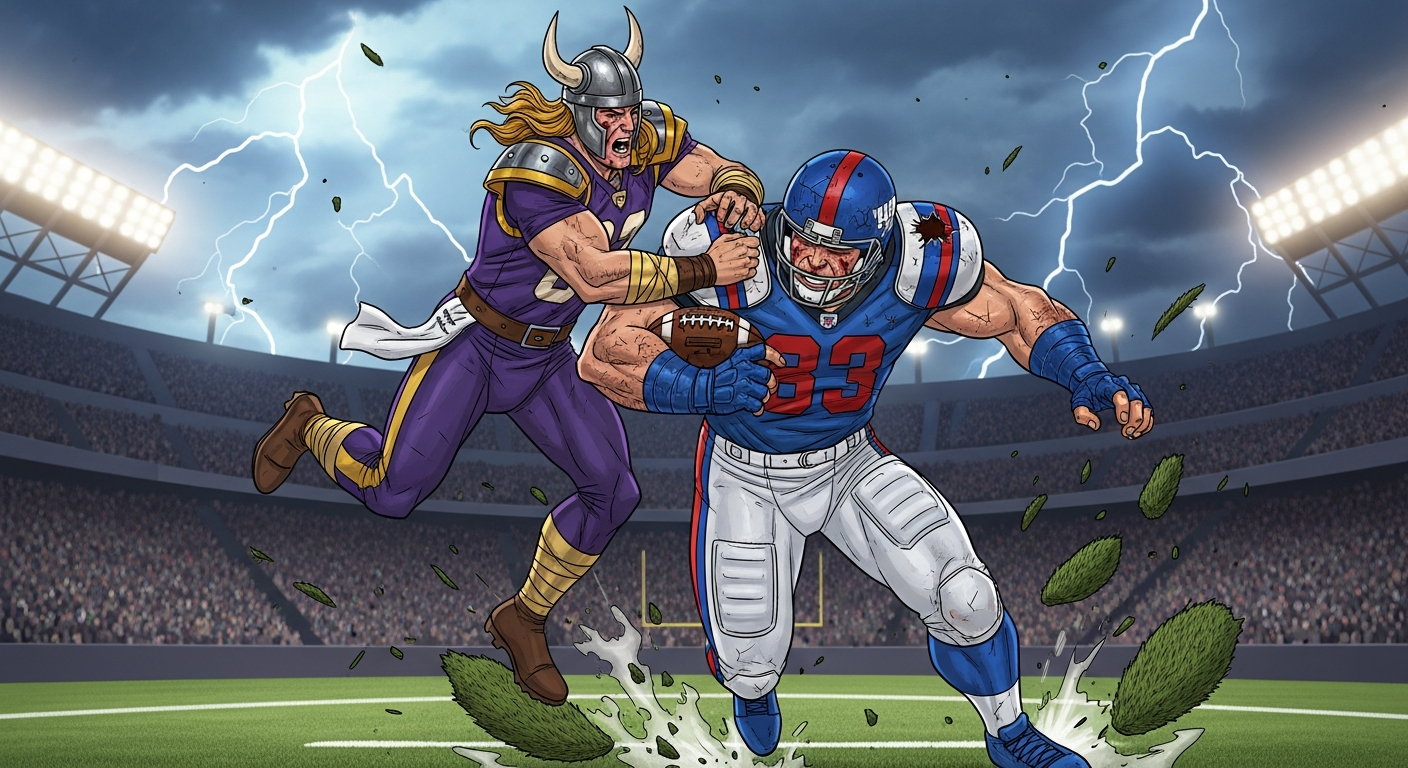
The Minnesota Vikings’ offensive line situation isn’t just another injury report—it’s a microcosm of the NFL’s systemic failure to protect its most valuable assets. With Christian Darrisaw now officially on injured reserve and the team cycling through an astonishing 16 different offensive line combinations this season, the Vikings exemplify how the league’s approach to player health continues to undermine team success and player careers.
The NFL’s Return-to-Play Problem Is Costing Teams Championships
Christian Darrisaw’s situation represents everything wrong with how NFL teams handle player recovery. Despite tearing both his ACL and MCL in Week 8 of last season, Darrisaw was back on the field in Week 3 this year—a recovery timeline that looks impressive on paper but proved disastrous in execution. The fact that he completed only five of ten games and was ‘routinely limited in practice’ should set off alarm bells throughout the league.
Coach O’Connell’s comments about ‘deferring to medical staff’ while ensuring Darrisaw is ‘in a good place’ ring hollow when examining the actual sequence of events. The Vikings rushed a cornerstone player back before he was fully recovered, watched him struggle through half-completed games, and now have lost him for the remainder of the season. This isn’t an isolated incident—it’s standard operating procedure in a league that consistently prioritizes short-term availability over long-term health.
Look at Tua Tagovailoa’s concussion history with the Dolphins or Christian McCaffrey’s recurring injuries with the Panthers before his resurgence with the 49ers. Both cases demonstrate how proper recovery protocols can make the difference between wasted potential and sustained excellence.
Offensive Line Instability Is a Competitive Death Sentence
The Vikings’ use of 16 different offensive line combinations (tied for most in the league) isn’t just a footnote—it’s the central explanation for their disappointing 6-8 record. Quarterback Sam Darnold has shown flashes of the potential that made him a high draft pick, but no quarterback can succeed behind a constantly reshuffled offensive line.
Elite teams build consistency in the trenches. The Kansas City Chiefs’ offensive line transformation after their Super Bowl LV loss to Tampa Bay demonstrates this principle perfectly. After Patrick Mahomes spent that game running for his life, the organization completely overhauled their protection unit, investing heavily in both draft capital and free agent acquisitions. The result? Two more Super Bowl victories.
The Philadelphia Eagles’ dominant 2022 season that led them to the Super Bowl was built on the league’s most stable and talented offensive line. Their subsequent struggles in 2023 coincided directly with injuries and disruption to that unit. The correlation between offensive line stability and team success isn’t just strong—it’s arguably the most reliable predictor in football.
The Long-Term Contract Paradox
Perhaps most troubling in Darrisaw’s situation is that the Vikings signed him to a contract extension through 2029, yet failed to protect their investment by ensuring his complete recovery. This represents a bizarre contradiction in NFL team management: organizations willingly commit tens of millions in guaranteed money to players while simultaneously making decisions that undermine those players’ ability to perform at the level that earned them those contracts.
The San Francisco 49ers provide the counter-example here. Their careful handling of Brock Purdy’s recovery from a serious elbow injury, giving him the full offseason to rehabilitate rather than rushing him back for OTAs, has paid dividends with his consistent performance. Similarly, their patient approach with running back Christian McCaffrey’s early-season calf issues this year demonstrates an understanding that short-term absences are preferable to season-ending setbacks.
The Broader Player Health Crisis
The Vikings’ offensive line troubles highlight a league-wide problem that extends far beyond Minnesota. NFL teams continue to treat player injuries as inconveniences to be managed rather than serious medical conditions requiring proper treatment. The addition of the 17th regular season game, combined with the expanded playoff format, has only increased the physical burden on players without corresponding improvements in recovery protocols.
The NFLPA has repeatedly raised concerns about artificial turf surfaces increasing injury risks, yet many teams (including the Vikings’ opponent this week, the Giants) continue to use these surfaces despite mounting evidence of their dangers. When Cowboys linebacker Micah Parsons publicly criticized Thursday Night Football for not giving players adequate recovery time, he was voicing a concern shared by players throughout the league.
Alternative Viewpoints: The Competitive Reality
Some will argue that injuries are simply part of football—an inevitable consequence of a violent sport that cannot be engineered away. Others will point to the competitive pressure teams face to get their best players on the field, suggesting that organizations have no choice but to push recovery timelines.
These perspectives have merit but miss the larger point: the current approach isn’t even working on its own terms. Teams rushing players back often end up without those players for longer stretches later, as the Vikings are now experiencing with Darrisaw. The competitive advantage of having a player return one or two weeks earlier disappears entirely when that player then misses months due to reinjury or compensatory issues.
The financial argument also falls apart under scrutiny. The Vikings will now pay Darrisaw’s substantial salary while getting zero production from him for the remainder of the season—hardly a sound business decision.
A Path Forward
The Vikings and other NFL teams must fundamentally rethink their approach to player health. This means creating recovery timelines based on medical science rather than game schedules, investing in offensive line depth to reduce the pressure to rush starters back, and building organizational cultures that prioritize long-term player availability over short-term fixes.
For players like Darrisaw, the stakes couldn’t be higher. At just 25 years old with a contract running through 2029, his career trajectory will be determined largely by how well his body holds up over the next several years. The Vikings’ handling of his recovery will directly impact not just their on-field success, but the career longevity of a player they’ve deemed central to their future.
The NFL has made progress on concussion protocols in recent years, but the broader approach to player health remains stuck in an outdated paradigm that treats human bodies like replaceable parts. Until teams like the Vikings recognize that player health is not just an ethical imperative but a competitive advantage, we’ll continue to see promising seasons derailed by preventable injury situations.