
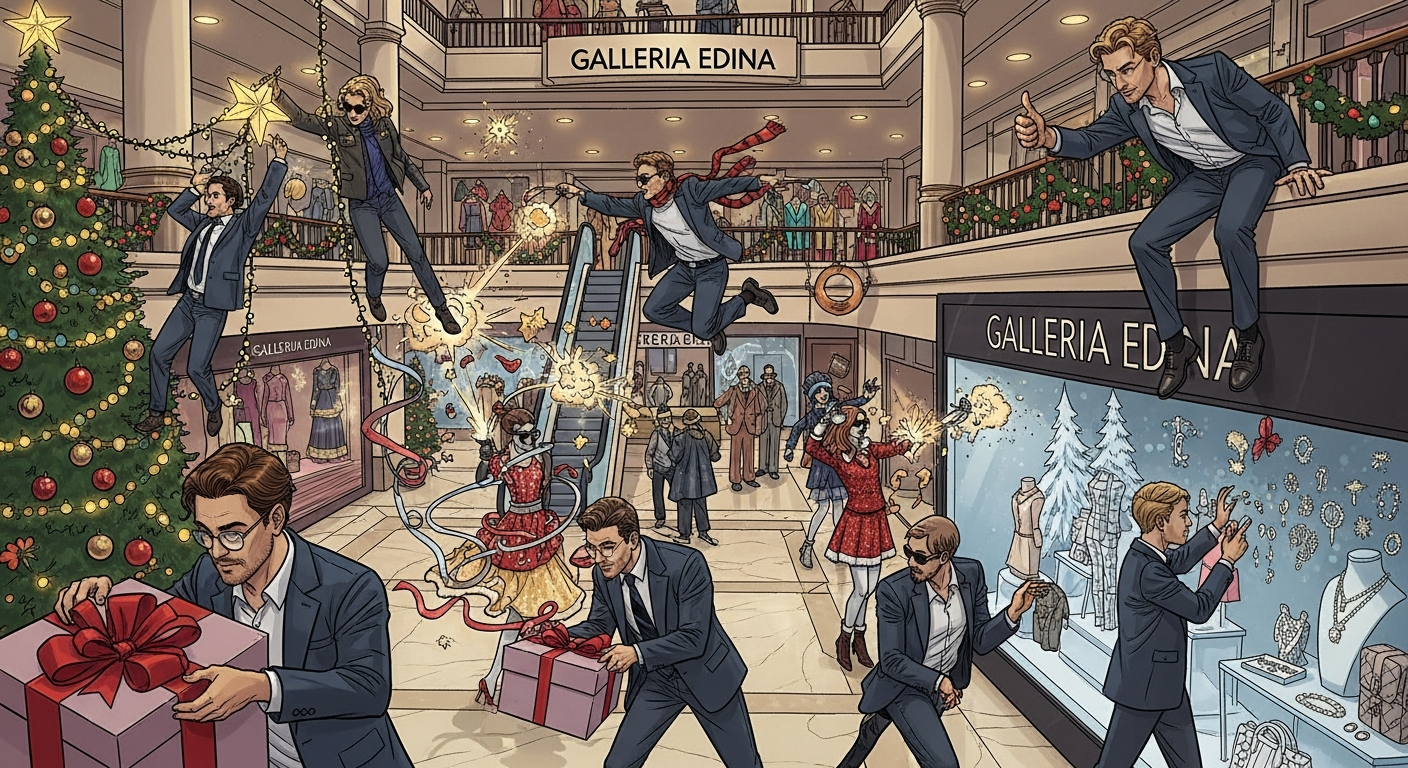
The holiday shopping season has transformed from a time of meaningful gift-giving into an overwhelming commercial enterprise that often leaves shoppers stressed and uninspired. The Galleria Edina’s recent holiday showcase, however, represents a refreshing departure from this trend, demonstrating how retail spaces can balance commerce with community impact and artistic expression. Their fashion forest of uniquely crafted trees made from tulle, denim, and knits doesn’t just offer visual appeal—it represents a blueprint for how shopping centers nationwide should be reimagining the holiday experience.
Retail With Purpose: The Make-A-Wish Partnership Model
The integration of Make-A-Wish Minnesota into the shopping experience demonstrates an evolved approach to retail that more businesses should adopt. By placing information about local children alongside their artistic displays, Galleria Edina has created a seamless connection between consumption and compassion. This isn’t merely a token charitable gesture—it’s a structural reimagining of how retail spaces can function as community hubs.
The QR code donation system represents a particularly effective use of technology, removing barriers to giving by making it immediate and contextual. Compare this to traditional mall charity drives that often feel disconnected from the shopping experience. The Ronald McDonald House collection boxes near mall food courts, for instance, typically generate minimal engagement because they lack personal stories and immediate connection to the cause.
What makes Galleria’s approach superior is its integration of storytelling into the charitable component. Shoppers aren’t just asked to donate—they’re invited to learn about specific children, their interests, and their wishes. This personalization transforms abstract charitable giving into concrete human connection, addressing the psychological distance that often prevents people from engaging with causes.
Local Female Entrepreneurship as a Retail Differentiator
The decision to partner with woman-owned Studios Moss for the creation of these artistic trees represents another significant departure from standard mall decorations. While most shopping centers purchase mass-produced decorations from commercial suppliers, Galleria’s choice to showcase local female artisans serves multiple purposes: it creates distinctive visual appeal, supports the local creative economy, and makes a subtle but important statement about gender equity in business.
The retail industry has long profited from female consumers while underrepresenting female business owners. According to the National Women’s Business Council, women-owned businesses receive less than 5% of all federal contract dollars and less than 5% of conventional small business loans, despite women owning approximately 42% of all businesses in the United States. By prominently featuring a woman-owned studio, Galleria isn’t just decorating—it’s making a statement about representation in retail partnerships.
Other malls could learn from this approach. Mall of America in Bloomington, for example, features impressive holiday displays but rarely highlights the creators behind them or emphasizes local female entrepreneurship in their promotional materials. The opportunity to transform decorative elements into platforms for underrepresented business owners represents an untapped potential for retail spaces nationwide.
Curated Diversity: The Antidote to Generic Gift-Giving
The article’s opening line about being