
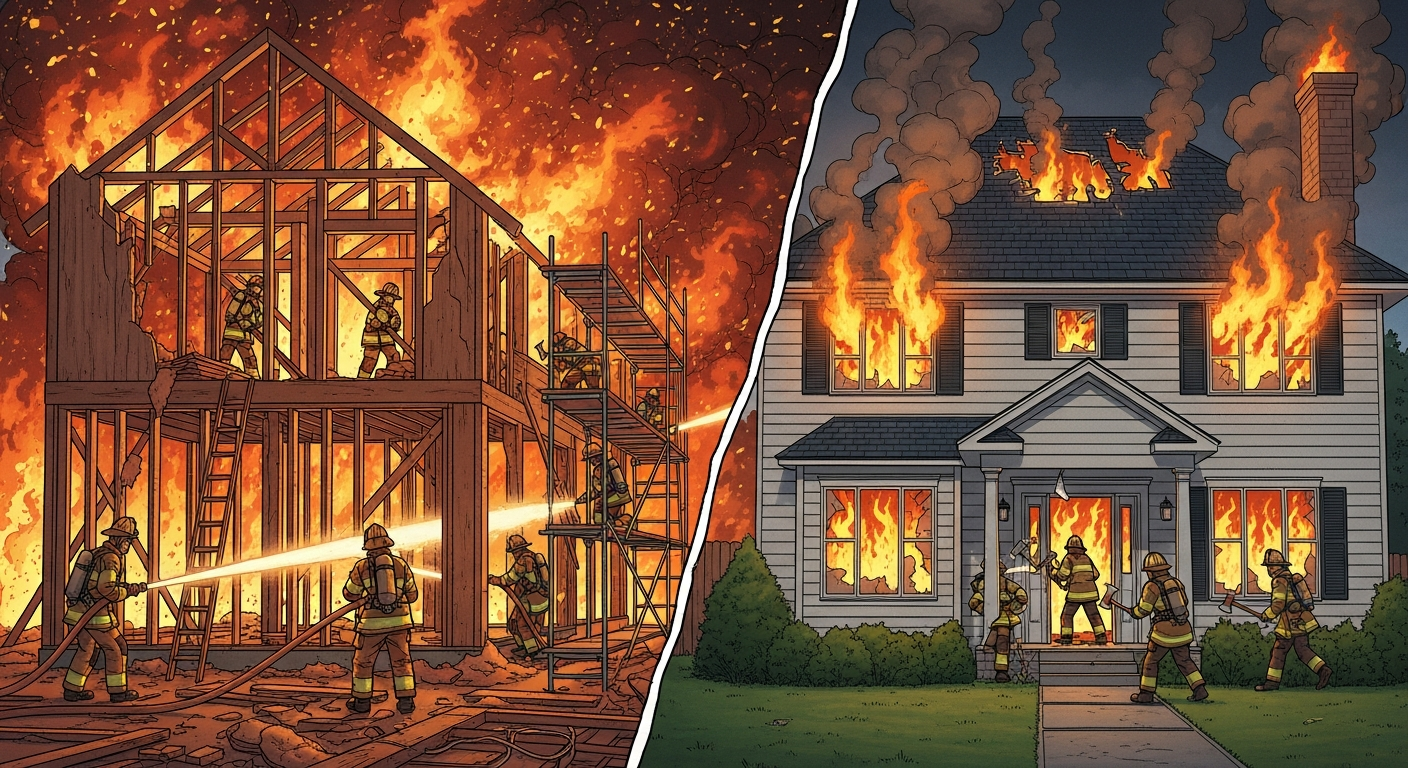
The recent fire at a house under construction in Minneapolis’ Linden Hills neighborhood isn’t just another local incident—it’s a glaring example of the persistent safety gaps in urban construction that continue to endanger communities nationwide. When firefighters responded to the blaze at 3927 Upton Ave South, they encountered not only heavy smoke and flames but also the particularly alarming sound of ‘popping’—likely from propane tanks or gasoline stored on-site. This forced crews to attack from outside and deploy multiple hose lines to protect adjacent homes. The three-hour (and counting) battle to contain this fire highlights a troubling reality: our construction safety regulations remain dangerously inadequate despite repeated incidents of this nature.
Construction Sites Are Regulatory Blind Spots
Construction sites represent a dangerous regulatory gray zone where safety standards often fall between the cracks of building codes and occupational safety regulations. While completed structures must meet strict fire safety standards—including sprinkler systems, fire-resistant materials, and proper exit routes—buildings under construction enjoy far fewer protections despite posing greater risks. The Minneapolis incident exemplifies this problem perfectly: the presence of propane tanks and gasoline at the Upton Avenue site created an explosive hazard that wouldn’t be permitted in an occupied building.
The National Fire Protection Association reports that between 2013-2017, construction site fires caused an annual average of $304 million in property damage and claimed multiple lives. In 2020, a massive five-alarm fire at a construction site in Charlotte, North Carolina destroyed an apartment complex under construction and damaged 25 nearby structures. Similarly, a 2017 Oakland construction site fire destroyed a seven-story apartment building and forced hundreds of nearby residents to evacuate. These aren’t isolated incidents—they represent a pattern of inadequate safety measures during the construction phase.
The False Economy of Lax Construction Site Regulations
The construction industry often resists additional safety regulations, citing increased costs and project delays. This argument represents a dangerously short-sighted economic calculation. The Minneapolis fire required multiple fire crews, endangered neighboring properties, and will likely result in complete rebuilding costs rather than a completed project. The economic impact extends beyond the construction site itself—neighboring property values can be affected, insurance premiums for the area may increase, and community resources are diverted to emergency response.
A 2019 study by the Construction Industry Institute found that investments in comprehensive construction site safety programs return $3-6 for every dollar spent through reduced insurance costs, prevented delays, and avoided property damage. When Boston implemented enhanced fire safety requirements for construction sites following a devastating 2018 fire, initial compliance costs averaged $25,000 per project—a fraction of the average $1.2 million in damages caused by construction site fires.
Technology Solutions Exist But Remain Underutilized
The technology to prevent or quickly contain construction site fires already exists but remains woefully underutilized. Temporary sprinkler systems designed specifically for buildings under construction have proven effective in limiting fire spread. Smart sensors that detect heat, smoke, or gas leaks can provide early warnings before catastrophic fires develop. These technologies are increasingly affordable but are rarely required by building codes for construction sites.
In the United Kingdom, after the tragic Grenfell Tower fire, regulations were updated to require temporary fire detection systems in buildings under construction taller than 18 meters. The result was a 31% reduction in serious construction site fires within two years. Seattle implemented similar requirements in 2018, mandating temporary sprinkler systems that activate as each floor is completed. The Minneapolis fire demonstrates how these proven technological solutions could have potentially prevented or minimized damage.
Community Impact Extends Beyond Property Damage
The impact of construction site fires extends far beyond property damage. The Minneapolis firefighters who responded to the Upton Avenue fire faced unnecessary risks due to the presence of flammable materials. Neighboring homes were threatened, requiring additional resources to protect them. The environmental impact of construction fires—including air pollution from toxic materials and water pollution from firefighting runoff—affects the entire community.
When a Washington D.C. construction site fire destroyed a $50 million apartment project in 2021, it also damaged 15 nearby homes, displaced 35 residents, and caused road closures that disrupted local businesses for weeks. The community costs of these incidents are rarely factored into regulatory cost-benefit analyses but represent real economic and social harm.
Alternative Viewpoints
Some industry representatives argue that additional construction site regulations would create undue financial burdens on developers and contractors. They suggest that market forces and insurance requirements already provide sufficient incentives for safety. This perspective has some merit—insurance companies do incentivize certain safety measures through premium reductions. However, these market-based approaches have clearly proven insufficient as evidenced by the continuing pattern of destructive construction site fires across the country.
Others contend that each construction project is unique, making standardized safety regulations impractical. While construction sites do vary considerably, this argument ignores the success of baseline safety standards in other high-risk industries. Aviation, for example, maintains rigorous safety protocols despite every flight having unique characteristics. The construction industry’s resistance to standardized safety measures appears more rooted in avoiding costs than in practical limitations.
The Path Forward Requires Regulatory Courage
The Minneapolis construction site fire should serve as a catalyst for meaningful regulatory reform. Local building codes must be updated to require temporary fire suppression systems, strict protocols for storing flammable materials, and enhanced site security measures during construction. The economic argument against such regulations collapses when the full costs of these fires—including emergency response resources, community disruption, and environmental damage—are properly calculated.
Cities like Boston and Seattle have demonstrated that enhanced construction site safety regulations are both practical and effective. Minneapolis officials now face a choice: continue with the status quo and wait for the next construction site fire, or implement the proven safety measures that could prevent it. The residents of Linden Hills and every community with ongoing construction deserve the latter.