
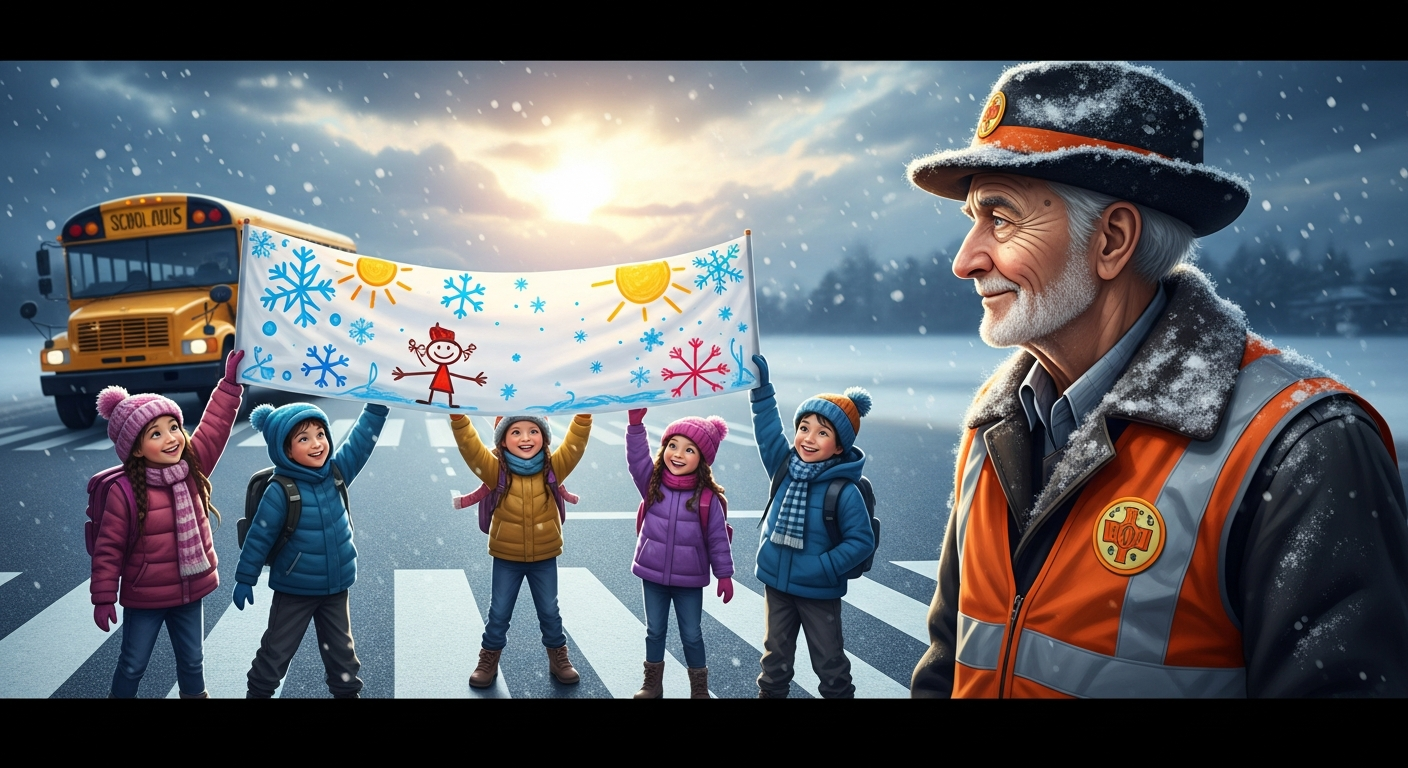
In a world often fixated on celebrity culture and viral moments, the story of Dave Bellis—a 76-year-old retired police officer and Vietnam veteran who quietly ensures the safety of middle school students in Prior Lake—provides a powerful reminder of what truly matters in our communities. The spontaneous outpouring of gratitude from hundreds of families for this ‘campus supervisor’ reveals something profound about the impact of consistent, humble service that our society desperately needs to recognize and celebrate more intentionally.
The Invisible Infrastructure of Community
Dave Bellis represents what sociologists call the ‘invisible infrastructure’ of functioning communities—individuals whose daily contributions create safety, connection, and stability without recognition or fanfare. Standing in all weather conditions to help 250 students cross between Hidden Oaks and Twin Oaks middle schools every hour, Bellis never considered his role particularly significant. ‘I don’t know that I’ve ever felt that what I do here is that important,’ he remarked when surprised with gifts from grateful families.
This humility is precisely what makes such service so valuable. Unlike the performative altruism that dominates social media—where good deeds are often filmed, edited, and shared for validation—Bellis represents authentic service motivated by genuine care rather than recognition. The fact that parent Katie Bengtson initially didn’t even know his name speaks volumes about how we often overlook the people who form the bedrock of community safety and connection.
Consider how this contrasts with our broader cultural tendencies. A 2022 survey by Common Sense Media found that 97% of teens use social media, with 35% saying they’re online ‘almost constantly.’ In this environment, quiet dedication like Bellis’s becomes increasingly rare and increasingly valuable. His daily presence represents a counterweight to transactional relationships and attention-seeking behavior that dominates modern interaction.
The Multiplier Effect of Recognition
What began as a simple coffee gift card idea transformed into a community movement involving more than 200 families and corporate donations from companies like Toro. This exponential growth demonstrates what could be called the ‘recognition multiplier effect’—when one person takes the initiative to acknowledge overlooked service, it creates permission for others to express similar gratitude they’ve been feeling but hadn’t acted upon.
The cascade of recognition for Bellis didn’t just provide him with practical gifts like cold-weather gear and a snowblower. It created a moment of community cohesion and identity. When students lined up to express what Bellis meant to them, saying things like ‘Whenever you see him your face just glows up,’ they weren’t just describing their relationship with one man—they were articulating values the community stands for: reliability, kindness, and intergenerational respect.
This phenomenon has been documented in research on community resilience. A 2019 study in the Journal of Community Psychology found that communities with higher levels of recognition for everyday contributions showed greater collective efficacy during crises. The public acknowledgment of Bellis’s service doesn’t just benefit him—it strengthens the social fabric of Prior Lake by reinforcing shared values and inspiring others to contribute similarly.
The Broader Impact of ‘Everyday Heroes’
The revelation that Bellis and his wife also dedicate time to supporting homeless veterans adds another dimension to this story. His service extends far beyond school crossings, suggesting that people who commit to service in one area often create ripple effects of positive impact throughout their communities.
This pattern appears in communities nationwide. In Flint, Michigan, retired autoworker Hank McArthur has spent 15 years volunteering as a crossing guard while also organizing neighborhood cleanups and food drives. In Portland, Oregon, 82-year-old Josephine Wilson has greeted elementary school children for over two decades while also knitting hundreds of hats and scarves for homeless shelters each winter. These individuals rarely receive recognition, yet they form the invisible connective tissue that holds communities together.
The snowblower gift to Bellis holds particular significance given that his old one had recently caught fire. This practical gift enables not just his continued service at the school but also his work with homeless veterans. It demonstrates how thoughtful community recognition can sustain broader service networks that operate largely out of public view.
Alternative Viewpoints: The Limits of Individual Recognition
Some might argue that while celebrating individuals like Bellis is heartwarming, it distracts from systemic issues. Why should a 76-year-old veteran need to stand outside in Minnesota winters directing traffic? Shouldn’t schools have adequate infrastructure and staffing to ensure student safety without relying on elderly volunteers? These are legitimate questions that deserve consideration.
Additionally, there’s the concern that celebrating individual ‘heroes’ can sometimes substitute for more substantial community investment. When we lionize people who make do with limited resources, we might inadvertently normalize the underinvestment that makes their extraordinary efforts necessary.
These perspectives have merit but miss something crucial: recognition and systemic improvement aren’t mutually exclusive. Communities can simultaneously celebrate individuals like Bellis while advocating for better resources and infrastructure. In fact, stories like his often become catalysts for broader conversations about community needs and priorities.
From Recognition to Culture Change
The Prior Lake community’s response to Dave Bellis offers a template for how we might begin rebuilding appreciation for consistent, humble service in an age of distraction and self-promotion. Their spontaneous mobilization demonstrates how dormant gratitude often exists within communities, waiting only for someone to take the first step toward expression.
The fact that companies like Toro joined in suggests potential for broader partnerships between businesses and communities to recognize essential but overlooked contributors. Rather than one-off donations, imagine systematic programs where businesses regularly identify and support the Dave Bellises in their communities—the people whose daily contributions create the conditions for everyone else to thrive.
Schools could integrate recognition of staff like Bellis into their curriculum, helping students understand that communities function because of countless small acts of dedication rather than just the celebrated achievements that make headlines. This would teach a more accurate and complete understanding of how society actually works.
Conclusion: The Revolution of Recognition
Dave Bellis didn’t seek recognition. He simply showed up, day after day, in all weather conditions, to ensure children safely crossed between school buildings. His surprise at the community’s gratitude reveals the gap between the value he provides and his own perception of his contribution—a gap that exists for countless others serving their communities without fanfare.
Closing this gap—helping people understand how much their consistent service matters—represents a quiet revolution against disposable culture and performative relationships. When communities intentionally recognize the Dave Bellises in their midst, they don’t just make one person feel appreciated; they articulate and reinforce the values that make community possible at all.
The next time you pass someone performing a seemingly mundane service that makes your day smoother or safer, consider: might they be your community’s Dave Bellis? And if so, what would it take to ensure they know exactly how much they matter?