
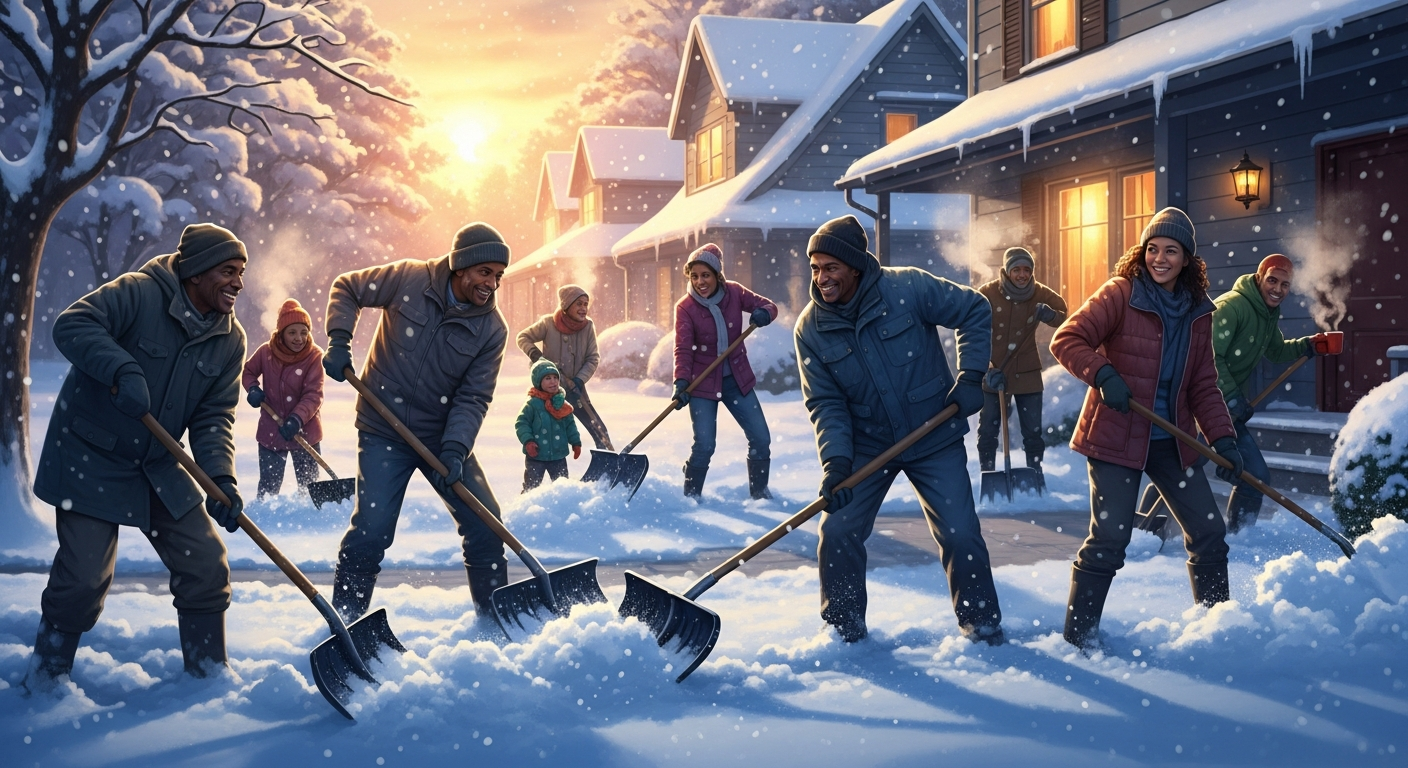
When Aman Imani picked up his shovel to help neighbors in St. Paul’s Como neighborhood, he wasn’t just clearing snow – he was demonstrating a critical form of community infrastructure that American society increasingly lacks. The story of the Saintly City Snow Angels reveals something profound about our social fabric: the most effective safety nets aren’t always government programs but neighbor-to-neighbor support systems that operate on goodwill and shared responsibility.
These volunteer shoveling networks represent more than just practical assistance – they embody a counterforce to the increasing isolation and individualism that characterizes modern American life. The data supports this concern: a 2021 Harvard study found that 36% of Americans report feeling ‘serious loneliness,’ with particularly high rates among young adults. Against this backdrop, informal community care networks like the Snow Angels aren’t just nice – they’re necessary.
The Hidden Crisis of Community Infrastructure
What makes the Snow Angels story particularly compelling is how it addresses an invisible crisis. While we readily acknowledge crumbling bridges and outdated power grids, we rarely discuss the deterioration of community infrastructure – the networks of mutual aid that historically helped communities weather both literal and metaphorical storms.
The snow shoveling program addresses multiple overlapping challenges. First, it provides practical assistance to vulnerable populations who might otherwise face mobility restrictions or city fines. Second, it creates meaningful connections between neighbors who might otherwise never interact. Third, it establishes a framework for other forms of mutual aid that might be needed throughout the year.
Consider the alternative: elderly residents unable to clear their walkways become effectively homebound during winter months, increasing isolation and reducing access to necessities like groceries and medication. The city’s threat of fines for uncleared sidewalks creates additional financial stress for those already struggling. Without volunteer networks, these residents face a cascade of preventable hardships that extend well beyond inconvenience.
The Economic Value of Volunteer Networks
The economic impact of volunteer snow removal networks deserves serious attention. When Senior Community Services in Minnetonka provides affordable or free snow removal to seniors, they’re not just performing a nice service – they’re preventing falls that cost the U.S. healthcare system approximately $50 billion annually, according to CDC data. The average hospitalization for a fall costs about $30,000, meaning each prevented fall represents significant healthcare savings.
Moreover, these volunteer networks fill gaps that commercial services cannot. Many snow removal companies have minimum charges that make clearing a simple walkway prohibitively expensive for fixed-income seniors. The sliding scale model used by Senior Community Services ensures accessibility regardless of financial means – a model that purely market-based solutions cannot replicate.
The Minneapolis-St. Paul metro area, with its significant snowfall and aging population, provides an ideal case study for how volunteer networks can supplement both government services and market offerings. The 400 requests received by Senior Community Services this winter alone demonstrate the substantial unmet need.
Building Resilience Through Community Action
Climate change projections suggest increasing weather volatility, including more frequent intense winter storms in northern regions like Minnesota. This climate reality makes community resilience not just desirable but essential. The volunteer snow removal networks demonstrate how communities can organize effectively to respond to environmental challenges.
Seattle’s Snowshoe Brigade, formed during a 2019 snowstorm, provides an instructive parallel. What began as an ad-hoc response to a weather emergency evolved into a permanent volunteer network that now addresses multiple community needs beyond snow removal. Similarly, the Saintly City Snow Angels have the potential to evolve into multi-purpose community aid networks that respond to various challenges throughout the year.
The philosophy expressed by Imani –