
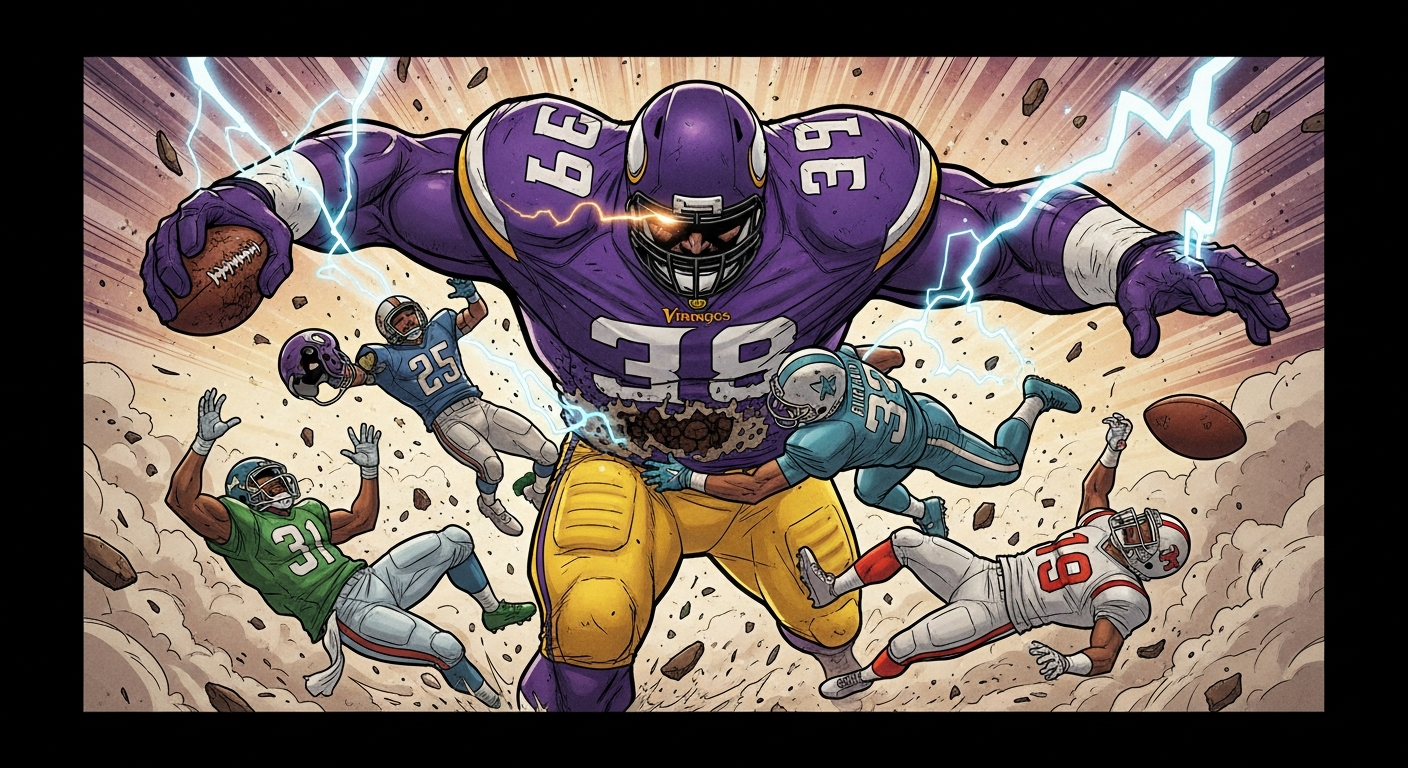
When a team forces six turnovers and records five sacks in a single NFL game, it isn’t just a good defensive performance—it’s a statement about fundamental identity. The Minnesota Vikings’ 23-10 dismantling of the Detroit Lions on Christmas Day wasn’t merely an upset; it exposed the critical vulnerability that ultimately doomed Detroit’s once-promising season: an inability to protect the football when facing aggressive defenses in high-stakes situations.
The Vikings, playing with their third-string quarterback and missing multiple offensive starters, had no business dominating a Lions team that many considered playoff-caliber just weeks ago. Yet Harrison Smith’s masterclass defensive performance—featuring an interception, a sack, three pass deflections, and two tackles for loss—demonstrated how a well-coordinated defensive scheme can completely neutralize even the most talented offenses when pressure creates turnovers.
Turnover Margin: The NFL’s Most Undervalued Championship Metric
The Vikings’ plus-six turnover margin in this game wasn’t just impressive—it was historically significant. According to Sportradar, this margin ties for the best in any NFL game in the past nine years. This statistic reveals a truth that often gets overshadowed by flashy offensive highlights: turnover margin remains the single most reliable predictor of NFL success.
Since 2015, teams with a +3 or better turnover margin in a game win approximately 89% of the time. The Lions’ six-turnover meltdown against Minnesota represents a catastrophic failure of ball security that virtually guaranteed their elimination from playoff contention. Jared Goff, typically one of the league’s most careful quarterbacks with the football, surrendered five turnovers himself (two interceptions and three fumbles).
The Baltimore Ravens’ 2023 championship run provides a compelling contrast. Despite lacking elite receivers, the Ravens finished the regular season with a +12 turnover differential, helping them secure the AFC’s top seed. Meanwhile, the Cincinnati Bengals’ injury-plagued 2023 campaign was doomed largely by their -8 turnover margin, showing how even talented rosters can’t overcome consistent ball security issues.
The Aggressive Defense Renaissance
Minnesota’s defensive performance against Detroit signals a broader trend in the NFL—the resurgence of aggressive, turnover-focused defensive schemes. Under defensive coordinator Brian Flores, the Vikings have embraced a blitz-heavy approach that prioritizes disruption over containment. Against Detroit, this philosophy paid dividends as Goff faced constant pressure and made uncharacteristic mistakes.
This approach stands in stark contrast to the bend-don’t-break defensive philosophies that dominated the NFL during the offensive explosion of the late 2010s. Teams like the New York Jets under Robert Saleh and the Pittsburgh Steelers under Mike Tomlin have similarly found success by returning to pressure-based defensive systems that prioritize forcing turnovers over simply limiting yards.
The Cleveland Browns’ transformation under defensive coordinator Jim Schwartz provides a compelling parallel. Despite offensive struggles, the Browns remained in playoff contention largely because their defense led the NFL in takeaways through much of the 2023 season. Like the Vikings against Detroit, the Browns demonstrated how an aggressive defense can compensate for offensive limitations.
The Psychological Impact of Turnovers
Beyond the statistical impact, the Lions’ turnover implosion highlights the psychological dimension of ball security. As turnovers mounted, Detroit’s offensive approach became increasingly conservative and hesitant—precisely the opposite of what’s needed when trying to mount a comeback. This psychological spiral is particularly devastating for teams with championship aspirations.
The Buffalo Bills’ playoff struggles under Josh Allen provide a telling comparison. Despite elite offensive talent, Allen’s turnover-prone performances in critical playoff games have repeatedly derailed Buffalo’s Super Bowl hopes. Like the Lions against Minnesota, the Bills have demonstrated how turnover problems can become self-reinforcing under pressure.
Campbell’s post-game assessment—