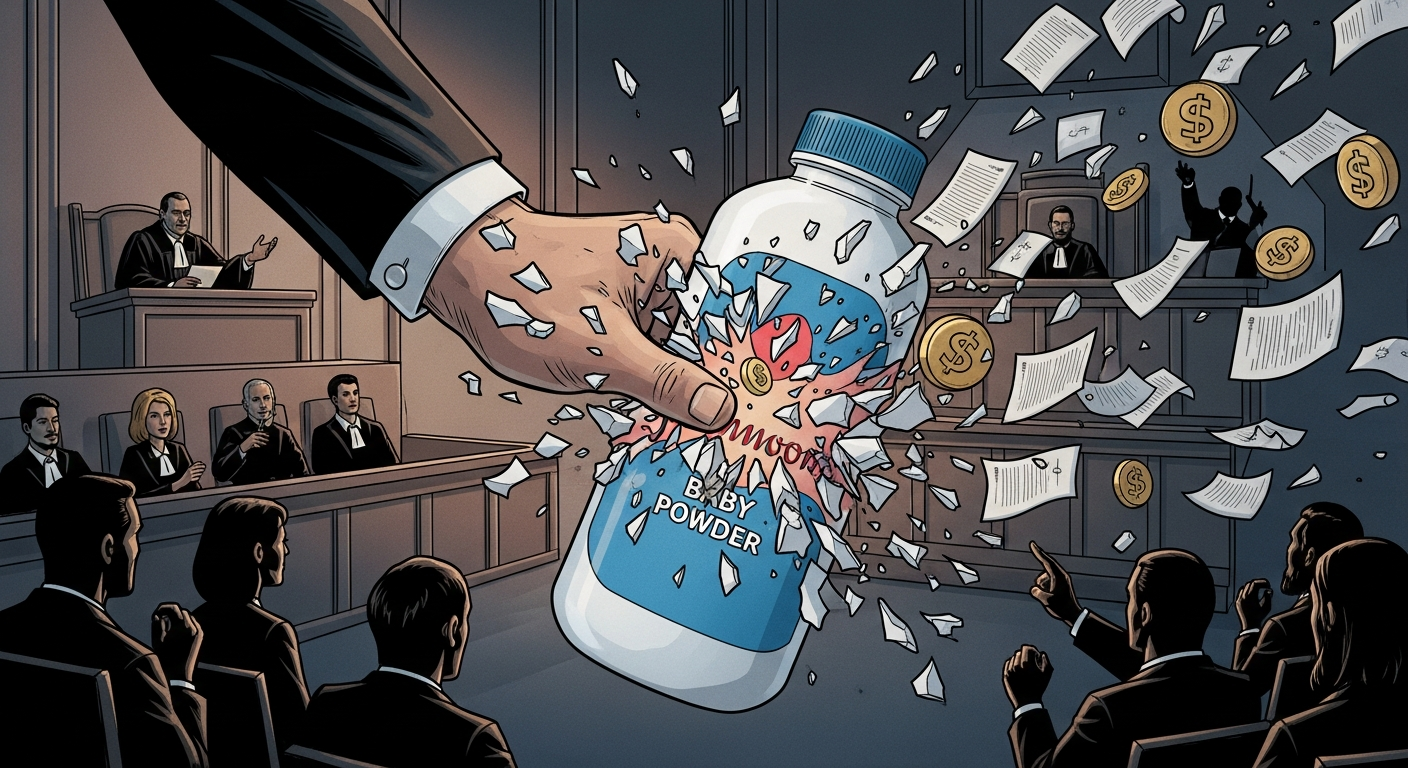
The $65.5 million verdict against Johnson & Johnson represents more than just compensation for Anna Jean Houghton Carley—it symbolizes a damning indictment of corporate America’s persistent prioritization of profits over public safety. This latest ruling joins a growing mountain of evidence suggesting that one of America’s most trusted household brands knowingly exposed consumers to dangerous products for decades while actively concealing risks. The Minnesota jury’s decision should force us to confront an uncomfortable truth: our regulatory systems are fundamentally broken when companies can market potentially carcinogenic products directly to parents for use on their children.
A Pattern of Deception, Not Isolated Incidents
Johnson & Johnson’s response to this verdict follows a predictable playbook: deny, dismiss, and delay. Their immediate promise to appeal and claims of ‘junk science’ represent the latest chapter in what appears to be a calculated strategy to exhaust plaintiffs through legal attrition rather than accept accountability. This isn’t an isolated incident—it’s part of a disturbing pattern. The $40 million awarded to two women earlier this month and the staggering $966 million verdict in October paint a picture of systematic corporate malfeasance.
Internal documents revealed during previous litigation showed J&J executives knew about potential asbestos contamination in their talc products as early as the 1970s. Rather than reformulating their product or warning consumers, the company allegedly developed testing methods specifically designed to miss asbestos contamination. This level of calculated deception goes beyond negligence—it suggests a corporate culture that deliberately valued market share over human lives.
The Regulatory Failure That Enabled Corporate Harm
The FDA’s historical hands-off approach to cosmetic regulation created the perfect environment for this crisis to unfold. Unlike pharmaceuticals, cosmetic products require no pre-market safety approval. The FDA only intervened after independent testing found asbestos in J&J products in 2019—decades after internal company concerns emerged. This regulatory gap allowed Johnson & Johnson to self-police, creating a dangerous conflict of interest.
The European Union, by contrast, has banned over 1,300 chemicals from cosmetics while the U.S. has banned just 11. This stark difference highlights how American consumers remain uniquely vulnerable to corporate exploitation. The talc scandal demonstrates that industry self-regulation is a dangerous fantasy that puts millions at risk. Companies facing billions in potential liability cannot be trusted to objectively evaluate their own products’ safety.
The Human Cost Behind Corporate Calculations
Lost in J&J’s clinical dismissals of ‘junk science’ is the devastating human toll of mesothelioma. This aggressive cancer typically kills patients within 12-21 months of diagnosis. Anna Jean Houghton Carley is just 37 years old with three children. Her exposure didn’t come from industrial work or home renovation—it came from a product marketed specifically for babies and children, applied by parents who trusted a brand that positioned itself as uniquely caring and gentle.
The tragedy extends beyond individual plaintiffs. Mesothelioma cases linked to cosmetic talc disproportionately affect women, who were targeted by marketing campaigns encouraging liberal daily use of these products for feminine hygiene. Internal memos revealed in other talc cases showed J&J specifically targeted women of color after white customers began abandoning talc. This targeting of vulnerable populations adds another disturbing dimension to the company’s conduct.
The Corporate Playbook: Deny, Delay, Distract
Johnson & Johnson’s response to mounting evidence follows a well-established corporate defense strategy pioneered by the tobacco industry. First, deny any problem exists. Then, when evidence mounts, attack the science as inconclusive. Next, delay through endless litigation while continuing to profit. Finally, when the evidence becomes overwhelming, restructure liabilities through bankruptcy maneuvers and settlements that represent pennies on the dollar compared to actual harm caused.
J&J attempted to shield itself through a controversial ‘Texas Two-Step’ bankruptcy maneuver, creating a subsidiary to hold talc liabilities before declaring that entity bankrupt. This cynical legal strategy was ultimately rejected by courts, but it reveals the lengths to which corporations will go to avoid accountability. The company only discontinued talc-based powder in North America in 2020, and globally in 2023—decisions made not out of consumer protection but financial calculation as litigation costs mounted.
Alternative Viewpoints: The Defense Has Merit?
Defenders of Johnson & Johnson argue that scientific consensus on talc remains mixed. Some epidemiological studies have indeed found weak or inconsistent links between talc use and cancer. The company has won some jury trials, suggesting that evidence quality varies between cases. Furthermore, trace amounts of asbestos may be unavoidable in naturally occurring minerals like talc, making