
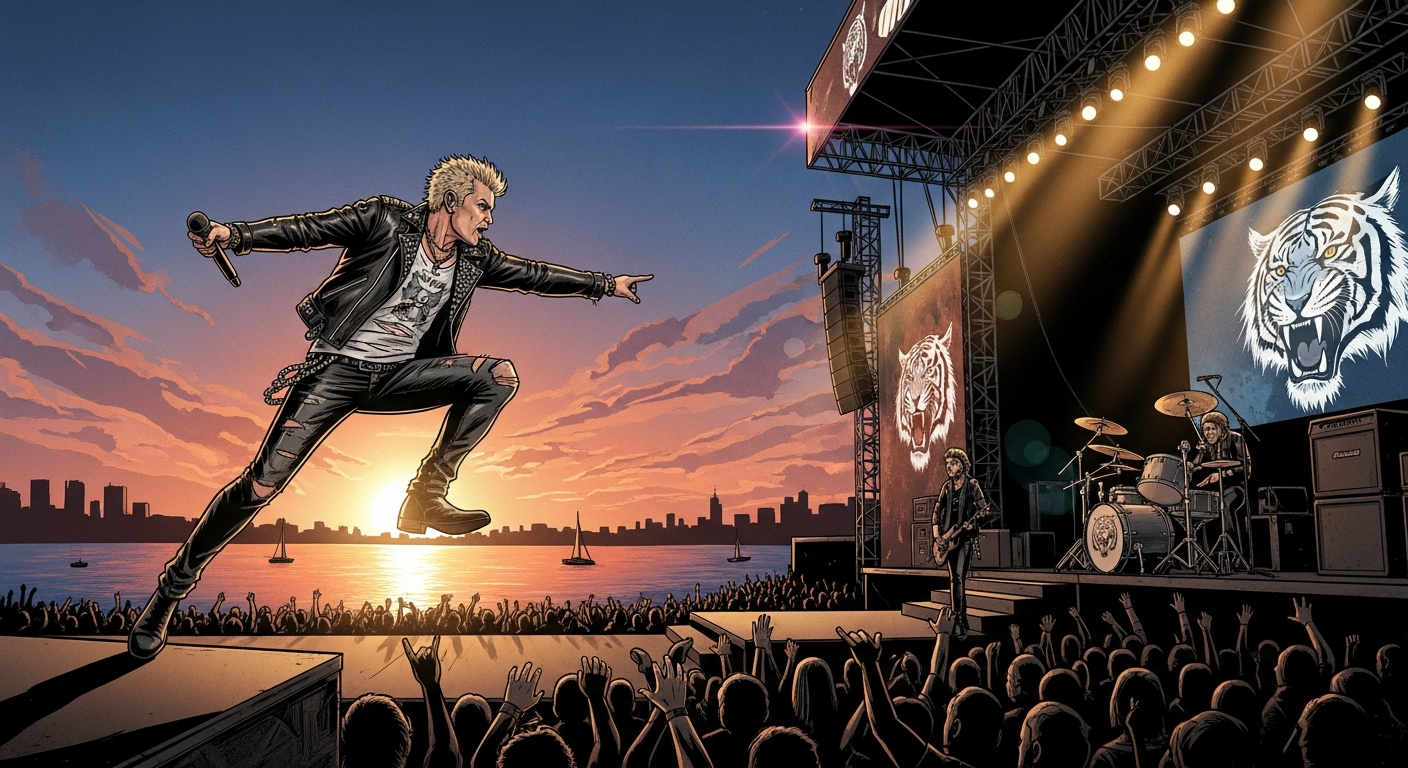
The announcement of Billy Idol headlining the 2026 Lakefront Music Fest represents far more than just another nostalgic act cashing in on past glories. It signals a profound cultural shift in how we value musical longevity in an era obsessed with virality and overnight success. At 70 years old (in 2026), Idol’s continued relevance challenges our youth-obsessed music industry and demonstrates that authentic artistry ultimately outlasts manufactured trends.
Rock’s Elder Statesmen Continue to Outperform Their Pop Successors
Billy Idol’s enduring appeal contradicts the conventional wisdom that rock is dead or relegated to nostalgia acts. While streaming numbers for contemporary pop stars may generate impressive headlines, the touring revenue tells a different story. Rock veterans consistently outperform younger acts in ticket sales and venue sizes. In 2023 alone, legacy acts like Bruce Springsteen, Metallica, and Guns N’ Roses all ranked in the top 10 highest-grossing tours globally, with Springsteen generating over $380 million. Even accounting for higher ticket prices, these figures demonstrate sustained demand for authentic rock performances.
Idol’s collaboration with Avril Lavigne on his 2025 album “Lean Into It” further demonstrates his cross-generational appeal. Rather than simply rehashing his 80s formula, Idol continues to evolve artistically while maintaining his distinctive voice and attitude. The aptly titled upcoming documentary “Billy Idol Should Be Dead” acknowledges his notorious past while celebrating his survival and continued relevance – a narrative arc that resonates with audiences who appreciate authenticity over perfection.
Community-Focused Music Festivals Outshine Corporate Mega-Events
The Lakefront Music Fest, organized by the Prior Lake Rotary Club, represents an increasingly valuable alternative to corporate festival behemoths. While Coachella, Lollapalooza, and other major festivals have become homogenized experiences with interchangeable lineups, community-driven events like Lakefront maintain distinct identities while directly benefiting local organizations.
The festival’s commitment to channeling proceeds to schools, athletic programs, and over 30 nonprofit organizations creates a virtuous cycle that strengthens community bonds. This model stands in stark contrast to corporate festivals where profits flow primarily to entertainment conglomerates and shareholders. When fans purchase tickets to see Billy Idol at Lakefront, they’re simultaneously supporting local institutions – a value proposition increasingly attractive to consumers who want their entertainment dollars to make a difference.
The Punk-to-Mainstream Evolution Remains a Viable Career Path
Idol’s career trajectory – from punk frontman with Generation X to mainstream solo success – continues to serve as a blueprint for artists seeking longevity without sacrificing credibility. His partnership with guitarist Steve Stevens created a distinctive sound that balanced commercial appeal with edge, allowing him to maintain artistic integrity while achieving massive commercial success.
This path has been successfully followed by numerous artists across decades. Green Day evolved from Berkeley punk clubs to Broadway musicals and stadium tours. Paramore transformed from Warped Tour staples to Grammy-winning pop crossover success. Even newer acts like YUNGBLUD have studied this playbook, starting with rebellious personae before broadening their appeal without abandoning their core identity.
The key lesson from Idol’s career is that authenticity must remain constant even as musical styles evolve. His sneering attitude and visual identity stayed consistent even as his sound incorporated more mainstream elements. This consistency created trust with his audience, allowing them to follow his evolution without feeling betrayed.
Alternative Viewpoints: Is Nostalgia Blocking New Voices?
Critics might argue that festivals booking 80s icons like Idol perpetuate a backward-looking music culture that prevents new artists from gaining visibility and building sustainable careers. This perspective has merit – festival slots are finite, and every legacy act booked potentially displaces an emerging artist.
The economics of festival booking also favor established acts with proven ticket-selling power. Festival organizers face legitimate financial pressures that make booking untested talent risky, especially for community events where proceeds support important local causes. The Prior Lake Rotary Club has responsibilities to its beneficiaries that may limit artistic risk-taking.
However, this critique oversimplifies the relationship between legacy and emerging acts. Festivals that successfully pair established headliners with carefully selected newer artists create intergenerational musical conversations that benefit everyone. Younger attendees discover classic artists they might otherwise ignore, while older fans are exposed to fresh sounds. The ideal approach isn’t eliminating nostalgia acts but creating thoughtfully balanced lineups where past and present complement each other.
The Value of Musical Resilience in Challenging Times
Perhaps the most powerful aspect of Billy Idol’s continued relevance is what it symbolizes about resilience. His career has weathered seismic changes in the music industry – from vinyl to streaming, MTV to TikTok – while surviving his personal battles with addiction and career setbacks. In uncertain times, this resilience resonates with audiences seeking stability and authenticity.
The documentary title “Billy Idol Should Be Dead” acknowledges this journey with self-awareness rather than self-pity. It presents survival not as entitlement but as something earned through adaptation and perseverance. This narrative connects powerfully with audiences navigating their own challenges in a rapidly changing world.
The Lakefront Music Fest’s commitment to community similarly represents resilience – the belief that local institutions and relationships matter even in an increasingly digital, fragmented culture. By supporting schools, athletics, and arts programs, the festival affirms that physical communities remain vital even as virtual ones proliferate.
Conclusion: Authenticity Endures Beyond Trends
Billy Idol’s headlining slot at Lakefront Music Fest ultimately represents the enduring power of authentic artistic voices. While the music industry continues chasing algorithmic trends and manufactured virality, artists who maintain distinctive identities while evolving thoughtfully continue finding audiences decades into their careers.
This lesson extends beyond music to all creative endeavors and even personal development – authenticity combined with adaptability creates lasting relevance. The sneering punk who crafted “Rebel Yell” four decades ago remains compelling because his evolution has been organic rather than calculated, maintaining core identity while absorbing new influences.
As we navigate an increasingly artificial culture where deepfakes, AI-generated content, and algorithmic curation threaten to overwhelm human creativity, Billy Idol’s continued cultural presence reminds us that the human voice – distinctive, flawed, and genuine – still cuts through the noise. That’s something worth celebrating, whether through dancing with ourselves or with thousands of others at a community music festival in Minnesota.