
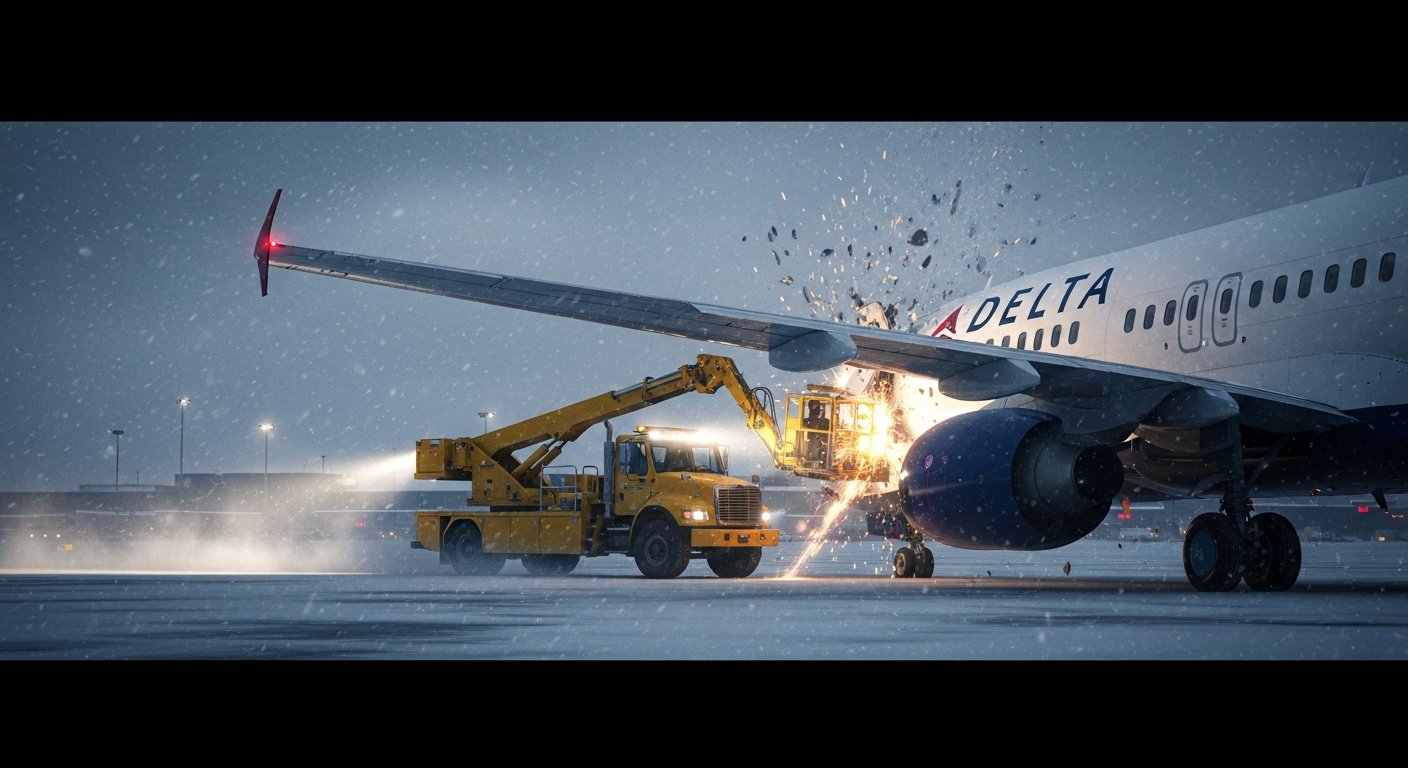
The recent incident at MSP International Airport involving a deicing truck striking a Delta aircraft bound for Honolulu highlights a persistent but often overlooked safety concern in aviation: ground operation accidents. While flight safety receives extensive attention and regulation, the equally critical ground operations continue to experience preventable incidents that disrupt travel, damage equipment, and potentially endanger lives. This is not merely an isolated incident but rather a symptom of systemic issues in airport ground safety protocols that deserve immediate industry-wide scrutiny.
Ground Operations Safety Deserves Equal Priority to Flight Safety
The aviation industry has achieved remarkable flight safety records through rigorous protocols, extensive training, and continuous improvement. Aircraft accidents during flight have become exceedingly rare, with a global accident rate of just 1.20 accidents per million flights according to IATA’s 2022 safety report. Yet ground incidents like the MSP deicing collision occur with troubling frequency. Data from the Flight Safety Foundation indicates that ground damage incidents cost the aviation industry approximately $10 billion annually—a staggering figure that reveals the scope of the problem.
At major hubs like Chicago O’Hare, Atlanta Hartsfield-Jackson, and indeed Minneapolis-Saint Paul, ground vehicles navigate complex pathways in challenging conditions, often under significant time pressure. The Delta incident occurred during winter weather operations—precisely when deicing is most critical but also when ground conditions are most hazardous. This creates a dangerous contradiction: procedures meant to ensure safety (deicing) are themselves conducted under circumstances that increase risk.
The industry’s approach to these incidents often follows a predictable pattern: a brief acknowledgment (as seen in Delta’s statement), minimal disclosure about damage assessment, and quick rescheduling. This response prioritizes operational continuity over transparency about safety concerns, leaving the public uninformed about potential systemic issues.
Economic Pressures Contribute to Ground Safety Compromises
Airlines operate on razor-thin profit margins, with intense pressure to minimize delays and maintain tight schedules. This economic reality creates an environment where ground crews face implicit pressure to work quickly, sometimes at the expense of following every safety protocol. A five-hour delay, as experienced by the Honolulu-bound passengers in this incident, represents significant cost to the airline and inconvenience to travelers.
The Aviation Safety Network database shows that ground incidents spike during periods of increased scheduling pressure, such as holiday travel seasons and during adverse weather conditions when operations are already strained. The MSP incident fits this pattern perfectly—occurring during winter weather operations when deicing creates additional scheduling challenges.
Southwest Airlines’ ground operations overhaul following a series of similar incidents in 2019 demonstrates the economic implications of addressing these issues. Their investment of $150 million in ground safety improvements initially affected their bottom line but ultimately reduced damage incidents by 23% over the following two years—proving that safety investments deliver economic returns.
Training and Technology Solutions Exist But Remain Underutilized
The aviation industry has access to technologies that could significantly reduce ground incidents. Proximity sensors, automated deicing systems, and enhanced ground vehicle tracking systems exist but have seen inconsistent adoption across airports and airlines. The technology to prevent incidents like the one at MSP exists—what’s lacking is the industry-wide commitment to implementation.
Ground crew training standards also vary widely across airports and service providers. While pilot certification is strictly regulated and standardized, ground operations personnel often receive variable training with less rigorous certification requirements. This inconsistency creates vulnerability in the safety chain. The Federal Aviation Administration’s voluntary Ground Safety Initiative program has shown promising results where implemented, reducing ground incidents by up to 30% at participating airports, but remains optional rather than mandatory.
Successful case studies exist: Amsterdam’s Schiphol Airport implemented comprehensive ground safety technology and training standards in 2018, resulting in a 40% reduction in vehicle-aircraft incidents over three years. This demonstrates that solutions are available and effective when properly implemented.
Alternative Viewpoints: Balancing Safety with Operational Realities
Industry representatives often point to the relatively low rate of serious injuries from ground incidents as evidence that current protocols are adequate. They argue that the economic cost of implementing additional safety measures across thousands of ground vehicles and training thousands of personnel would be prohibitive, potentially raising costs for travelers.
This perspective has merit in acknowledging real economic constraints, but it fails to account for the cumulative impact of