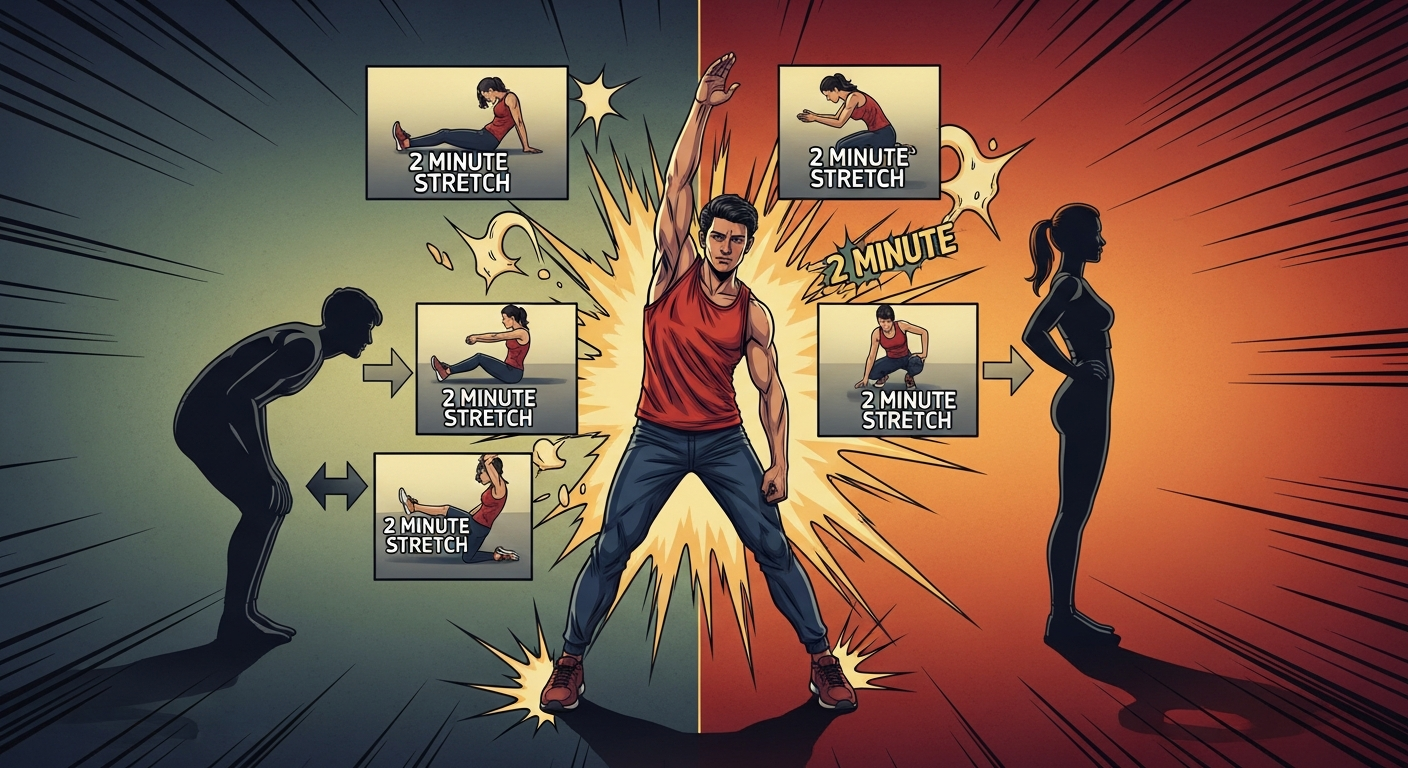
In a world where sitting has become the new smoking, the recent KARE 11 segment featuring Drew Kjellsen’s stretching tips represents more than just casual health advice—it’s addressing a silent epidemic that’s compromising our collective wellbeing. The modern workplace has engineered movement out of our lives, replacing it with hours of uninterrupted sitting that our bodies were never designed to endure. While Kjellsen’s simple stretches like toe raises, hip rotations, and box breathing might seem like minor interventions, they actually represent critical micro-corrections to a fundamentally flawed work environment.
The Sedentary Epidemic Has Far Greater Consequences Than We Acknowledge
The problem with our desk-bound culture extends far beyond occasional stiffness or discomfort. Prolonged sitting fundamentally alters our musculoskeletal system in ways that cascade throughout the entire body. When we sit for extended periods, our hip flexors shorten and tighten, pulling the pelvis into an unnatural position that forces the spine to compensate. This doesn’t just cause back pain—it creates a chain reaction of physiological dysfunction.
Consider the findings from a 2018 study published in the Journal of Physical Activity and Health that followed 8,000 adults over a four-year period. Those who sat for more than eight hours daily without regular movement breaks showed a 59% increased risk of cardiovascular mortality compared to active counterparts. Even more alarming, researchers at the Mayo Clinic found that this sedentary behavior couldn’t be offset by a single workout session—the damage of prolonged sitting persisted despite evening exercise routines.
The stretches Kjellsen recommends aren’t merely comfort measures; they’re essential circuit-breakers that interrupt this damaging pattern. The toe raises he suggests, for instance, activate the anterior tibialis muscle, which counters the shortened position our ankles adopt during prolonged sitting. Similarly, hip rotations directly address the hip flexor tightness that initiates much of the postural dysfunction seen in office workers.
Corporate Wellness Programs Miss the Mark by Focusing on the Wrong Metrics
Many workplace wellness initiatives focus on step counts, gym memberships, or after-hours fitness challenges while ignoring the fundamental problem: the workday itself. These programs essentially tell employees, “Your work environment is harmful, but we’ll help you counteract it on your own time” rather than addressing the harmful environment itself.
Microsoft’s corporate wellness program provides a telling example. Despite investing millions in employee health benefits, including fitness reimbursements and health screenings, their own research showed that employees were still experiencing unprecedented levels of physical discomfort. It wasn’t until they implemented mandatory movement breaks and redesigned workstations that meaningful improvements in employee wellbeing emerged.
Similarly, Google’s data-driven approach to employee wellness revealed that their most effective intervention wasn’t their lavish gym facilities but their “micro-kitchen” strategy—placing healthy snack stations throughout offices that required employees to stand up and walk periodically throughout the day, creating natural movement breaks.
What these examples demonstrate is that the most effective interventions aren’t elaborate fitness programs but simple environmental changes that make movement inevitable rather than optional. Kjellsen’s box breathing technique is valuable precisely because it can be integrated into the workday itself rather than relegated to before or after hours.
The Mental-Physical Connection Is Being Dangerously Underestimated
Perhaps the most overlooked aspect of chronic tension is its bidirectional relationship with mental health. The article briefly mentions that muscle tension affects “our bodies and our minds,” but this dramatically understates the neurobiological reality. Chronic muscular tension triggers a continuous low-grade stress response that floods the system with cortisol, creating a physiological state incompatible with optimal cognitive function.
Research from the American Psychological Association demonstrates that individuals with chronic muscular tension, particularly in the neck and shoulders (common in desk workers), show measurably higher levels of anxiety, reduced cognitive flexibility, and impaired decision-making capacity. These aren’t just comfort issues—they’re performance issues with real economic consequences.
A 2020 study by the Wellness Council of America quantified this impact, finding that employees with high levels of reported physical discomfort experienced a 23% reduction in productivity and were 2.6 times more likely to report errors in their work. In financial terms, this translates to approximately $3,600 in lost productivity per affected employee annually.
Kjellsen’s emphasis on techniques like the “box breath” directly addresses this mind-body connection. Controlled breathing patterns have been shown to activate the parasympathetic nervous system, counteracting the stress response that both results from and contributes to muscular tension. This creates a positive feedback loop where mental relaxation facilitates physical relaxation and vice versa.
Alternative Viewpoints: Is Individual Responsibility the Right Focus?
Some would argue that promoting individual stretching routines places the burden of adaptation on employees rather than addressing the fundamentally flawed design of modern work. From this perspective, Kjellsen’s tips, while helpful, represent a band-aid solution to a structural problem that requires systemic change.
This criticism has merit. Individual stretching routines cannot fully compensate for work environments designed around continuous sitting. The most progressive workplaces have moved beyond optional stretching to implement standing desks, walking meetings, and work schedules that mandate regular movement.
However, dismissing individual interventions entirely ignores the immediate relief they can provide while larger systemic changes evolve. The stretches Kjellsen recommends represent accessible, zero-cost interventions that can be implemented immediately without waiting for corporate policy or office redesigns. They empower individuals to take control of their physical wellbeing within the constraints of their current environment.
Furthermore, the growing adoption of these individual practices creates collective awareness that can drive demand for more substantial workplace reforms. When employees become attuned to how movement affects their wellbeing, they become more likely to advocate for environments that support rather than undermine physical health.
Beyond Stretching: The Future of Work Requires Fundamental Redesign
While Kjellsen’s stretching tips provide valuable immediate relief, they should be viewed as a starting point rather than a complete solution. The future of healthy work environments will require fundamental redesign that makes movement integral to work rather than an interruption of it.
Forward-thinking companies are already exploring alternatives to the traditional desk setup. Pharmaceutical giant Novartis implemented “activity-based working” in their headquarters, eliminating assigned desks and creating varied work environments that encourage employees to change positions and locations throughout the day. Their internal data showed a 16% reduction in reported musculoskeletal complaints within the first year.
Similarly, architectural firm NBBJ designed their Seattle office around what they call “the quarter-mile workplace,” ensuring that routine tasks like meetings, printing, and collaborations require regular movement throughout the space. This approach integrates physical activity into the workflow itself rather than treating it as a separate health initiative.
These examples point to a future where stretching routines like Kjellsen’s become less necessary because movement is built into the very structure of work rather than added as an afterthought. Until that future arrives, however, these simple stretching techniques remain essential tools for navigating our current desk-bound reality.