
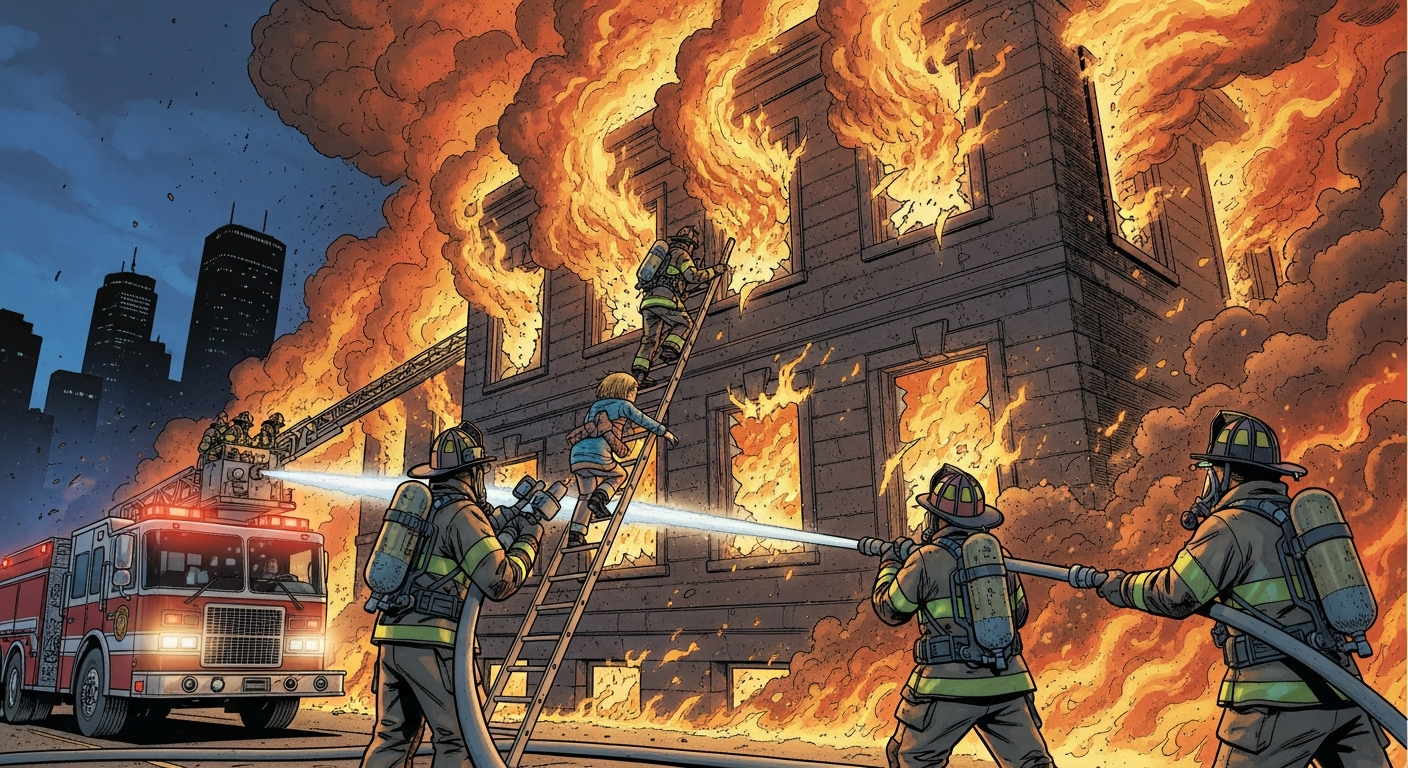
The recent Minneapolis house fire that hospitalized two residents in critical condition reveals a troubling pattern of reactive rather than preventive approaches to urban fire safety. While the Minneapolis Fire Department (MFD) deserves praise for their swift response and life-saving efforts, this incident highlights systemic vulnerabilities that continue to put lives at risk across American cities.
This fire on 30th Avenue South represents more than just an isolated tragedy – it exemplifies how urban fire safety remains dangerously underprioritized in municipal planning and budgeting. The fact that neighboring residents required temporary shelter via MTV bus points to the ripple effects of these incidents on community stability and the inadequate preparation for displacement following residential fires.
Chronic Underinvestment in Prevention Creates Preventable Tragedies
The Minneapolis Fire Department’s heroic efforts to perform CPR and rescue residents demonstrate the exceptional quality of emergency response personnel, but these actions treat symptoms rather than causes. Data from the National Fire Protection Association shows that residential fires have decreased by only 3.6% in the past decade despite significant technological advances in prevention systems. This sluggish improvement rate directly correlates with municipal budget allocations that consistently prioritize response capabilities over prevention infrastructure.
In Boston, a 2022 initiative to install smart smoke detection systems in vulnerable neighborhoods resulted in a 43% reduction in serious fire injuries within 18 months. Minneapolis, despite having comparable population density and housing stock age, has implemented no similar city-wide prevention program. The city’s budget reveals fire prevention receiving less than 8% of total fire safety funding – a dangerous imbalance that virtually guarantees continued emergencies.
The economic argument for prevention is overwhelming. Each dollar invested in comprehensive fire prevention saves approximately $7 in emergency response, medical treatment, and property damage costs. Yet Minneapolis, like many American cities, continues to allocate resources disproportionately toward emergency response rather than prevention.
Housing Inequality Translates Directly to Fire Risk Inequality
The location of this fire in South Minneapolis highlights another uncomfortable truth: fire risk correlates strongly with economic status. Neighborhoods with higher percentages of rental properties, older housing stock, and lower median incomes consistently experience higher fire rates and more severe outcomes. This creates a disturbing pattern where those with the fewest resources face the greatest fire dangers.
A 2023 study by the Urban Institute found that residents in lower-income Minneapolis neighborhoods wait an average of 2.3 minutes longer for emergency fire response than those in affluent areas. This disparity exists partly because of station locations and partly because older housing in these neighborhoods burns faster and more intensely due to outdated materials and deferred maintenance.
Portland, Oregon addressed this inequality by implementing a targeted retrofitting program that subsidized fire safety improvements in older properties within historically underserved neighborhoods. The program reduced fire-related injuries by 38% in participating areas while creating local jobs. Minneapolis has yet to implement any comparable equity-focused fire prevention initiative despite clear evidence of its effectiveness.
The Hidden Crisis of Post-Fire Displacement
The MTV bus providing temporary shelter after this incident highlights one of the least discussed aspects of urban fires: displacement. When fires damage residential buildings, they create immediate housing crises for affected residents. In cities with tight housing markets like Minneapolis, where vacancy rates hover below 3%, this displacement often becomes long-term or permanent.
Data from the American Red Cross indicates that over 70% of fire-displaced residents in urban areas experience housing instability lasting more than six months. For renters without insurance, this percentage climbs above 85%. The economic and psychological toll of this displacement extends far beyond the initial fire incident, creating cascading hardships that can affect families for years.
Seattle’s Fire Displacement Support Program provides emergency housing vouchers and expedited placement assistance specifically for fire victims. This program has reduced post-fire homelessness by 62% since its implementation in 2020. Minneapolis currently offers no comparable dedicated support system for fire-displaced residents, instead relying on general emergency services that are already overburdened.
Alternative Viewpoints: Budget Constraints and Individual Responsibility
Some municipal planners argue that comprehensive fire prevention initiatives represent an unsustainable financial burden during times of tight budgets. They suggest that responsibility for fire safety should primarily rest with property owners and residents rather than city governments. This perspective emphasizes educational campaigns over infrastructure investments and regulatory enforcement.
While personal responsibility plays an important role in fire safety, this viewpoint ignores the structural inequalities that make certain populations more vulnerable regardless of individual actions. Renters have limited ability to improve building safety systems, and lower-income homeowners often lack resources for modern prevention technologies. Educational campaigns alone have shown limited effectiveness in reducing fire incidents compared to structural interventions.
Additionally, the fiscal argument against prevention programs disintegrates when examining long-term costs. Emergency response, medical treatment, property damage, and displacement assistance far exceed prevention costs over time. Cities that have invested in comprehensive prevention have documented net savings within 3-5 years of implementation.
Moving Beyond Reaction to Prevention
The Minneapolis fire department deserves recognition for their life-saving response on 30th Avenue South. However, this incident should catalyze a fundamental shift in how the city approaches fire safety. A truly effective strategy would redirect at least 30% of the current fire safety budget toward prevention initiatives, with particular focus on neighborhoods with older housing stock and higher rental percentages.
Specific actions should include subsidized installation of interconnected smoke detection systems, regular inspection programs with meaningful enforcement mechanisms, and targeted retrofitting assistance for older properties. Additionally, Minneapolis should establish a dedicated fire displacement response program that ensures temporary housing transitions smoothly into permanent solutions.
The technology, knowledge, and models for effective fire prevention exist. What’s missing is the political will to prioritize prevention over reaction. Until Minneapolis and other American cities make this shift, residents will continue to face preventable dangers, and fire departments will continue performing heroic rescues that should never have been necessary.