
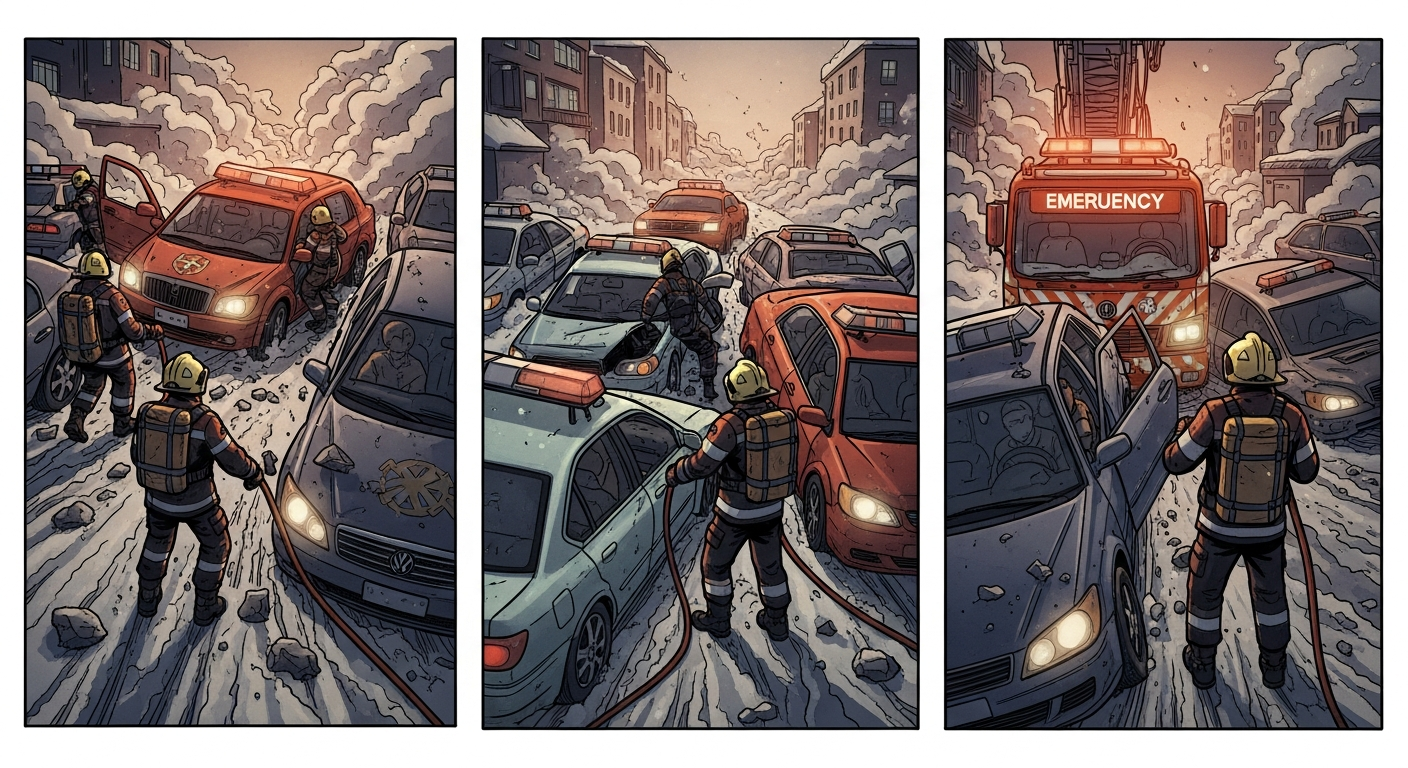
The recent snowstorm that paralyzed Minnesota, causing over 400 crashes and dozens of flight cancellations, isn’t merely a weather event—it’s a stark reminder of our persistent infrastructure vulnerabilities and emergency response limitations. While winter weather in Minnesota is hardly unexpected, the scale of disruption reveals systemic weaknesses in how we prepare for and respond to entirely predictable seasonal challenges.
The Minnesota State Patrol’s plea for residents to cancel travel plans following 418 property damage crashes, 33 injury crashes, and 458 vehicles off the road represents more than just statistics—it signifies a breakdown in our preparedness systems. When a state accustomed to harsh winters still experiences this level of chaos, we must question whether we’re learning from past experiences or simply accepting preventable disruption as inevitable.
Infrastructure Resilience Remains Inadequate Despite Predictable Challenges
Minnesota’s response to winter storms highlights a troubling pattern seen across northern states—reactive rather than proactive planning. Despite knowing with absolute certainty that winter storms will occur, our infrastructure planning continues to prioritize fair-weather functionality over all-weather resilience. The evidence is clear: when MnDOT issues no-travel advisories for southwestern highways, it acknowledges that these critical transportation arteries aren’t designed to function during entirely predictable weather events.
Compare this approach to countries like Finland, where roads are built with materials specifically engineered to withstand freeze-thaw cycles, and where winter maintenance begins before—not after—storms hit. Finnish municipalities maintain specialized equipment reserves that deploy immediately when forecasts predict snow, rather than waiting until accumulation reaches crisis levels. The result? Finland experiences significantly fewer weather-related accidents despite comparable or worse winter conditions.
Similarly, the Toronto Transit Commission has implemented a winter operations plan that includes pre-positioning maintenance crews based on weather forecasts and deploying snow-clearing equipment on a preventative basis. These proactive measures have reduced service disruptions by 30% during major winter events compared to previous years.
Early Warning Systems Fail to Translate to Preventative Action
The timing of the crashes reported by the State Patrol reveals a critical gap between warning and action. The majority of incidents occurred between midnight and 1:30 p.m. on Sunday—hours after forecasts had predicted the storm’s arrival and intensity. This suggests that despite having sophisticated meteorological prediction tools, we struggle to convert these warnings into effective preventative measures.
Modern weather forecasting can predict winter storms with remarkable accuracy days in advance. Yet our systems for translating these forecasts into operational decisions—such as pre-treating roads, positioning emergency response assets, or implementing targeted travel restrictions—remain woefully inadequate. The National Weather Service provided accurate forecasts for this storm, but the operational response lagged behind the information available.
The contrast with hurricane response systems is telling. Coastal states have developed sophisticated evacuation and preparation protocols that activate based on hurricane forecasts, not after the storm makes landfall. When Hurricane Ian approached Florida in 2022, emergency management offices implemented phased evacuation plans 72 hours before expected landfall, potentially saving thousands of lives. Winter storm response deserves the same level of anticipatory action.
Economic Impacts Extend Far Beyond Immediate Disruption
The 78 delays and 56 cancellations at Minneapolis-St. Paul International Airport represent more than inconvenience—they signal significant economic damage that ripples throughout the region. Each canceled flight doesn’t just affect the passengers directly involved; it disrupts supply chains, business meetings, and time-sensitive deliveries.
Research from the University of Maryland’s Transportation Policy Research Group estimates that weather-related transportation disruptions cost the U.S. economy approximately $3.5 billion annually. These costs disproportionately affect regions like Minnesota that experience severe winter weather. More troubling, these economic impacts are distributed inequitably, with hourly workers unable to reach jobs bearing the greatest financial burden when transportation systems fail.
The Massachusetts Bay Transportation Authority (MBTA) implemented a winter resiliency program following Boston’s catastrophic winter of 2015, investing $100 million in infrastructure hardening. Economic analysis showed that this investment paid for itself within three years through reduced disruption costs, demonstrating that proactive spending on winter preparedness yields substantial economic returns.
Alternative Viewpoints: The Challenges of Perfect Preparedness
Some argue that preparing for the worst-case scenario in every winter storm would require prohibitive investments in equipment and personnel that would sit idle during milder weather. This argument has merit—maintaining snowplows, salt reserves, and emergency response teams at levels sufficient for the most severe storms would indeed require significant resources.
However, this perspective fails to account for the advancement of flexible response systems. Modern emergency management doesn’t require maintaining maximum capacity at all times; it requires scalable systems that can expand rapidly when needed. The Minnesota Department of Transportation could implement contracts with private equipment operators who activate during severe weather, similar to the mutual aid agreements used by fire departments during major incidents.
Others contend that individual responsibility should play a larger role—that drivers who venture out during storm warnings bear responsibility for the consequences. While personal responsibility matters, this view ignores the reality that many people have no choice but to travel for essential work, medical care, or family emergencies. A functioning society cannot simply shut down with each storm warning; it must build systems resilient enough to maintain critical functions under stress.
Moving Beyond Acceptance Toward Resilience
The most troubling aspect of Minnesota’s winter storm response isn’t the immediate disruption but the sense of resignation that accompanies it. We’ve normalized a level of winter dysfunction that would be considered unacceptable in other contexts. When summer heat waves cause power outages, we demand investigations and improvements. When winter storms cause hundreds of crashes, we shrug and wait for spring.
This acceptance of preventable harm must end. Minnesota should implement a comprehensive winter resilience strategy that includes: graduated travel restrictions based on forecast severity rather than current conditions; mandatory winter equipment requirements for vehicles similar to those in Quebec; and infrastructure investments specifically targeted at winter performance rather than merely summer capacity.
The technologies and methodologies to dramatically reduce winter weather disruption already exist. What’s missing is the political will to prioritize resilience over reaction and the cultural shift needed to stop accepting preventable chaos as an inevitable part of winter.