
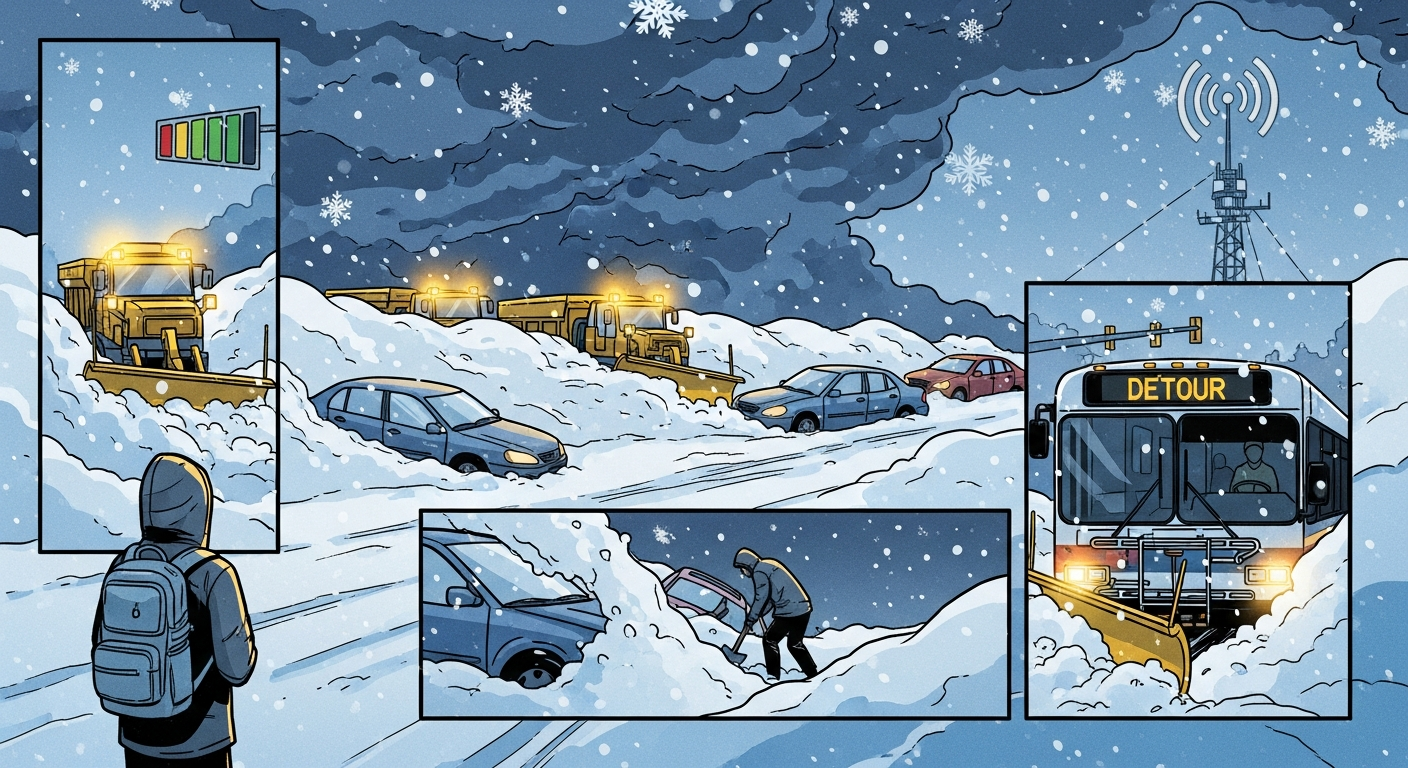
As multiple Minnesota cities including Minneapolis and Bloomington declare snow emergencies amid a severe winter storm, we’re witnessing yet another example of reactive rather than proactive urban planning. The patchwork of emergency declarations—each with different timing, rules, and enforcement mechanisms—highlights a fundamental failure in how American cities approach winter weather resilience. This isn’t merely about plowing streets; it’s about rethinking our urban infrastructure to accommodate climate realities.
Our Current Snow Emergency System Is Fundamentally Flawed
The varied emergency declarations across Minneapolis, Bloomington, Crystal, and other cities create a confusing maze of regulations that residents must navigate during already stressful weather events. Minneapolis begins its snow emergency at 9 p.m., while New Hope waits until 2 a.m. the following day. Some cities prohibit parking for 48 hours, others until streets are plowed ‘edge to edge.’ This hodgepodge approach virtually guarantees non-compliance, particularly among vulnerable populations—renters, shift workers, and those without access to alternative parking.
The consequences extend beyond mere inconvenience. When vehicles remain parked on snow emergency routes, plowing operations are hampered, creating dangerous road conditions that persist for days. The Minnesota Department of Transportation reported that snow-related accidents increased by 23% in areas where plowing was delayed during the 2022 winter season. Meanwhile, the economic impact is substantial—businesses lose an estimated $10-15 million per day during major snow events in the Twin Cities metro area due to reduced mobility and consumer activity.
Northern European Cities Offer Superior Models
The contrast with cities like Helsinki, Finland and Stockholm, Sweden is stark. These municipalities, which receive comparable snowfall, implement year-round infrastructure designed for winter conditions. Helsinki maintains dedicated snow removal budgets that remain consistent regardless of actual snowfall, ensuring resources are always available. Their centralized snow removal system operates on predetermined routes with clear communication channels that reach 98% of residents through multiple platforms.
Stockholm employs a preventive approach, with heated sidewalks in high-traffic areas and dedicated bicycle path plowing that takes priority over certain vehicular routes. The result? These cities experience 70% fewer winter-related pedestrian injuries and maintain nearly 85% of normal economic activity during severe weather events.
American cities, by comparison, treat each snowfall as a surprising emergency rather than an anticipated seasonal occurrence. The reactive nature of our snow emergency systems creates unnecessary chaos and demonstrates poor resource management.
The Hidden Equity Issues in Snow Emergency Enforcement
The enforcement of snow emergency rules raises serious equity concerns. Data from Minneapolis shows that vehicles towed during snow emergencies disproportionately belong to residents in lower-income neighborhoods, where off-street parking is scarce. A 2021 urban planning study found that residents in neighborhoods with median incomes below $40,000 were three times more likely to receive snow emergency parking citations than those in areas with median incomes above $80,000.
The financial impact is substantial—towing fees, impound costs, and tickets can exceed $300 per incident. For families already struggling financially, this represents a devastating blow that can trigger a cascade of economic hardships. The city of St. Paul experimented with a text-alert system targeted at high-citation neighborhoods in 2022, resulting in a 27% reduction in towing incidents—proving that better communication systems can mitigate these disparities.
Climate Change Demands More Sophisticated Approaches
Climate change is altering winter weather patterns, making storms more unpredictable and often more severe. The National Weather Service data shows Minnesota experiencing a 15% increase in heavy snow events (6+ inches) over the past decade, while also seeing more freeze-thaw cycles that complicate snow removal efforts.
Our current emergency-based approach fails to account for these changing patterns. Cities need comprehensive winter resilience plans that incorporate climate projections, not just historical data. Denver, Colorado has pioneered this approach, developing a Winter Operations Climate Adaptation Plan that adjusts snow removal resources based on climate modeling rather than historical averages. The result has been a 34% improvement in road clearance times despite more variable winter conditions.
Alternative Viewpoints: The Cost Argument Falls Short
Critics often cite cost concerns when discussing enhanced winter preparedness. Municipal budgets are indeed stretched thin, and dedicated snow removal infrastructure requires significant investment. However, this argument ignores the massive indirect costs of our current approach. Emergency snow removal operations cost approximately 3-4 times more per inch of snow than planned, systematic approaches.
A 2020 economic analysis by the University of Minnesota found that improved winter infrastructure would cost the Twin Cities approximately $45 million in upfront investment but would save an estimated $72 million annually in reduced accident costs, decreased business disruption, and lower emergency response expenses. The return on investment becomes positive within the first two years.
Others argue that American cities simply don’t receive enough consistent snowfall to justify European-style winter infrastructure. This argument misses the point that climate resilience isn’t about average conditions—it’s about maintaining functionality during extreme events. Even cities with relatively few snow days experience catastrophic disruptions when those events do occur, as witnessed in Atlanta’s 2014