
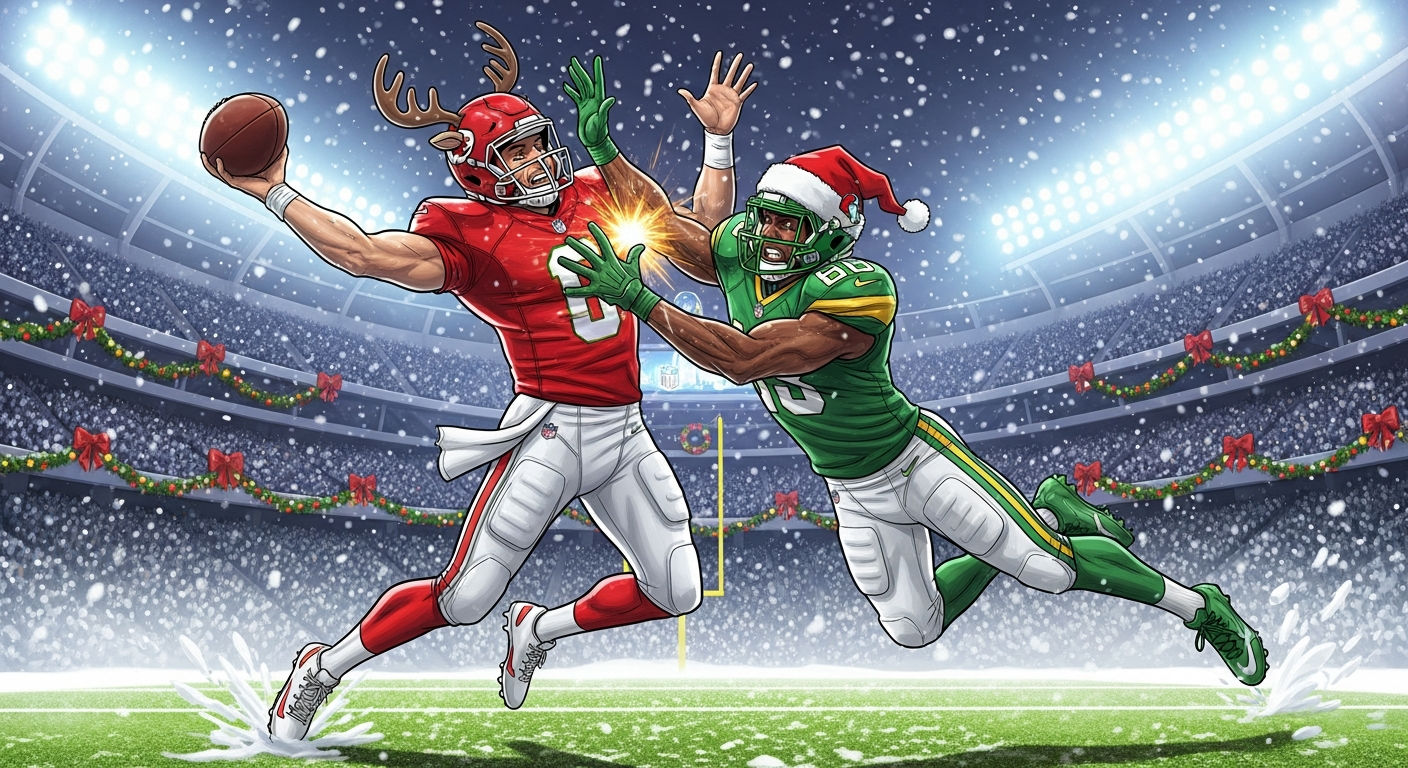
The Minnesota Vikings’ decimated roster heading into their Christmas Day matchup against the Detroit Lions isn’t just unfortunate timing—it’s a damning indictment of the NFL’s continued prioritization of profit over player welfare. With three offensive linemen, their rookie quarterback, star tight end, and leading rusher all sidelined, the Vikings aren’t fielding a competitive team; they’re fielding whatever remains after the NFL’s punishing schedule has taken its toll.
Thursday Games Represent the NFL’s Hypocrisy on Player Safety
The Vikings’ injury report reads like a who’s who of their most important players, with three offensive line starters—Christian Darrisaw, Ryan Kelly, and Brian O’Neill—all unavailable. This isn’t coincidental. It’s the predictable outcome of forcing teams to play two games in five days. The NFL has spent years trumpeting its commitment to player safety with rule changes and protocols, yet consistently undermines these efforts by expanding to Thursday games, international games, and now a 17-game season.
Consider the case of Ryan Kelly, now suffering his third concussion of the season. The NFL’s concussion protocol supposedly exists to protect players, yet the schedule itself creates conditions where players haven’t fully recovered from Sunday’s physical toll before being thrust back onto the field. A 2019 study published in Sports Health found that injury rates were significantly higher in Thursday games compared to games with standard rest periods. The Vikings’ situation isn’t an anomaly—it’s the system working exactly as designed: maximizing TV revenue while treating player health as an acceptable casualty.
Rookie Quarterbacks Bear Undue Risk in the Modern NFL
J.J. McCarthy’s absence due to a hand injury highlights another troubling trend: rookie quarterbacks facing heightened injury risk behind compromised offensive lines. The Vikings are now starting an undrafted rookie (Max Brosmer) behind a patchwork offensive line missing three starters. This creates a perfect storm for potential career-altering injuries.
Look at what happened to Bryce Young in Carolina last season or C.J. Stroud in Houston, who both took unnecessary punishment behind struggling offensive lines. The Cincinnati Bengals watched Joe Burrow take 70 sacks in his first 20 games, culminating in a torn ACL. The Vikings are now recreating these exact high-risk conditions for Brosmer—not because they want to, but because the NFL’s schedule demands it.
The league’s structure forces teams to choose between competitive viability and player protection, a choice no organization should have to make. McCarthy’s development is now delayed, and Brosmer faces significant physical risk—all because the NFL needed to fill a Christmas Day broadcast slot.
The Competitive Integrity Problem
Beyond player safety, these injury situations fundamentally undermine the NFL’s competitive balance. The Lions, fighting for playoff positioning, now face essentially a Vikings B-team. Is this really the product the NFL wants to showcase on a premier holiday broadcast?
When the San Francisco 49ers faced the Kansas City Chiefs in Super Bowl LVIII with a severely limited Brock Purdy (elbow) and Christian McCaffrey playing through multiple injuries, viewers were robbed of seeing both teams at full strength in the season’s most important game. The Vikings-Lions Christmas matchup represents the same problem on a smaller scale—fans tuning in won’t see the actual Vikings team, but rather a depleted version forced to play before players could properly heal.
The NFL has created a system where teams regularly field compromised rosters for Thursday games. The Philadelphia Eagles’ Lane Johnson once noted that players aren’t physically recovered from Sunday games until Thursday or Friday—precisely when Thursday night games kick off. This isn’t competitive sport; it’s scheduled attrition.
Alternative Viewpoints: The Business Reality
Defenders of the NFL’s current structure point to the business realities: Thursday games generate approximately $660 million annually in broadcast rights. The league’s expansion to Christmas Day games represents another revenue opportunity that teams and players benefit from through salary cap increases. Players’ union representatives have repeatedly approved CBA terms that include these games.
However, this argument fundamentally misunderstands the power dynamic. Players accept these terms because the alternative—standing firm against them—would likely result in lockouts and lost wages. The NFL’s monopoly power over professional football in America means players must accept the league’s terms or not play at all. When Kelly is suffering his third concussion of the season, the theoretical benefit of a higher salary cap offers little consolation.
Solutions Exist If the NFL Actually Cared
The NFL could easily implement solutions if player welfare were genuinely prioritized. Teams playing Thursday games could be given byes the previous week. The league could eliminate Thursday games entirely, returning to a schedule that provides adequate recovery time. At minimum, late-season Thursday games could be eliminated when teams are already worn down from months of competition.
The German Bundesliga and other European soccer leagues build winter breaks into their schedules specifically to allow player recovery. The NFL, with its significantly more physically punishing gameplay, provides no such consideration. Even the NBA, facing criticism about its compressed schedule, implemented changes to reduce back-to-back games. The NFL has moved in the opposite direction, adding games and shortening recovery periods.
The Vikings’ Christmas Day roster devastation isn’t bad luck—it’s the predictable outcome of a system designed to extract maximum games from players’ bodies with minimal concern for their wellbeing.
The Broader Implications
The Vikings-Lions Christmas matchup exemplifies a fundamental ethical question the NFL has consistently answered incorrectly: Is the game about the players or the profit? When three offensive linemen, a quarterback, a star tight end, and a leading rusher are all unavailable for a holiday showcase game, the answer becomes painfully clear.
As viewers tune in to watch a depleted Vikings team struggle against the Lions, they should recognize they’re not watching football at its best—they’re watching the consequences of the NFL’s prioritization of broadcast revenue over player welfare and competitive integrity. Until fans demand better and stop rewarding the NFL with viewership regardless of product quality, nothing will change. The Vikings’ Christmas Day injury report isn’t just a team problem—it’s an indictment of the entire NFL system.