
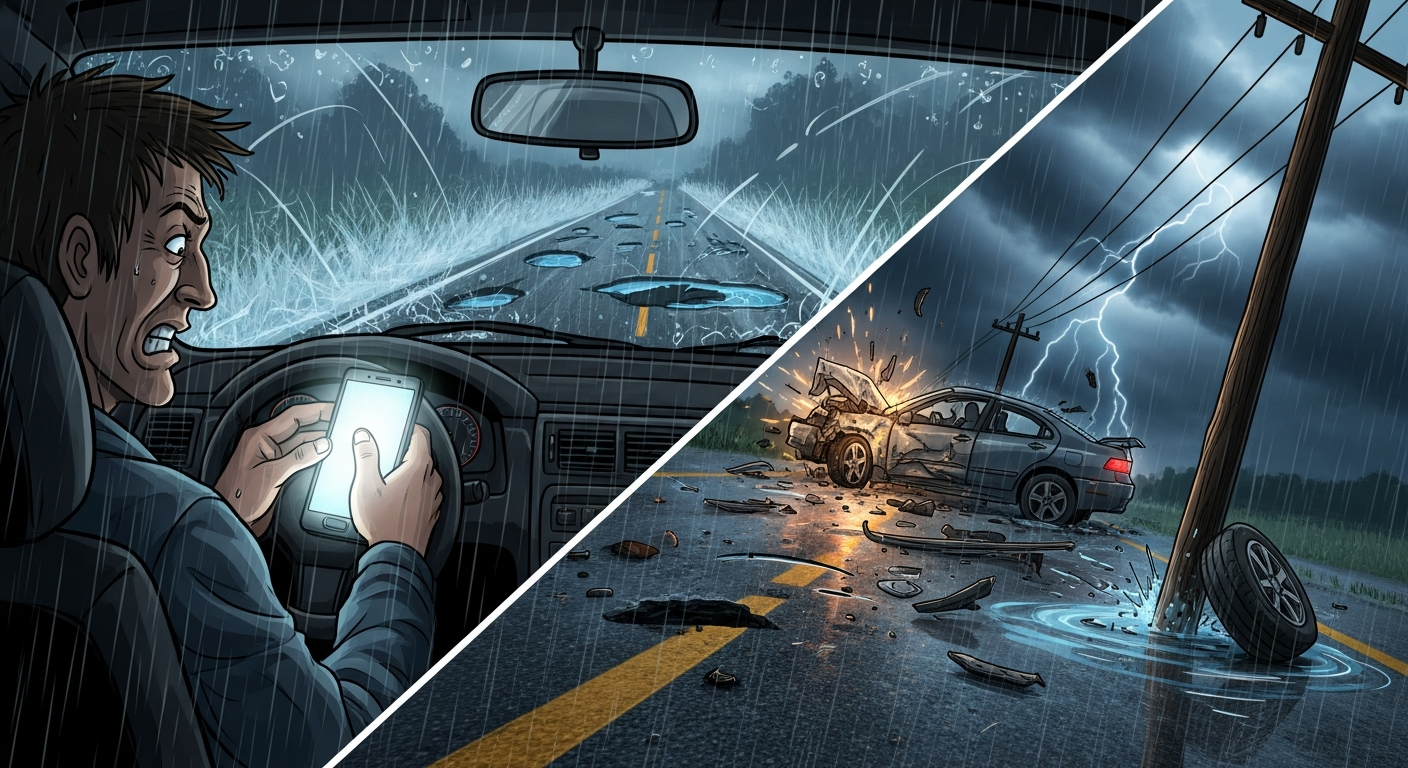
The recent fatal crash in Champlin that claimed the life of a 70-year-old woman represents far more than just another tragic traffic incident. It spotlights a systemic failure in how we design, maintain, and police our suburban roadways. While details about the cause remain under investigation, this three-vehicle collision at West River Road and Pennsylvania Avenue joins thousands of similar ‘accidents’ that are, in reality, predictable outcomes of flawed infrastructure and policy decisions.
When we see crashes involving multiple vehicles and drivers of vastly different ages (17, 36, and 70 in this case), it’s time to stop viewing these as random tragedies and start recognizing them as symptoms of deeper problems with our transportation systems.
The Myth of ‘Accidents’ in Modern Transportation Planning
Traffic deaths are not inevitable. They result from specific choices in road design, speed limits, enforcement priorities, and community planning. The intersection of West River Road and Pennsylvania Avenue, like many suburban crossroads, was likely designed primarily for vehicle throughput rather than safety. This prioritization of speed over safety permeates American transportation planning.
Vision Zero initiatives in cities like Oslo, Norway have demonstrated that traffic fatalities can be virtually eliminated with proper design and policy. Oslo recorded zero pedestrian and cyclist deaths in 2019 after implementing comprehensive safety measures including reduced speed limits, physical barriers, and redesigned intersections. Meanwhile, U.S. traffic fatalities have increased 18% since 2019, according to NHTSA data.
The suburban context of this crash is particularly telling. Suburbs like Champlin often feature wide, straight roads that encourage speeding while simultaneously mixing residential traffic with commuter throughways. This deadly combination creates perfect conditions for high-speed, multi-vehicle collisions.
Age-Related Factors Demand Better Systems, Not Blame
The involvement of drivers at significantly different life stages (teenage, middle-aged, and elderly) highlights how our current road systems fail to accommodate the full spectrum of human capabilities. A 17-year-old driver likely has different reaction times and risk assessment abilities than a 70-year-old driver, yet our roads make little accommodation for these differences.
Research from the Insurance Institute for Highway Safety shows that both teenage and elderly drivers have higher crash rates per mile driven than middle-aged adults. However, rather than creating systems that protect vulnerable road users, we continue to build infrastructure that demands peak performance from all drivers at all times.
Countries like Japan have implemented graduated licensing restrictions and infrastructure modifications in areas with high elderly populations. These include simplified intersection designs, improved signage, and dedicated turning lanes that have reduced crashes involving older drivers by up to 30% in targeted areas.
The Economic and Social Costs We Ignore
Each traffic death represents not just a personal tragedy but an enormous social and economic cost. The National Safety Council estimates the comprehensive cost of a single traffic fatality at $11.3 million when accounting for medical expenses, emergency services, productivity losses, property damage, and quality-of-life impacts.
For Champlin and similar communities, these costs accumulate silently, draining resources that could otherwise support community development. The hospitalization of the two surviving drivers adds further to this burden, potentially creating long-term health issues and financial hardships for those involved.
Consider the stark contrast with countries like the Netherlands, where comprehensive infrastructure investments reduced road fatalities by over 70% since the 1970s. These investments have proven economically efficient, with studies showing each euro spent on road safety returning approximately 3-4 euros in reduced social and economic costs.
Alternative Viewpoints: The Individual Responsibility Argument
Some will argue that focusing on individual driver responsibility rather than systemic change is the appropriate response to such crashes. This perspective suggests that better driver education, stricter licensing requirements, and harsher penalties for traffic violations would prevent such tragedies.
While driver behavior certainly plays a role, this approach ignores fundamental principles of human factors engineering. People make mistakes, have limitations, and occasionally exercise poor judgment. A transportation system that requires perfect human performance at all times is inherently flawed and destined to produce casualties.
Moreover, the individual responsibility argument fails to explain why countries with similar or lower levels of driver education have achieved dramatically better safety outcomes through infrastructure improvements and policy changes. Sweden’s road fatality rate is less than half that of the United States, not because Swedish drivers are inherently more responsible, but because their roads are designed with the expectation that humans will make errors.
What Champlin and Similar Communities Must Do
The intersection where this crash occurred deserves immediate safety assessment and potential redesign. Beyond this specific location, suburban communities like Champlin need comprehensive traffic safety audits that examine speed limits, intersection designs, visibility factors, and traffic flow patterns.
Practical steps include implementing road diets (reducing lane widths to slow traffic), adding protected turn phases at intersections, improving signage and road markings, and considering roundabouts as replacements for traditional intersections. Research shows roundabouts reduce fatal crashes by approximately 90% compared to conventional intersections.
Communities must also reconsider how they allocate transportation budgets. The focus on widening roads and increasing capacity often comes at the expense of safety features that could prevent fatalities. This represents a fundamental misalignment of priorities that values minutes saved over lives lost.
The death of this 70-year-old Champlin resident wasn’t just bad luck or an unavoidable tragedy. It was the predictable outcome of transportation systems that prioritize speed and convenience over human life. Until we recognize traffic deaths as a public health crisis demanding systemic solutions, more families will face the devastating loss experienced by this victim’s loved ones.