
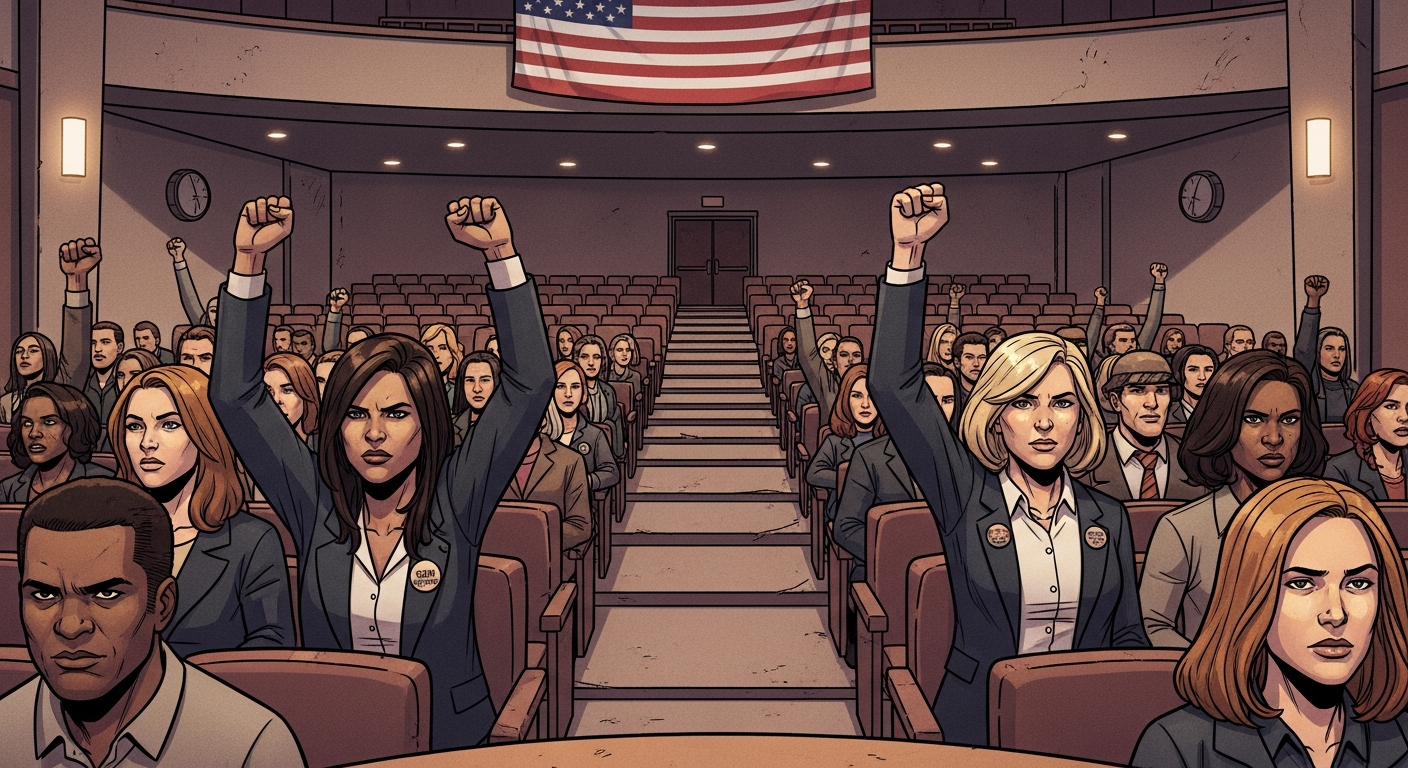
The overwhelming vote by Anoka-Hennepin teachers to authorize a strike highlights a fundamental crisis in how we fund and value public education in America. When 98% of union members in Minnesota’s largest school district are willing to walk away from their classrooms, we must recognize this isn’t about greedy teachers seeking better pay—it’s about educators fighting for basic economic survival in a system that continues to shift healthcare burdens onto their shoulders.
A 22% premium increase that pushes monthly insurance costs to $1,000 isn’t just a budget item—it’s effectively a massive pay cut that erases years of modest salary gains. This situation in Anoka-Hennepin represents a microcosm of the broader structural problems plaguing public education funding nationwide.
The Insurance Crisis Is Actually a Compensation Crisis
The core issue extends far beyond this single district. When teachers are forced to spend up to $12,000 annually on health insurance, we’ve created a system where educators effectively fund their own salary reductions. In real terms, a teacher making $60,000 who pays $12,000 for health insurance is actually earning $48,000—a salary that often doesn’t support a middle-class existence in many communities.
This pattern repeats across the country. In West Virginia, the 2018 teacher strike centered on similar insurance issues, with the state’s Public Employees Insurance Agency implementing devastating premium increases while simultaneously reducing benefits. The resulting nine-day strike shut down schools in all 55 counties before legislators finally addressed the insurance crisis.
Similarly, Chicago teachers fought against premium increases of 7-12% in their 2019 contract negotiations—increases that would have negated their proposed raises. The pattern is clear: districts balance budgets by shifting healthcare costs to teachers, effectively cutting compensation while claiming they’re providing raises.
School Boards Face Impossible Math Without Structural Reform
School boards aren’t necessarily the villains in this story. They face genuine budget constraints created by inadequate state funding formulas, property tax limitations, and rising costs across all operational areas. The Anoka-Hennepin district, like many others, must balance competing priorities with limited resources.
The Minnesota Legislature increased education funding by 4% in 2023 and 2% in 2024, but these increases fail to keep pace with inflation, especially in healthcare. When health insurance premiums rise at double or triple the rate of education funding increases, districts face mathematical impossibilities.
Colorado provides an instructive example. Despite increasing per-pupil funding by 6% in 2022, districts still struggled with insurance costs rising at 7-10% annually. The Denver Public Schools ended up increasing employee healthcare contributions by 9% that same year, effectively negating salary increases for many teachers.
Without addressing the underlying structural funding issues and the specific challenge of healthcare costs, school boards will continue facing no-win scenarios where they must choose between adequate teacher compensation and other essential educational services.
The Hidden Costs of Undervaluing Educators
The consequences of this compensation crisis extend far beyond teachers’ personal finances. When educators cannot afford their own healthcare, the entire educational system suffers in measurable ways. Teacher turnover rates in districts with poor healthcare benefits average 16% annually versus 10% in districts with competitive benefits, according to National Center for Education Statistics data.
This turnover directly impacts student achievement. Research from the Learning Policy Institute demonstrates that high teacher turnover rates correlate with lower student performance, particularly in high-poverty schools where stability matters most. When experienced teachers leave due to unsustainable financial pressures, students lose access to their expertise and institutional knowledge.
Furthermore, the teacher pipeline continues to shrink. Education degree completions have dropped nearly 20% over the past decade, with surveys consistently citing compensation—including benefits—as a primary deterrent for talented college students considering the profession. The insurance crisis doesn’t just hurt current teachers; it’s actively preventing the next generation from entering the classroom.
Alternative Viewpoints: The Fiscal Reality
Some will argue that public education already consumes a significant portion of state and local budgets, and taxpayers cannot sustain further increases. This perspective deserves serious consideration. Minnesota already spends approximately $14,000 per pupil annually, placing it in the upper half of states for education funding.
Others point to administrative bloat as the real problem. The Anoka-Hennepin district, like many others, has seen growth in non-teaching positions over the past two decades. Some fiscal conservatives argue that reallocating resources from administration to teacher compensation could solve the problem without additional funding.
These viewpoints contain partial truths but miss the larger structural issue. Even if administrative positions were reduced, the fundamental mathematics of healthcare inflation outpacing education funding would eventually recreate the current crisis. And while Minnesota’s per-pupil spending appears substantial, it hasn’t kept pace with the specialized services schools now provide or the rising costs of healthcare that affect all employers.
The more compelling counterargument involves examining alternative compensation structures. Some charter schools have implemented models with higher base salaries but more modest benefits packages, giving teachers more take-home pay while controlling district costs. These models deserve exploration but must account for the reality that healthcare costs impact all compensation structures.
A Path Forward Requires Systemic Change
Resolving the Anoka-Hennepin strike threat—and preventing similar crises nationwide—requires moving beyond the traditional zero-sum negotiations between teachers and school boards. Several structural reforms warrant serious consideration.
First, states should consider establishing dedicated educator healthcare funds that pool risk across all districts, creating larger insurance groups that can better negotiate rates and absorb premium increases. Massachusetts implemented such a system through its Group Insurance Commission, which has helped control premium growth for public employees, including teachers.
Second, education funding formulas must specifically account for healthcare inflation rather than using general inflation measures that consistently underestimate actual cost increases. When healthcare costs rise at 7-10% annually but education funding increases by only 2-4%, the math simply doesn’t work.
Finally, the conversation must expand beyond the education budget alone. Healthcare costs represent a national crisis affecting all sectors. Meaningful healthcare reform that addresses the underlying cost drivers would benefit education budgets alongside every other industry struggling with unsustainable premium increases.
The Anoka-Hennepin teachers aren’t asking for luxury—they’re fighting for economic survival in a profession that’s supposed to offer middle-class stability. Their struggle represents a warning about the sustainability of our entire public education model. If we cannot provide teachers with affordable healthcare, we cannot expect to maintain quality public education for future generations.