
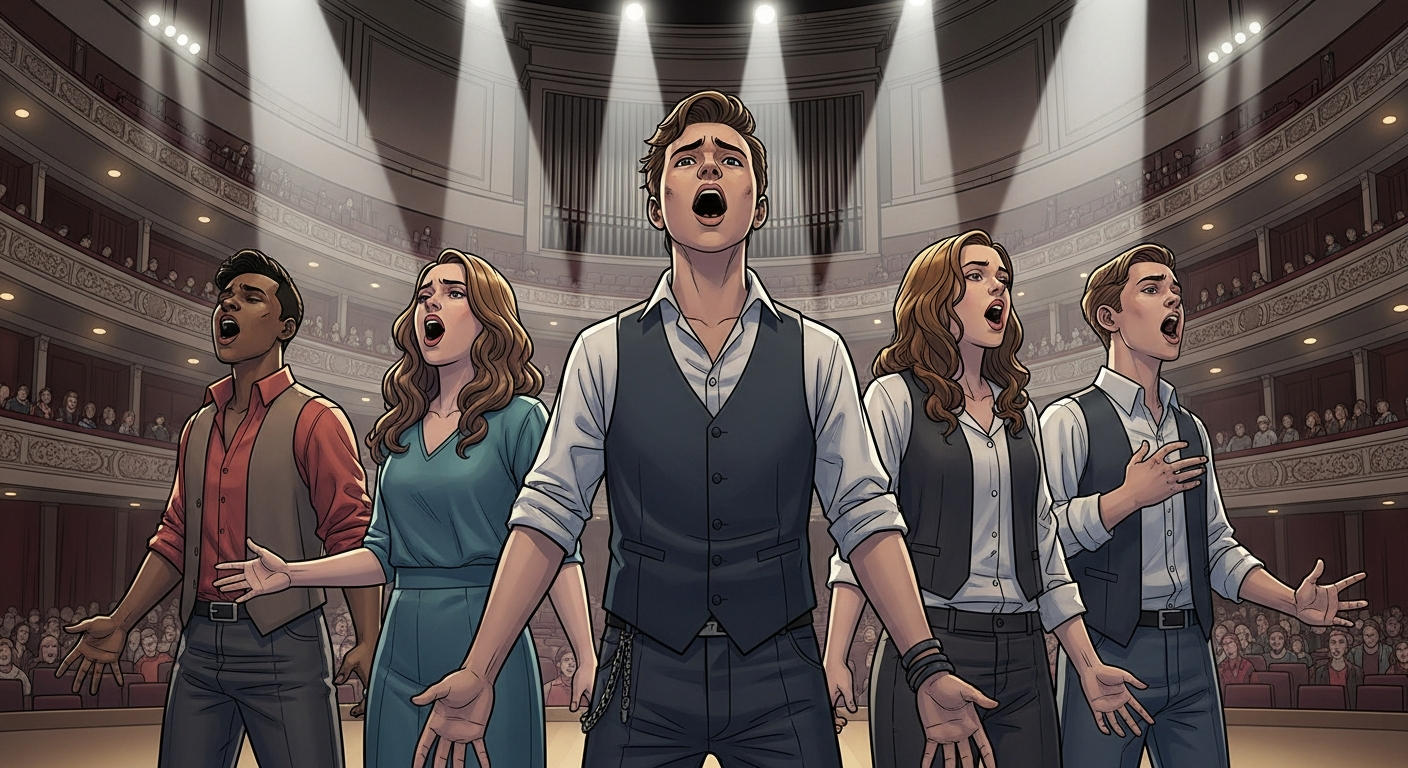
When 13-year-old Max Zhang and 16-year-old Laila Elazab took the stage at Carnegie Hall this December, they represented far more than just the MacPhail Center for Music or their Minnesota hometown. Their achievement stands as compelling evidence that arts education remains a vital pathway to excellence, especially when supported by dedicated mentorship and institutional commitment. These young vocalists’ accomplishment reveals an often-overlooked truth in our STEM-obsessed educational landscape: artistic talent, when properly nurtured, can propel students to world-class achievements at remarkably young ages.
The significance of Zhang and Elazab’s performances transcends mere individual accomplishment. At a time when arts programs face budget cuts nationwide and music education is increasingly treated as expendable, these teenagers demonstrate the extraordinary outcomes possible when young people receive consistent, high-quality arts instruction. Their journey to Carnegie Hall offers a powerful counternarrative to the diminishing support for arts education across America.
Early Mentorship Creates Exceptional Outcomes
The role of Dr. Mikyoung Park in these students’ development cannot be overstated. Elazab’s decade-long relationship with Park, beginning with piano lessons in kindergarten, exemplifies the transformative power of sustained mentorship. This type of long-term artistic guidance has become increasingly rare in American education, where continuity is often sacrificed to standardized curricula and rotating teaching assignments.
Research consistently confirms the effectiveness of this approach. A 2018 study from the National Endowment for the Arts found that students with dedicated arts mentors were 29% more likely to pursue advanced study in their field compared to peers with similar talent but inconsistent instruction. The MacPhail Center’s model, allowing students like Elazab to develop relationships with master teachers over many years, should be viewed as a blueprint rather than an exception.
Consider the contrast with typical public school music education, where students might see different instructors yearly or face program disruptions. The Brookings Institution reported in 2021 that only 22% of American public school students have access to the same music instructor for more than three consecutive years. MacPhail’s approach demonstrates that consistency in arts education produces exceptional results.
Arts Education as Stress Management and Academic Enhancement
Zhang’s comment about singing for 30 minutes to destress before returning to homework highlights another critical benefit of arts education that deserves greater attention. In our high-pressure academic environment, where teen anxiety rates have increased 52% in the past decade according to the American Psychological Association, the arts offer vital emotional regulation tools.
The cognitive benefits extend beyond stress relief. Numerous neurological studies, including landmark research from Northwestern University’s Auditory Neuroscience Laboratory, demonstrate that musical training enhances executive function, improves memory, and strengthens language processing. These benefits directly translate to academic performance across subjects.
The California Arts Council tracked 12,000 students over four years and found those with consistent music education scored 22% higher on standardized tests and demonstrated 17% higher graduation rates compared to matched peers without arts instruction. Zhang’s approach to using singing as a mental reset before tackling homework isn’t just a personal preference—it’s aligned with scientific understanding of how artistic practice enhances cognitive function.
International Recognition Versus Local Support
The American Protege International Vocal Competition that recognized these young vocalists offers a striking contrast to local arts funding priorities. While these teenagers earned international acclaim, many American communities continue dismantling music programs. Since 2008, over 80% of school districts have cut funding for arts education, with music programs often first on the chopping block.
The MacPhail Center represents an alternative model—a dedicated community arts institution that partners with schools but maintains independent programming and funding. This hybrid approach ensures stability and excellence regardless of shifting educational priorities. When the Minneapolis Public Schools faced a $33 million budget deficit in 2022, instrumental music instruction was reduced in elementary schools, yet MacPhail continued providing high-quality instruction to students like Zhang and Elazab.
Similar community music schools have demonstrated remarkable outcomes nationwide. Settlement Music School in Philadelphia, Colburn School in Los Angeles, and Merit School of Music in Chicago all report sending students to prestigious competitions and performance venues annually. These institutions succeed because they maintain singular focus on artistic excellence while building sustainable funding models that don’t depend exclusively on school budgets.
Alternative Viewpoints: Is Elite Arts Training Accessible?
Critics might reasonably question whether the MacPhail model is accessible to all students. Private music instruction remains expensive, with weekly lessons often costing thousands annually. This creates legitimate concerns about equity and access, particularly for low-income families.
These concerns deserve serious attention. However, many community music schools, including MacPhail, offer significant scholarship support. In 2022, MacPhail provided over $2 million in need-based financial aid, reaching more than 6,000 students across Minnesota. The solution isn’t abandoning the model but expanding access through increased funding for scholarships and community partnerships.
Others might argue that focusing on traditional Western classical music venues like Carnegie Hall represents an outdated approach to musical excellence. This perspective has merit—musical accomplishment takes countless forms beyond classical performance. Yet the discipline, technical mastery, and artistic sensitivity developed through classical training transfers to all musical genres. Many of today’s innovative musicians in jazz, pop, and experimental music built their foundation through classical training.
The Broader Implications for American Arts Education
The achievements of Zhang and Elazab should prompt serious reconsideration of arts education priorities nationwide. Their success demonstrates that with proper support, American students can achieve world-class artistic accomplishment alongside academic excellence. This isn’t an either/or proposition—artistic development complements academic achievement.
The MacPhail model offers several transferable lessons for communities nationwide: sustained mentorship matters; dedicated arts institutions can provide stability when school budgets fluctuate; and early artistic training produces both excellence in the discipline and cognitive benefits that enhance overall educational outcomes.
As we celebrate these young Minnesota vocalists performing at Carnegie Hall, the question becomes not whether we can afford comprehensive arts education, but whether we can afford to continue without it. The evidence suggests that communities supporting young artists aren’t just nurturing individual talent—they’re investing in cognitive development, emotional wellbeing, and academic success that benefits all students.