
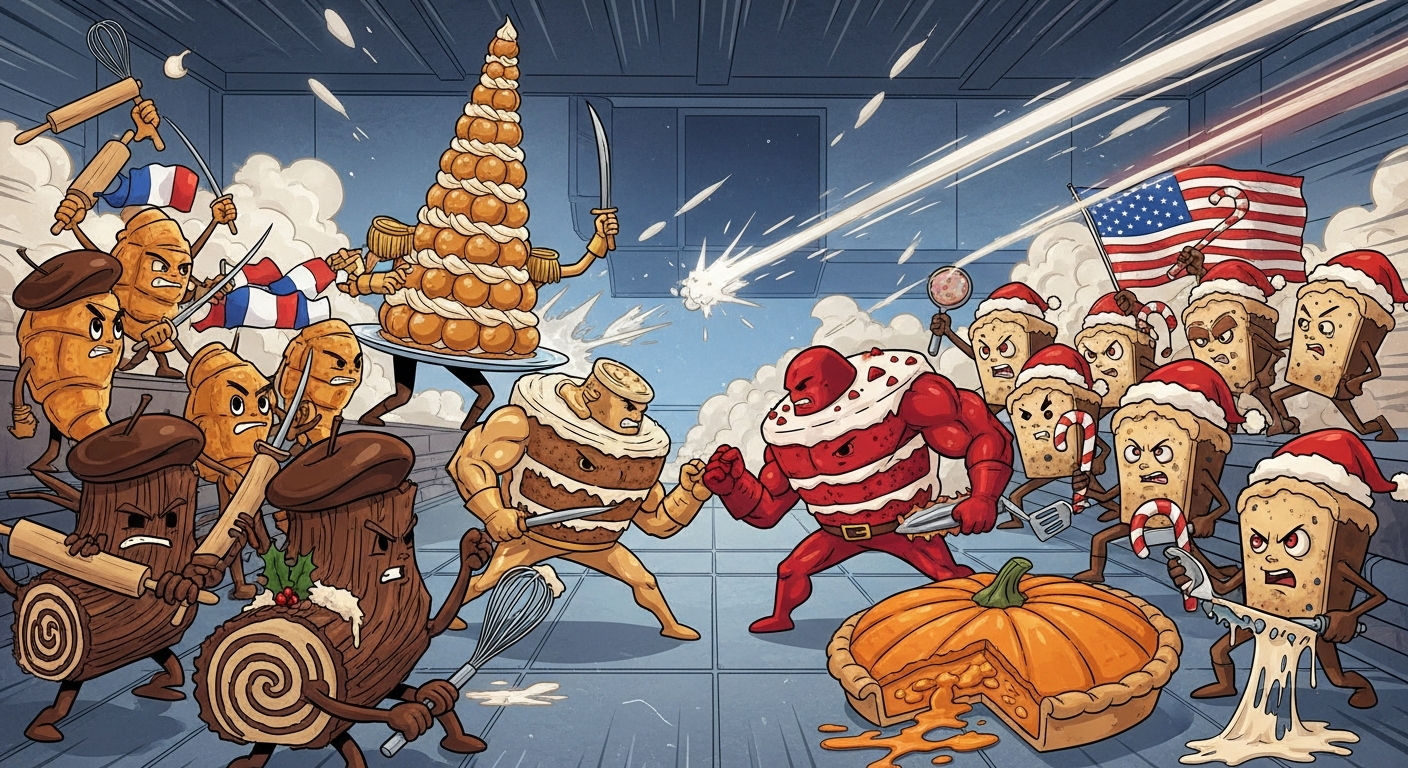
The announcement of Chef John Kraus and Elizabeth Rose’s upcoming Maison Rose in Lilydale represents far more than just another bakery opening. It signals something profound happening in American culinary culture – a renaissance of artisanal baking that directly challenges our mass-produced food system. The success of Patisserie 46 and Rose Street Patisserie, now expanding to a third location, demonstrates that consumers are increasingly rejecting industrial food products in favor of craftsmanship, tradition, and authenticity.
What makes this development particularly significant is the timing. In an era when chain restaurants and corporate food brands dominate the landscape, Kraus and Rose are doubling down on techniques that prioritize quality over convenience – and they’re thriving.
The Kugelhopf Recipe Reveals What We’ve Lost in Modern Baking
The featured Kugelhopf recipe isn’t just a set of instructions – it’s a cultural artifact that highlights everything missing from contemporary American baking. This traditional Alsatian cake requires fresh yeast (not instant), multiple rises totaling over two hours, and careful, hands-on techniques. The inclusion of Kirsch Eau de Vie (a traditional fruit brandy) further demonstrates a commitment to authentic flavors that have been systematically engineered out of commercial baked goods.
Compare this approach to the ultra-processed products that dominate grocery store shelves. Most commercial cakes contain dozens of ingredients – many unpronounceable – designed for shelf stability and cost efficiency rather than flavor. A 2019 Stanford University study found that 60% of the American diet now consists of ultra-processed foods, correlating directly with rising rates of obesity and metabolic disorders.
Kraus’ recipe, by contrast, contains simple, recognizable ingredients and demands time – the one element modern food production consistently tries to eliminate. This isn’t nostalgia; it’s a radical act of preservation.
Small Bakery Expansion Challenges the Corporate Food Monopoly
The expansion of Patisserie 46 and Rose Street Patisserie into a third location represents a significant counterpoint to the monopolization of our food system. While four companies control over 80% of beef processing and similar consolidation exists across the food industry, small-scale artisanal operations like Kraus and Rose’s enterprise demonstrate a viable alternative business model.
Their success challenges the prevailing narrative that only large-scale, highly automated food businesses can survive in today’s economy. By focusing on quality, craftsmanship, and community connection, these small bakeries have built loyal customer bases willing to pay premium prices for authentic products.
Consider the contrast with industrial bakery operations like Bimbo Bakeries USA (owner of Sara Lee, Thomas’, and Entenmann’s), which produces millions of identical products daily. While efficient, this model disconnects consumers from the craft of baking and homogenizes food culture. Chef Kraus’ expansion proves consumers hunger for an alternative.
The James Beard Foundation recognized this significance when they nominated Kraus for multiple awards. His operations represent more than delicious pastries – they’re preserving cultural heritage and technical skills that would otherwise disappear from American foodways.
The True Cost and Value of Artisanal Food
Artisanal bakeries like those run by Kraus and Rose inevitably charge more than supermarket alternatives. A handcrafted Kugelhopf might cost three or four times what a mass-produced cake would. However, this price differential reveals the hidden costs in our industrial food system rather than simple premium pricing.
When food is priced artificially low, we pay elsewhere – through environmental degradation, poor labor conditions, and public health crises. The true cost of cheap food includes the environmental impact of industrial agriculture, the economic devastation of rural communities, and the massive healthcare costs associated with diet-related disease.
Artisanal bakeries typically source higher-quality ingredients from smaller suppliers, pay living wages, and create products designed for immediate consumption rather than extended shelf life. These practices necessarily increase costs but deliver value beyond the immediate eating experience.
The growth of operations like Patisserie 46 demonstrates that consumers increasingly understand this value equation. According to the Specialty Food Association, specialty food sales grew at 10.7% annually between 2016-2020, more than three times the growth rate of conventional food, indicating a significant shift in consumer priorities.
Alternative Viewpoints: The Accessibility Problem
The most compelling criticism of the artisanal food movement centers on accessibility. Critics rightfully point out that high-quality, handcrafted foods like those produced by Chef Kraus remain inaccessible to many Americans. When a significant portion of the population struggles with food insecurity, celebrating $30 cakes can seem tone-deaf.
This criticism has merit. Food justice requires addressing both quality and accessibility. However, the solution isn’t abandoning craftsmanship for industrial production. Rather, we need to address the economic and policy structures that make quality food inaccessible while subsidizing processed alternatives.
Additionally, bakeries like Patisserie 46 often engage with their communities through education, training programs, and occasional accessibility initiatives. They serve as important repositories of knowledge that benefit the broader food system, even for those who cannot regularly afford their products.
The real problem isn’t that artisanal bakeries charge too much – it’s that we’ve normalized food prices that don’t reflect true production costs, creating an unsustainable system that ultimately harms both producers and consumers.
The Cultural Significance of Traditional Recipes
Chef Kraus’ decision to feature Kugelhopf – an Alsatian specialty with roots in Central European baking traditions – highlights another vital aspect of the artisanal baking renaissance: cultural preservation. In an increasingly homogenized food landscape, these traditional recipes maintain connections to culinary heritage that would otherwise disappear.
The complex technique and specific mold required for Kugelhopf represent knowledge passed through generations of bakers. When Chef Kraus teaches this recipe on television and serves it in his bakeries, he’s not simply selling cake – he’s preserving cultural knowledge.
This preservation has tangible value. Research from cultural anthropologists demonstrates that maintaining connection to culinary traditions significantly impacts community cohesion and individual well-being. The loss of traditional foodways correlates with diminished cultural identity and increased health problems.
By maintaining these traditions while adapting to contemporary tastes and contexts, bakeries like Patisserie 46 and the upcoming Maison Rose serve as crucial bridges between past and future.
Conclusion: Why This Matters Beyond Pastry
The expansion of Chef Kraus and Elizabeth Rose’s bakery empire represents a significant indicator of changing American food values. Their success demonstrates that craftsmanship, tradition, and quality can compete with convenience and low prices – challenging core assumptions about consumer behavior that have driven food industry consolidation for decades.
As we face unprecedented challenges in our food system – from climate change to public health crises – these small-scale, craft-focused enterprises offer vital alternatives to industrial production models. They preserve essential knowledge, maintain biodiversity through demand for heritage ingredients, and strengthen local economies.
The next time you bite into an artisanal pastry – whether from Patisserie 46 or your local bakery – remember you’re not just enjoying a treat. You’re participating in a quiet revolution that’s reclaiming our food system one loaf, one cake, one pastry at a time. The question isn’t whether we can afford artisanal food – it’s whether we can afford to lose the knowledge, tradition, and quality it represents.