
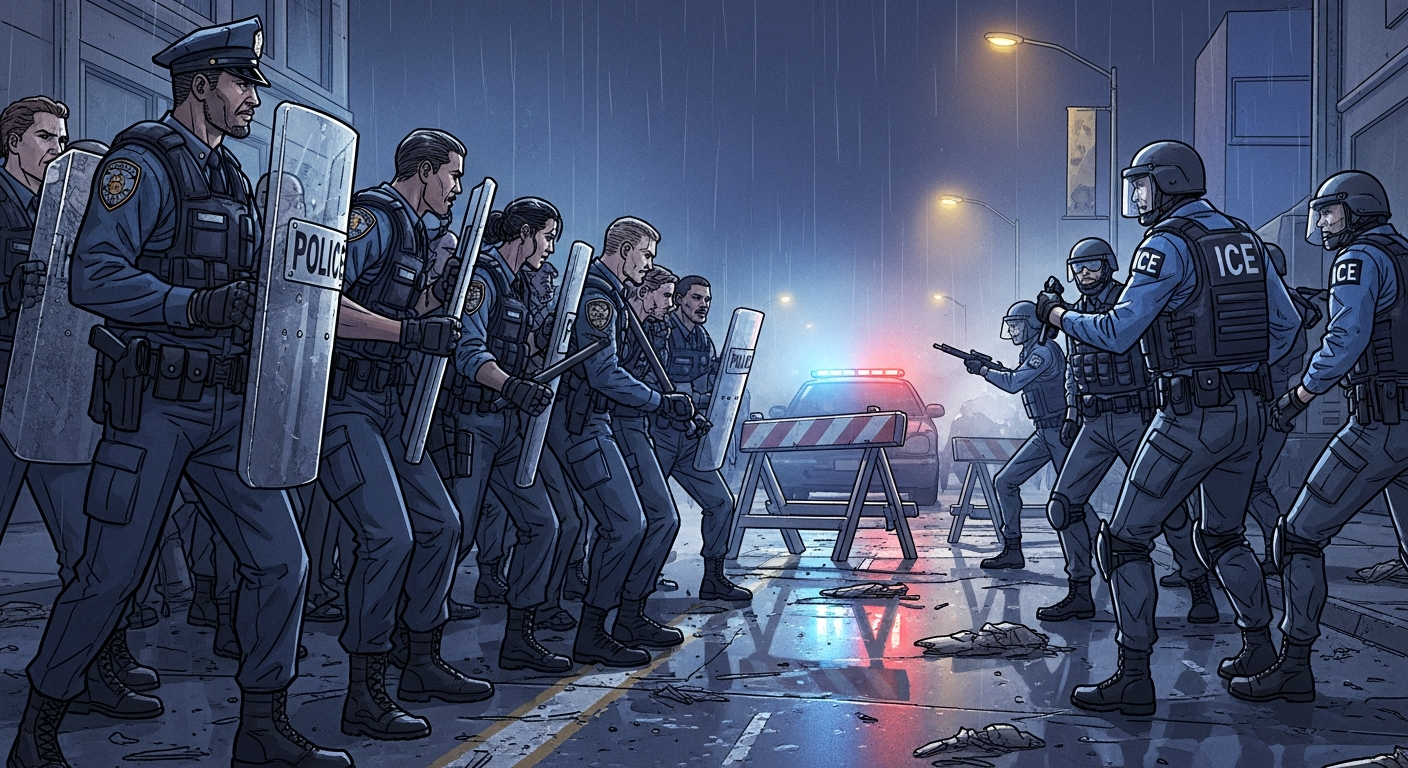
The recent clash between ICE agents and protesters in Minneapolis represents more than just an isolated incident—it signals a troubling divergence in policing standards between federal and local agencies. When Minneapolis Police Chief Brian O’Hara criticizes federal immigration agents for using ‘questionable methods,’ we’re witnessing the consequences of a two-tier approach to law enforcement reform that threatens to undermine years of progress following George Floyd’s murder.
The scene described is disturbingly familiar: an officer kneeling on a person’s back as they claim they can’t breathe, followed by dragging them by one arm toward a vehicle. That this occurred just miles from where George Floyd was killed makes the parallel impossible to ignore. The difference? This time it was federal agents, not local police, employing tactics that Minneapolis officers have specifically been trained to avoid.
Federal Agencies Operating Outside Local Reform Standards
Minneapolis police have undergone intensive de-escalation training in the five years since Floyd’s death—a necessary response to restore community trust. Chief O’Hara’s decision to withdraw officers from the scene rather than assist federal agents demonstrates a commitment to these reformed practices. However, this incident exposes a critical gap: while local departments face intense scrutiny and reform mandates, federal agencies like ICE appear to operate under different standards.
This disparity creates a dangerous precedent. In Portland during 2020, federal agents deployed against protesters used tactics local police had been barred from employing. Similarly, in Philadelphia in 2022, ICE raids conducted without coordination with local authorities undermined community policing efforts. The Minneapolis incident follows this troubling pattern, with federal agents apparently disregarding local use-of-force guidelines that prohibit techniques like those witnessed by bystanders.
Community Policing Undermined by Aggressive Enforcement
The escalating tensions in Minneapolis’s Somali community—the largest in the country—highlight the collateral damage of aggressive immigration enforcement. When communities perceive law enforcement as threatening rather than protective, cooperation evaporates. Studies from the Urban Institute show that immigrant communities report fewer crimes when they fear immigration enforcement, making everyone less safe.
Witness accounts describing officers shoving bystanders and using chemical irritants without apparent provocation stand in stark contrast to community policing models. Lauryn Spencer’s observation that officers