
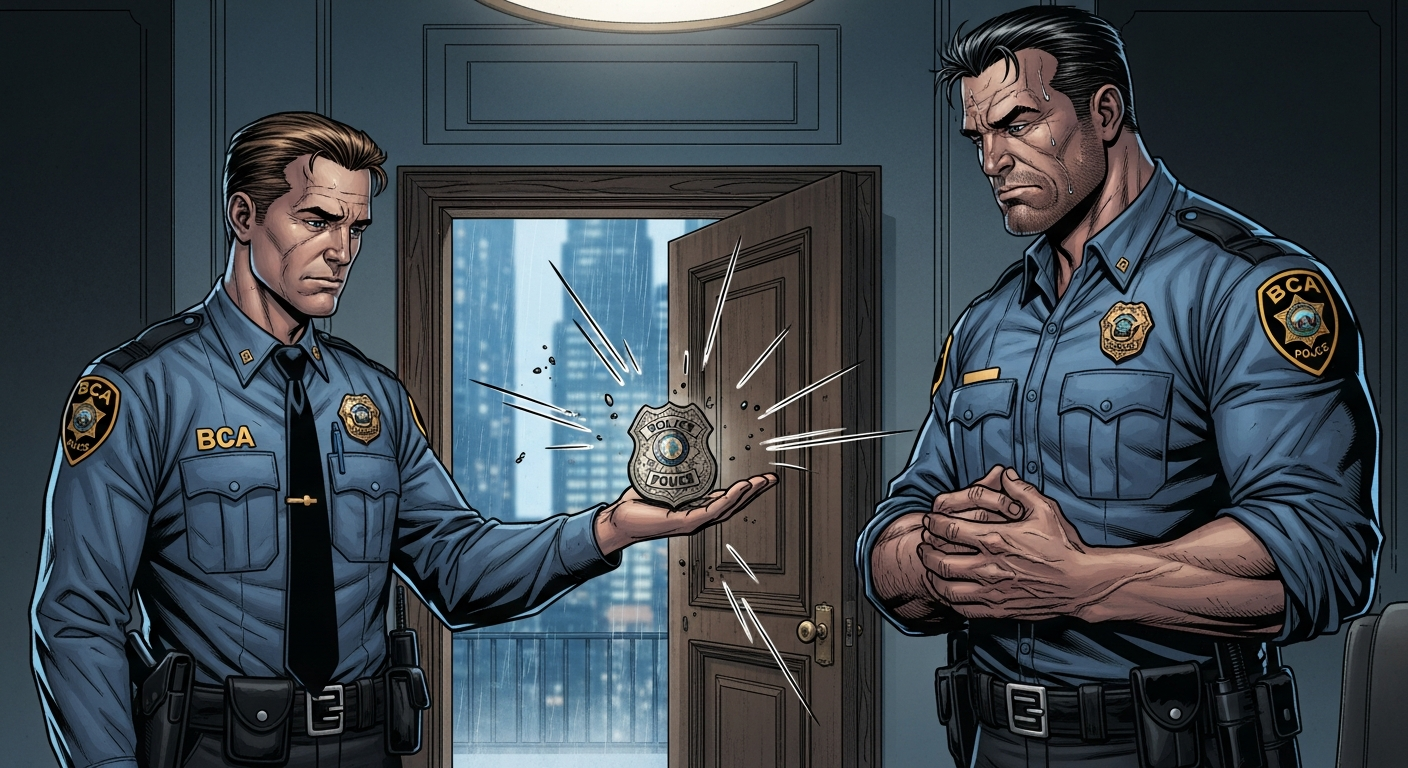
Last week’s incident in Minneapolis where a police officer fired at an armed suspect without causing injury represents a nuanced case study in the ongoing national conversation about police use of force. While many headlines focus exclusively on tragic outcomes, this encounter offers an opportunity to examine police response through a more balanced lens. The facts suggest officers followed protocol while showing remarkable restraint in a potentially volatile situation.
The incident unfolded when officers responded to a serious call – a resident reporting their neighbor had pointed a gun at their mother. When the suspect emerged from his apartment holding a firearm and refused commands to drop it, an officer fired twice. Remarkably, the suspect was uninjured and subsequently taken into custody.
Police Face Impossible Split-Second Decisions Under Intense Scrutiny
The reality of modern policing involves making life-or-death decisions in fractions of seconds while knowing every action will be dissected for months afterward. In this Minneapolis case, officers confronted an armed individual who had allegedly already threatened someone with a gun – presenting a textbook high-risk scenario. The officers’ decision to use force when the suspect refused to drop his weapon aligns with standard police training nationwide.
Consider the 2019 case of Officer Stephen Mader in West Virginia, who was fired for not shooting an armed suspect he believed was attempting ‘suicide by cop.’ Mader assessed the man wasn’t an immediate threat to others despite holding a gun. While he eventually won a wrongful termination lawsuit, his case illustrates the damned-if-you-do, damned-if-you-don’t reality officers face. The Minneapolis officers, confronting a suspect who had allegedly already threatened someone, made a different calculation about public safety.
What deserves particular attention in this Minneapolis incident is that despite discharging a weapon, no injuries occurred. This suggests either remarkable marksmanship designed to avoid lethal outcomes or a demonstration of restraint in a tense situation – both worthy of acknowledgment rather than just criticism.
Body Cameras Represent Progress, Not Just Accountability Tools
The BCA’s statement that officers wore body cameras during this incident represents significant progress in policing transparency. These devices serve multiple purposes: they protect citizens from potential misconduct, but they also protect officers from unfounded accusations and provide critical context for use-of-force incidents.
The Washington Post’s database on police shootings shows that in jurisdictions with comprehensive body camera programs, complaints against officers have dropped significantly – in some cases by over 90%. Body camera footage often provides crucial context that initial reports miss. In a 2021 Columbus, Ohio case, initial public outrage over a police shooting was substantially tempered when body camera footage showed the deceased individual was in the process of stabbing another person when officers fired.
While the Minneapolis incident’s body camera footage hasn’t been publicly released yet, its very existence means we’ll eventually have more than just competing narratives to evaluate what transpired. This represents a meaningful advancement in policing accountability that benefits both the public and officers themselves.
Critical Incident Leave Protects Mental Health and Investigation Integrity
The officer being placed on critical incident leave following the shooting isn’t punitive – it’s a necessary protocol that serves multiple important purposes. This administrative action allows for proper investigation while also addressing the psychological impact such incidents have on officers.
Research from the Police Executive Research Forum shows that officers involved in critical incidents, particularly shootings, experience significant psychological stress regardless of whether the outcome was justified. A 2020 study in the Journal of Traumatic Stress found that 46% of officers involved in shootings experienced significant PTSD symptoms in the following months.
Critical incident leave provides necessary mental health support while ensuring officers aren’t immediately placed back into potentially volatile situations before proper evaluation. The Minneapolis Police Department’s adherence to this protocol demonstrates commitment to both officer wellbeing and investigative integrity.
Alternative Viewpoints: Legitimate Concerns About Police Use of Force
Critics of police use of force raise valid concerns about whether non-lethal alternatives receive sufficient consideration in training and practice. De-escalation techniques have proven effective in numerous cases, and some argue that American police training overemphasizes firearm use compared to peer nations.
The Minneapolis Police Department has faced particular scrutiny following the murder of George Floyd, and trust between law enforcement and communities remains strained. Some community advocates might question whether firing a weapon was necessary in this case, even if the suspect was armed, particularly since the suspect was ultimately taken into custody without injury.
These perspectives deserve serious consideration. However, they must be balanced against the reality that officers were responding to a report of an armed threat, and the suspect emerged holding a weapon while refusing commands to drop it. Unlike many cases where critics question whether a suspect was actually armed, this incident appears to involve a confirmed firearm recovered at the scene.
The Need for Context in Police Incident Reporting
Media coverage of police incidents often lacks crucial context that helps the public understand use-of-force decisions. Initial reports frequently omit details about what preceded a confrontation, what officers knew at the time, and what specific threats they perceived.
The Star Tribune’s Police Shooting Database reveals that in Minnesota, approximately 45% of police shootings involve subjects actively pointing weapons at officers or others. This context matters tremendously when evaluating officer decisions, yet often gets minimized in reporting that focuses primarily on outcomes.
More comprehensive reporting would include statistics on how frequently police successfully de-escalate armed encounters without firing weapons, providing a baseline for evaluating incidents where shots are fired. It would also provide context about the frequency of various police interactions compared to use-of-force incidents.
Conclusion
This Minneapolis incident represents a case where officers followed protocols while showing remarkable restraint. They responded to a reported threat, confronted an armed individual who refused to drop his weapon, fired with sufficient control to avoid injury, secured the suspect, and followed proper post-incident procedures. While every police use of force deserves scrutiny, this case appears to demonstrate professional policing rather than misconduct.
As communities continue important conversations about police reform, acknowledging instances where procedures work as intended is just as important as identifying failures. Building effective police-community relations requires recognizing both the legitimate concerns about excessive force and the reality that officers sometimes face genuinely dangerous situations requiring split-second decisions. This balanced perspective doesn’t excuse misconduct but creates space for nuanced evaluation of complex situations.