
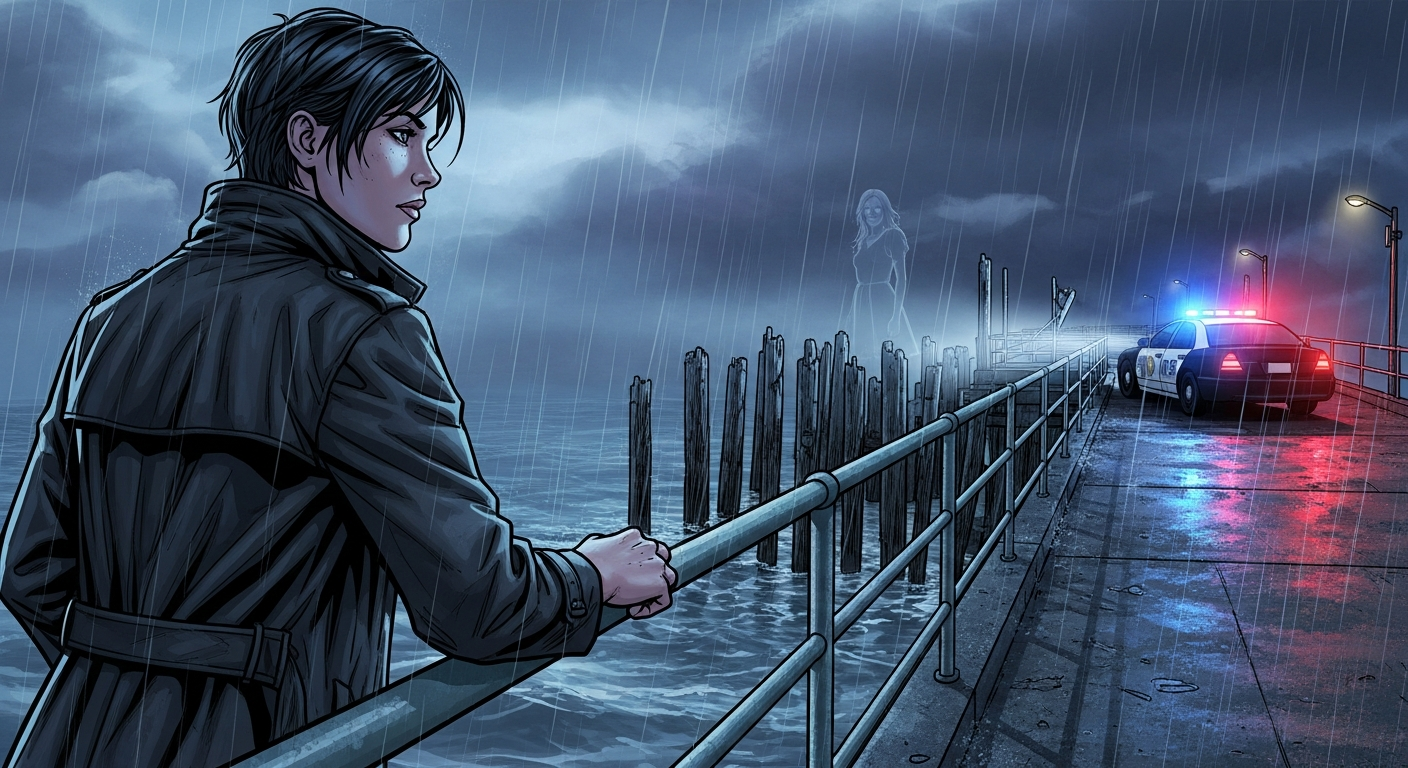
Donna Ingersoll vanished into the December night 35 years ago without proper clothing, money, or even her glasses—and our justice system has effectively vanished along with her. The case of this 4’11” woman with strawberry blonde hair represents thousands of cold cases that expose a fundamental failure in our approach to justice: investigations that cool with time rather than intensify. When Ingersoll walked out of that Wabasha house party after an argument with her boyfriend in 1990, she entered a limbo where too many missing persons remain—remembered occasionally through brief news updates but rarely benefiting from sustained investigative pressure.
The boyfriend’s suicide the following summer complicated matters, but it should never have ended them. The fact that foul play is suspected yet the case remains unsolved after three and a half decades points to systemic failures that demand addressing. This isn’t just about one missing woman in Minnesota—it’s about how we value justice for victims who no longer generate headlines.
Cold Cases Reflect Resource Allocation, Not Case Difficulty
The persistent myth that cold cases remain unsolved primarily because they’re inherently difficult to crack misses the fundamental truth: most remain unsolved because of resource allocation decisions, not investigative impossibilities. When Wabasha Police Chief Dave Kruger expressed in 2005 that it bothered him they hadn’t closed the case, the statement itself reveals the problem—expressing regret doesn’t solve cases; dedicated investigative resources do.
Consider the Golden State Killer case, unsolved for decades until genealogical DNA techniques finally identified Joseph James DeAngelo in 2018. The breakthrough didn’t come from simply waiting for new evidence to materialize—it came from applying new technology and dedicating significant resources to the investigation. Similarly, the identification of the 1988 Bear Brook murders victims came after decades, not because the case was impossible, but because persistent investigators finally applied emerging forensic techniques.
Donna Ingersoll’s case, like thousands of others, likely contains solvable elements that remain unexplored due to practical constraints in police departments. Small departments like Wabasha’s face overwhelming caseloads with limited personnel. The Minnesota Bureau of Criminal Apprehension (BCA) handles numerous cases across the state. Without dedicated cold case units with protected budgets and specialized training, cases inevitably slide into permanent limbo.
The Suicide of a Key Witness Should Trigger More Investigation, Not Less
The suicide of Gary Murphy, Ingersoll’s boyfriend and potentially the last person to see her alive, should have intensified the investigation rather than complicated it to the point of effective abandonment. Murphy’s death the summer following Ingersoll’s disappearance creates a convenient narrative endpoint for investigators—a suspect who can no longer be questioned or charged.
This pattern repeats across countless cases. When Robert Durst, long suspected in his wife Kathie’s 1982 disappearance, died in 2022 shortly after being convicted in a separate murder, many viewed it as the end of Kathie’s case. Similarly, when Steve Branch, the primary suspect in the 1993 disappearance of Stephanie Crane in Idaho, died in 2017, the investigation lost momentum despite no body ever being found.
The death of a suspect should trigger a comprehensive review of all evidence, not a gradual winding down of investigative efforts. Murphy’s suicide raises questions that deserve answers—was it motivated by guilt, by grief, or by entirely unrelated factors? Did he leave behind evidence, writings, or statements that were never fully explored? These questions likely remain inadequately investigated decades later.