
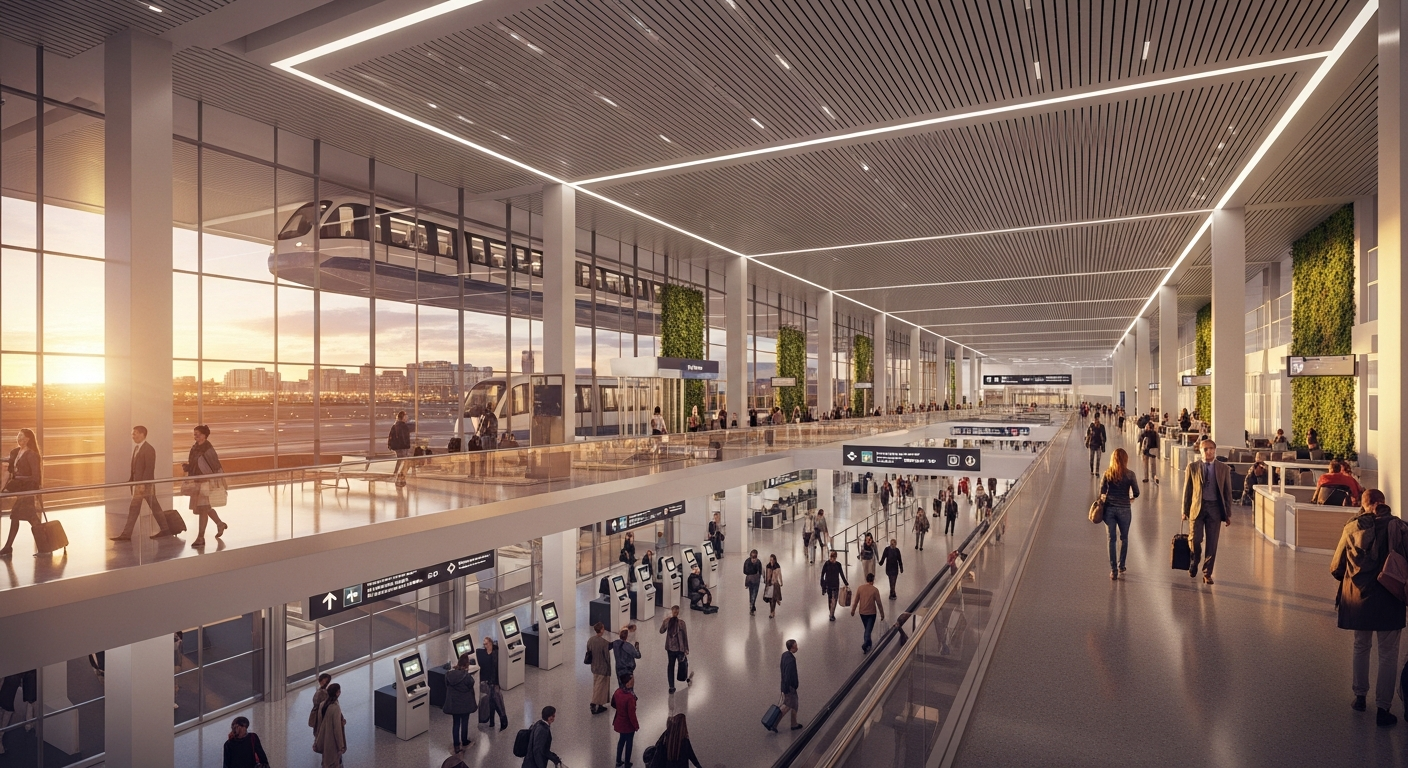
Minneapolis-St. Paul International Airport’s gleaming new $242 million renovation of Terminal 1 represents more than just aesthetic improvements—it symbolizes a fundamental disconnect between passenger priorities and airport spending. While travelers nationwide face canceled flights, skyrocketing ticket prices, and increasingly cramped seating, MSP and Delta have invested enormous sums in cosmetic upgrades like terrazzo flooring and column wrapping. The question we should be asking: does this actually address what air travelers need most?
Aesthetic Upgrades Mask Deeper Industry Problems
The renovation’s focus on visual elements—new flooring, wall finishes, metal panel ceilings—comes at a time when the air travel experience has deteriorated in more fundamental ways. According to the U.S. Department of Transportation, airlines canceled over 210,000 flights in 2022 alone, affecting millions of passengers. Meanwhile, average legroom in economy class has shrunk by 4 inches since the 1980s, and basic economy fares often don’t even include carry-on baggage.
The $242 million price tag raises serious questions about priorities. While wayfinding improvements and power outlets offer genuine utility, they represent a fraction of the overall investment. Consider that Delta, which contributed $60 million to these renovations, simultaneously reduced its minimum seat pitch to 30 inches on many aircraft and introduced basic economy fares that strip away traditional amenities. The juxtaposition is striking: premium materials in the terminal lead passengers to increasingly uncomfortable aircraft.
The Phoenix Sky Harbor International Airport took a different approach with its recent $590 million renovation of Terminal 3, allocating substantial funding to expanded security checkpoints that reduced wait times by an average of 12 minutes during peak periods. This demonstrates how infrastructure investments can directly address travelers’ primary pain points rather than merely creating a more pleasant waiting area.
The Economic Case: Does Aesthetic Investment Pay Off?
Airport officials and airlines frequently justify terminal renovations as necessary to attract premium travelers and maintain competitiveness. The economic logic suggests beautiful terminals drive passenger preference and spending. Data partially supports this claim—a 2019 ACI study found that passenger satisfaction increases 1.5% for each 10% increase in terminal aesthetic quality.
However, this logic falls apart when examining actual booking behavior. A 2022 Deloitte travel survey revealed that 79% of leisure travelers and 68% of business travelers rank ticket price as their primary consideration when booking flights, with on-time performance ranking second. Terminal aesthetics didn’t make the top five factors. The renovation’s $242 million investment—ultimately passed to travelers through fees and fares—seems disconnected from what actually drives consumer choices.
Singapore’s Changi Airport presents an instructive counterpoint. Its renowned Terminal 4 cost approximately $985 million but focused investments on automated check-in systems that reduced processing time by 65% and advanced baggage handling that decreased mishandled luggage by 30%. These improvements address concrete pain points while still delivering aesthetic excellence.
The Sustainability Question
The MSP renovation’s emphasis on new materials raises important sustainability concerns. The project involved significant demolition and replacement of functional existing infrastructure. While the new LED lighting delivers genuine energy efficiency, the environmental footprint of manufacturing and installing new terrazzo flooring, metal ceiling panels, and wall finishes is substantial.
Airport construction generates enormous waste. A typical terminal renovation produces approximately 250,000 tons of construction waste, with only about 30% typically diverted from landfills. The carbon footprint of manufacturing new materials often negates decades of operational efficiency improvements. While the MSP announcement mentions LED lighting, it lacks discussion of broader sustainability metrics like embodied carbon or waste diversion rates.
San Francisco International Airport’s Harvey Milk Terminal 1 renovation offers an alternative model. The project achieved zero waste by reusing or recycling 95% of construction debris and incorporated carbon-sequestering materials that offset 4,000 metric tons of CO2. This approach demonstrates how aesthetic improvements can be achieved while prioritizing environmental responsibility.
Alternative Viewpoints: The Case for Terminal Investments
Defenders of terminal renovations point to several legitimate benefits. First, improved wayfinding genuinely reduces passenger stress and missed connections. The dynamic gate signage visible from farther distances helps travelers navigate more efficiently, particularly valuable for elderly passengers or those with disabilities.
Second, terminal improvements can generate additional non-aeronautical revenue through increased retail spending, potentially offsetting costs. Research from airport retail specialist Pragma indicates that passengers spend 15-20% more in well-designed, modern retail environments compared to dated terminals.
Third, these investments create construction jobs and support local economies. The MSP project undoubtedly provided significant employment during its two-year construction period. However, these arguments still don’t address whether the same funds could have delivered greater passenger benefit through different priorities.
The Path Forward: Balancing Aesthetics With Function
The MSP renovation isn’t inherently misguided—it’s imbalanced. The problem lies not in improving terminals but in prioritizing cosmetic enhancements over operational improvements. Future airport investments should adopt a passenger-centric approach that balances aesthetics with meaningful operational enhancements.
Airports should allocate at least 50% of renovation budgets to improvements that directly address passenger pain points: expanded security checkpoints, advanced baggage systems, improved ground transportation, and technology that streamlines the journey. The remaining budget can then reasonably focus on creating pleasant environments without shortchanging functional needs.
The MSP Terminal 1 renovation represents a missed opportunity to reimagine what airport investment should prioritize in today’s challenging travel landscape. While passengers will certainly appreciate the brighter, more modern environment, they would likely have preferred investments that make their journey more reliable, efficient, and affordable. As air travel continues facing operational challenges, our infrastructure investments must address fundamental needs rather than merely creating more attractive spaces in which to experience travel frustrations.