
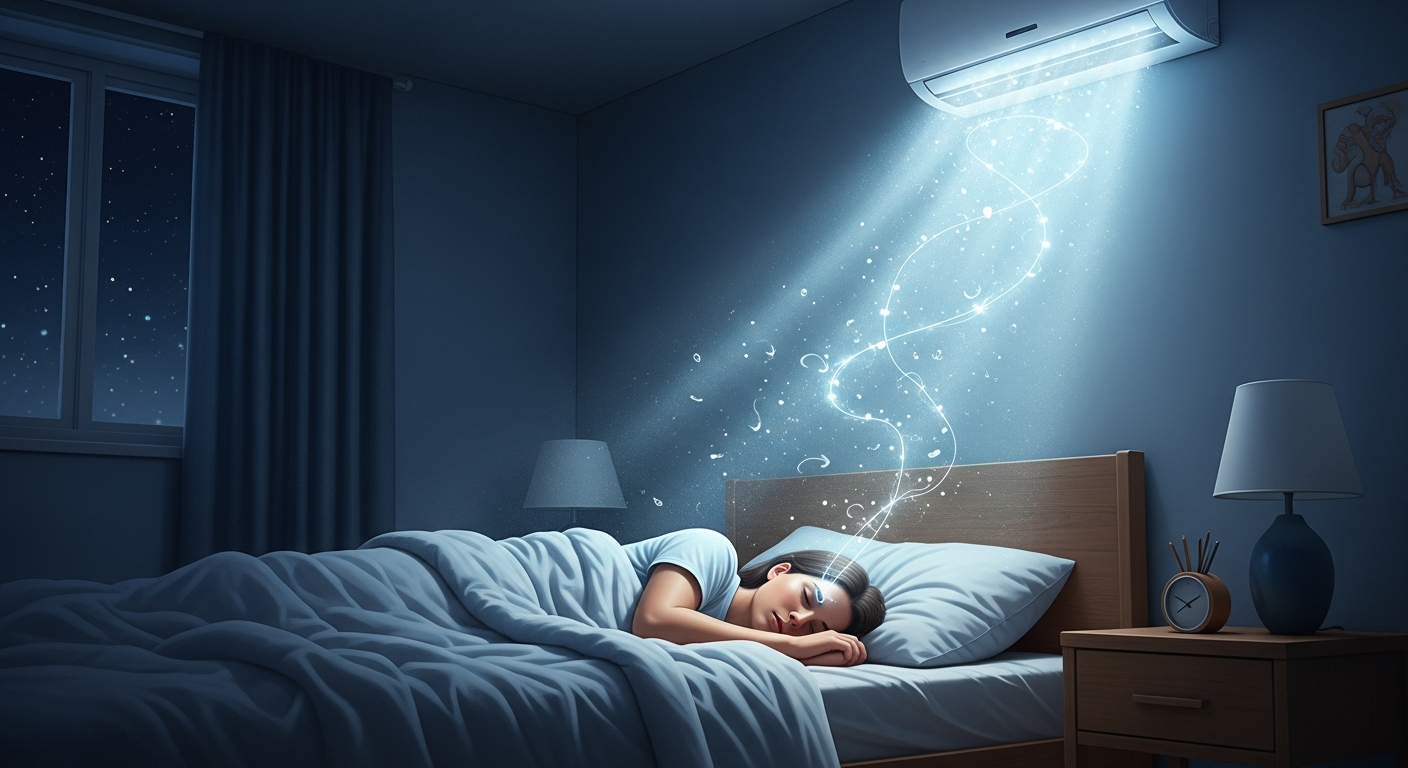
Jennifer Caldwell spent three years cycling through sleep medications, meditation apps, and expensive mattresses before discovering the culprit behind her chronic insomnia: the neglected air ducts lurking behind her bedroom walls. ‘I never made the connection,’ she says, describing the revelation that transformed her sleep from fitful to restorative. ‘It wasn’t until the HVAC technician showed me what was circulating through my home that I understood what I’d been breathing all night.’
What Caldwell experienced represents an overlooked dimension of America’s sleep crisis—one that public health officials and sleep scientists have largely ignored in favor of more visible factors like screen time and stress. Yet emerging research suggests the microscopic particulates cycling through our bedrooms may be as disruptive to our circadian rhythms as the blue light from our devices.
The Invisible Ecosystem Above Our Heads
The average American home’s air duct system processes approximately 1,000 cubic feet of air per minute, circulating it through living spaces roughly five to seven times daily. This invisible current becomes the atmospheric soup we unconsciously consume during the eight hours we spend in our most vulnerable state: sleep. ‘We’re essentially marinating in whatever our ventilation systems are distributing,’ explains Dr. Raymond Chen, pulmonologist at Northwestern Memorial Hospital and author of The Air We Breathe.
What exactly are we marinating in? According to the EPA, indoor air typically contains two to five times more pollutants than outdoor environments—a statistic that becomes more troubling when considering that most duct systems haven’t been cleaned in years, sometimes decades. The accumulated build-up becomes a breeding ground for allergens, mold spores, dust mites, and other particulates that wreak havoc on respiratory systems and, by extension, sleep architecture.
‘The trick isn’t just understanding that clean air matters,’ says Chen. ‘It’s recognizing that sleep quality represents one of the most sensitive barometers of air quality.’ Indeed, studies from the Sleep Research Society have demonstrated that particulate matter concentrations as low as 10 micrograms per cubic meter—well below what’s found in many bedrooms—can increase sleep fragmentation by 5-15% and reduce REM sleep by similar margins.
The Historical Disconnect
Our ancestors understood the connection between air and sleep intuitively. Ancient Romans positioned bedrooms away from cooking smoke; Victorian-era physicians prescribed ‘sleep with windows open’ as standard medical advice; and early 20th century sanitariums for tuberculosis patients emphasized fresh air as crucial to recovery. Yet somewhere in our rush to climate-controlled environments, we severed this ancient wisdom from modern practice.
The disconnection accelerated in the 1970s energy crisis, when American architecture pivoted toward sealed, energy-efficient buildings. ‘We essentially created airtight sleep chambers without considering the consequences,’ explains architectural historian Dr. Margaret Winters. ‘The energy-efficiency movement inadvertently prioritized thermal insulation over respiratory health.’
This architectural shift coincided with another significant change: the proliferation of synthetic materials in home furnishings, which off-gas volatile organic compounds (VOCs) that become trapped in closed circulation systems. The result is a perfect storm of recirculated pollutants that peaks during nighttime hours when ventilation is typically reduced and human bodies are most vulnerable to their effects.
The Science of Sleep Disruption
Sleep researchers now recognize that respiratory irritation—even at subclinical levels—triggers subtle fight-or-flight responses that fragment sleep cycles. ‘The body doesn’t fully power down when it’s actively defending against irritants,’ explains Dr. Eliza Montgomery, neurologist and sleep specialist at UCLA Medical Center. ‘Even if you don’t fully wake, your brain shifts to lighter sleep states when breathing is compromised.’
This insight helps explain why air duct cleaning services often report customer feedback that extends beyond respiratory improvements to include unexpected benefits like enhanced sleep quality, improved dream recall, and reduced morning grogginess. What many dismiss as placebo effect actually reflects the profound neurological impact of breathing cleaner air during sleep cycles.
The connection works through multiple pathways. First, particulates from dirty ducts can physically irritate airways, causing micro-arousals throughout the night. Second, certain molds and bacteria emit mycotoxins that affect neurotransmitter function. Third, the immune system’s response to airborne irritants increases inflammatory cytokines that directly disrupt sleep regulation in the hypothalamus.
Beyond Cleaning: A Systems Approach
While professional duct cleaning provides immediate benefits, sleep and respiratory experts advocate for a more comprehensive approach. ‘Cleaning is essential but insufficient alone,’ says indoor air quality consultant Maria Vasquez. ‘The insights we’ve gained from working with sleep clinics suggest we need to think about air as a dynamic system rather than a static cleaning task.’
This systems approach includes strategic considerations often overlooked in standard maintenance advice. For instance, bedroom supply vents ideally should be positioned to create gentle air circulation without directing flow directly onto sleeping areas. Return vents should be located to draw away carbon dioxide that sleepers naturally exhale in higher concentrations. And filtration systems should prioritize the capture of particles in the 0.3-1.0 micron range—the size most likely to penetrate deep into lung tissue during sleep’s deeper breathing patterns.
‘The most valuable trick in our toolkit isn’t a cleaning technique but a timing insight,’ explains Vasquez. ‘Scheduling duct maintenance seasonally rather than on fixed annual intervals accounts for how different pollutants cycle through homes at different times of year.’ Spring cleanings address winter’s accumulated combustion byproducts, while fall maintenance targets summer’s mold and pollen accumulation—each addressing distinct respiratory irritants before they impact sleep during vulnerable seasonal transitions.
The Democratization of Clean Sleep
Perhaps most encouraging in this emerging field is how accessible its benefits remain across socioeconomic lines. Unlike many health interventions that require expensive equipment or subscriptions, basic air duct maintenance represents a relatively affordable intervention with outsized returns on sleep quality.
Community health initiatives in cities like Philadelphia and Detroit have begun incorporating duct cleaning into asthma intervention programs, with preliminary data showing improvements not just in respiratory symptoms but in school performance metrics linked to sleep quality. These programs reveal that clean air isn’t merely a comfort upgrade but a public health opportunity with cascading benefits.
As Jennifer Caldwell discovered after her revelation about her home’s air quality, the path to better sleep sometimes runs through the most overlooked channels in our daily lives. ‘I spent thousands on sleep solutions,’ she reflects, ‘when what I needed most was circulating through my home all along, just waiting to be cleaned.’