
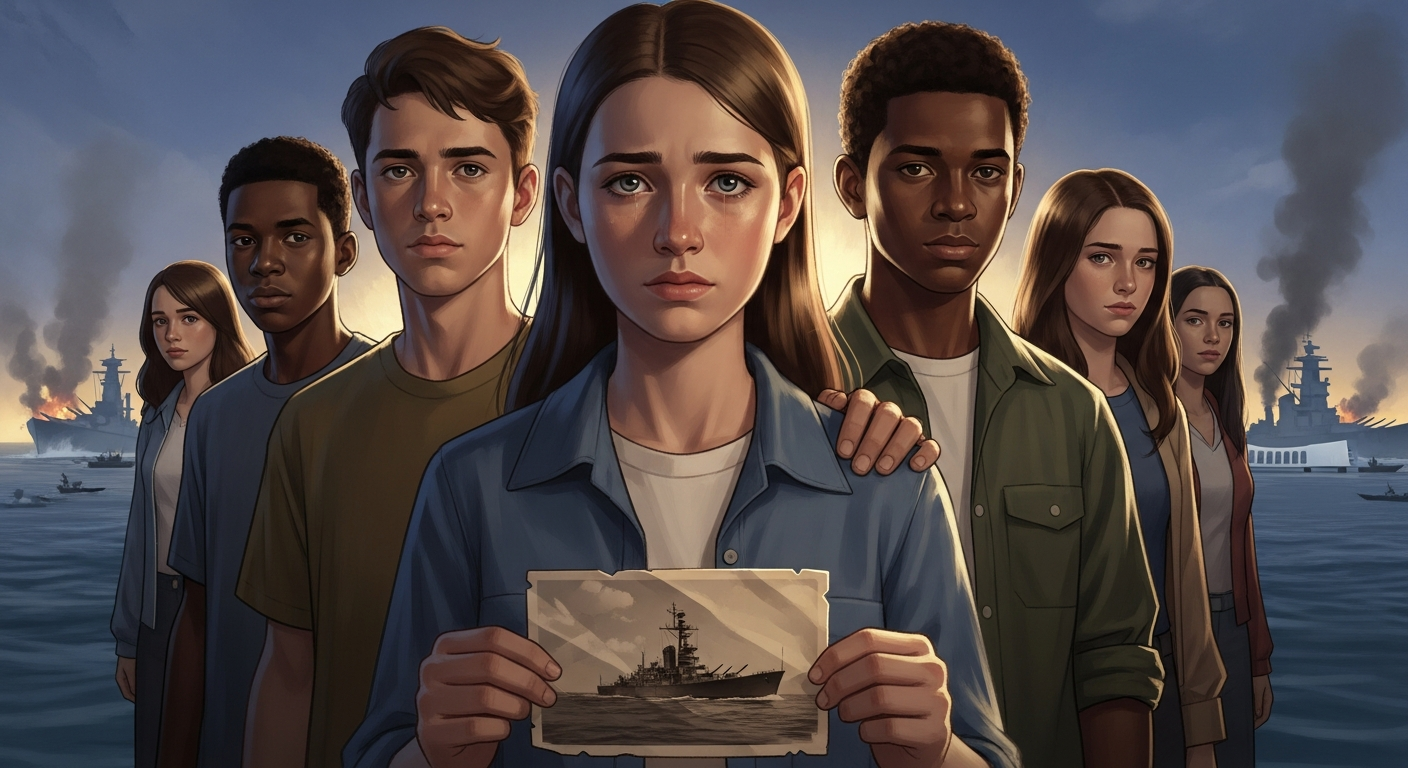
In an era where historical awareness among young Americans continues to decline, the Lakeville South Band’s selection to perform at the Pearl Harbor Remembrance Day ceremony represents far more than a prestigious musical opportunity—it’s a vital bridge connecting generations through shared remembrance. This performance stands as a powerful counterpoint to troubling data showing that only 15% of American high school students demonstrate proficiency in U.S. history, according to recent National Assessment of Educational Progress findings. When students physically stand where history happened, they absorb lessons that textbooks alone cannot convey.
Experiential Learning Trumps Classroom Instruction
The traditional approach to history education—reading textbooks and memorizing dates—consistently fails to create lasting historical literacy. The Lakeville South Band students walking the grounds of Pearl Harbor, seeing the names etched on the USS Arizona Memorial, and performing in honor of the 2,400 Americans who died there will internalize this history in ways impossible to replicate in a classroom. This represents exactly the kind of experiential learning that educational research consistently shows creates deeper, more permanent understanding.
Consider the Living History program at Colonial Williamsburg, which has demonstrated that students who physically engage with historical environments retain historical information at rates 40% higher than those learning through traditional methods. Similarly, the Holocaust Museum’s educational programs show that when students connect emotionally to historical events through physical presence and participation, their understanding transcends mere facts to encompass the human dimension of history.
When drum major Jon Ariza calls this a ‘fantastic opportunity,’ he’s unconsciously acknowledging this educational truth. The band members aren’t just performing music; they’re absorbing history through a multisensory experience that engages them emotionally, intellectually, and physically.
Music as Historical Preservation
Band director Chad Bieniek’s observation that this experience ‘puts them inside of history’ highlights music’s unique power as a vehicle for historical preservation. Music serves as both art and artifact—a living connection to the past that engages audiences and performers alike. The Lakeville South Band isn’t merely playing notes; they’re participating in a cultural ritual of remembrance that has preserved historical memory for centuries.
The U.S. military has long recognized this power. Military bands date back to the Revolutionary War, when music served practical battlefield communication purposes. Today, they fulfill a different but equally crucial role: maintaining cultural memory through ceremonial performances. The Navy Band’s annual performances at Pearl Harbor create continuity between past and present, ensuring that even as direct witnesses to history pass away, their stories endure.
This tradition finds parallels in other cultures. In Japan, the preservation of traditional gagaku court music for over a thousand years has maintained cultural continuity despite massive social changes. In West Africa, griots have preserved oral histories through music for generations. The Lakeville students join this ancient tradition of using music to carry historical memory forward.
Creating Cultural Ambassadors
The selection of Lakeville South as one of just 14 mainland bands for this ceremony transforms these students into cultural ambassadors who will carry this experience back to their communities. Research from the National Endowment for the Arts shows that arts participation creates stronger civic engagement, with students who participate in the arts being 20% more likely to volunteer in their communities and 24% more likely to be involved in civic activities as adults.
When color guard captain Nika Wolf speaks of ‘walking on the ground of all those amazing people that fought for our country,’ she’s articulating the beginning of this transformation. These students will return to Minnesota carrying not just memories but a sense of connection to national history that will influence how they participate in civic life going forward.
The ripple effects extend beyond the band members themselves. Their performance will be witnessed by ceremony attendees, including veterans and their families. Their experiences will be shared with peers, parents, and community members. In this way, 14 bands become hundreds of individual storytellers who preserve and transmit historical memory.
Alternative Viewpoints: Is This Just a Tourist Experience?
Critics might argue that such trips amount to little more than educational tourism—expensive excursions that provide fleeting experiences without lasting educational impact. Some educational researchers have questioned whether short-term immersive experiences produce meaningful long-term learning, suggesting that without proper contextual preparation and follow-up, such experiences may become mere souvenirs rather than transformative educational moments.
This concern has merit. One-time experiences without proper context and integration into broader educational frameworks can indeed become isolated memories rather than building blocks of deeper understanding. However, the ceremonial nature of this particular performance, combined with the emotional resonance of the Pearl Harbor site, creates conditions particularly conducive to meaningful learning.
The key lies in how educators frame the experience before, during, and after the event. If the Lakeville South band directors are integrating historical context, encouraging reflection, and helping students connect their experience to broader themes in American history, then this performance becomes far more than tourism—it becomes a genuine educational milestone.
The Urgency of Historical Memory in the Digital Age
As the last living Pearl Harbor survivors pass away (fewer than 1,500 remain today), and as digital information overwhelms young people’s attention spans, experiences that create emotional connections to history become increasingly crucial. The Pearl Harbor attack happened 84 years ago—beyond living memory for most Americans. Without deliberate efforts to preserve this memory, it risks fading into the background of American consciousness.
The Japanese attack on Pearl Harbor fundamentally altered America’s role in world affairs, leading directly to U.S. entry into World War II and eventually to America’s emergence as a global superpower. Understanding this pivotal moment helps citizens contextualize current geopolitical realities. When Lakeville South students perform at this ceremony, they’re not just honoring the past—they’re helping ensure that crucial historical knowledge remains alive in public consciousness.
This matters particularly in an era where historical knowledge among Americans continues to decline. A 2018 survey found that 22% of millennials weren’t sure if they had heard of the Holocaust, while a 2020 survey revealed that 63% of young adults didn’t know that 6 million Jews were killed in the Holocaust. These statistics suggest a broader erosion of historical knowledge that makes experiences like the Lakeville South band’s performance all the more valuable.
The Future of Historical Memory
As we move further from the events of December 7, 1941, keeping this history alive will require increasingly creative approaches. The participation of young musicians in commemorative ceremonies represents one such approach—engaging new generations through active participation rather than passive learning.
The Lakeville South Band’s performance at Pearl Harbor should serve as a model for how we might preserve historical memory in the coming decades. By involving young people directly in commemorative events, by physically placing them in historically significant locations, and by giving them active roles in ceremonies of remembrance, we create the conditions for genuine historical understanding to develop and persist.
This approach recognizes that historical memory isn’t just about knowing facts—it’s about feeling connected to the past in ways that inform our understanding of the present and our choices about the future. When band director Bieniek speaks of music ‘bringing people together,’ he’s articulating this fundamental truth: that shared cultural experiences create bonds across time as well as space.