
{
“title”: “Nature’s Arsenal: Why Fungal Biocontrol Could Revolutionize Our Fight Against Invasive Species”,
“content”: “
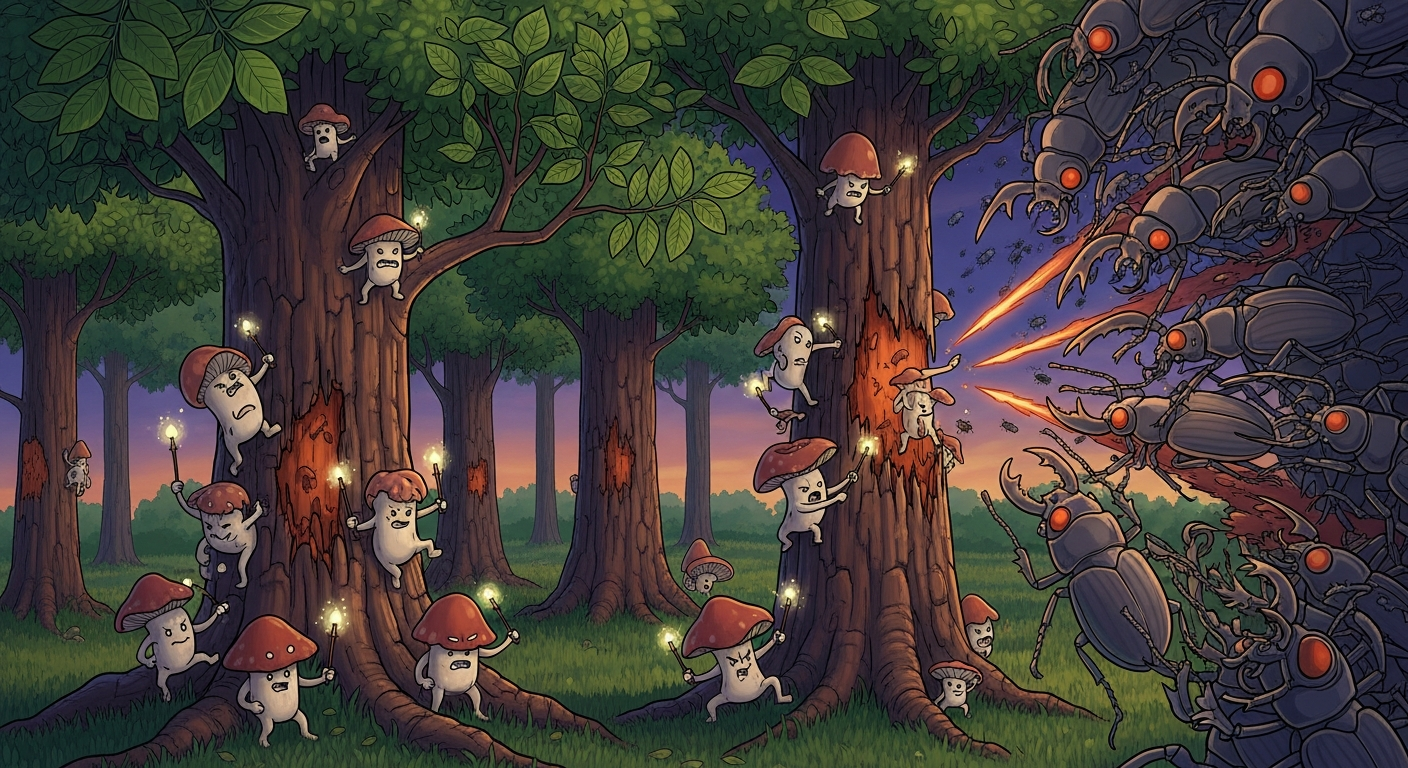
The University of Minnesota’s groundbreaking research on fungi capable of killing emerald ash borer beetles represents more than just another scientific study—it signals a potential paradigm shift in how we combat invasive species. With three fungal strains demonstrating reliable lethality against these destructive pests, we’re witnessing the dawn of a more sustainable, nature-based approach to ecological protection that could transform conservation efforts nationwide.
For too long, our response to invasive species has relied heavily on chemical pesticides and mechanical removal—methods that are costly, labor-intensive, and often environmentally damaging. This fungal biocontrol approach offers a sophisticated alternative that works with nature rather than against it.
Biological Warfare: The Superior Strategy for Ecological Balance
The emerald ash borer crisis demonstrates why biological controls represent our most promising path forward in invasive species management. Since its discovery in Michigan in 2002, this beetle has destroyed tens of millions of ash trees across 30+ states. Traditional chemical treatments cost $100-$200 per tree annually—an unsustainable approach when confronting Minnesota’s billion ash trees.
What makes the fungal approach superior is its self-perpetuating nature. The autodissemination device mentioned in the research—which traps beetles and coats them with fungal spores—creates a cascade effect where infected beetles spread the fungi to others. This targeted approach minimizes collateral damage to beneficial insects and reduces environmental contamination from broad-spectrum pesticides.
The USDA’s previous biocontrol efforts using parasitic wasps have shown promising but limited results. The addition of native fungal agents creates a multi-pronged approach that more closely mimics natural resistance mechanisms. When the New York State Department of Environmental Conservation implemented a similar fungal control against gypsy moths, they recorded 80-85% population reduction in treated areas without harming native species.
Economic Implications: The Hidden Value of Fungal Research
The economic case for fungal biocontrol is compelling. The emerald ash borer costs municipalities, property owners, and forest products industries an estimated $10.7 billion nationwide. In Minnesota alone, the cost of removing and replacing ash trees in communities could exceed $1.7 billion.
Developing locally-sourced fungal controls offers a cost-effective alternative. Unlike chemical treatments that require repeated applications, fungal controls can establish and spread independently once introduced. The University of Minnesota’s research focuses on fungi native to Minnesota, which eliminates concerns about introducing foreign biological agents and reduces regulatory hurdles.
When the Canadian Forest Service implemented a similar fungal biocontrol program against mountain pine beetles, they estimated a 60% reduction in management costs compared to chemical alternatives. The return on investment for research like Peters’ work is potentially enormous—every dollar spent on development could save hundreds in treatment and replacement costs.
The Preservation of Ecological Heritage
Minnesota’s ash trees represent more than timber value—they’re a cornerstone species in northern forests and wetlands. Black ash wetlands, in particular, provide critical habitat for numerous wildlife species and play essential roles in flood control and water filtration. The loss of these trees fundamentally alters ecosystems that evolved over thousands of years.
The fungal biocontrol approach acknowledges this ecological complexity. Rather than merely protecting individual trees of economic value, it aims to preserve entire forest systems by targeting the invasive species while minimizing ecosystem disruption.
The White Mountain National Forest in New Hampshire demonstrates the consequences of losing keystone species—after losing eastern hemlock to woolly adelgid infestation, stream temperatures increased by 2-4°C, devastating native brook trout populations. Similar cascading effects await Minnesota’s forests without effective emerald ash borer control.
Alternative Viewpoints: Valid Concerns About Biological Controls
Critics raise legitimate concerns about biological control methods. Some point to historical failures like the cane toad in Australia, introduced to control beetles but becoming an ecological disaster itself. However, this comparison overlooks crucial differences—the Minnesota research uses native fungi already present in local ecosystems, not exotic species.
Others argue that resources would be better directed toward breeding resistant ash varieties rather than controlling the beetle. While genetic approaches deserve funding, they require decades to implement at scale. The fungal approach provides an immediate intervention while longer-term solutions develop.
Some forestry experts advocate for “managed retreat”—allowing ash trees to die and focusing on replanting diverse species. This defeatist approach ignores the ecological cascade effects of losing ash trees suddenly rather than gradually, and abandons cultural values tied to existing forests.
The strongest counterargument concerns efficacy in field conditions versus laboratory settings. This is valid—many promising lab treatments fail in real-world applications. However, this concern argues for expanded field trials rather than abandonment of the approach. The researchers themselves acknowledge this challenge by planning extensive testing across Minnesota’s state parks and forests.
The Human Element: Beyond Science
Colin Peters’ story adds a poignant dimension to this research. His work honors his mother’s legacy—connecting scientific advancement to deeply personal motivation. This human element reminds us that conservation isn’t merely technical work but an expression of values and relationships with the natural world.
The best environmental solutions often emerge from this intersection of scientific innovation and personal commitment. Peters’ dedication exemplifies how individual passion drives breakthrough research that benefits entire ecosystems and communities.
The fungi discovered in this research were always present in Minnesota’s forests—it took human curiosity, persistence, and care to recognize their potential as allies in conservation. This partnership between human ingenuity and natural processes represents our most promising path forward in environmental protection.
Looking Forward: Implications Beyond Ash Trees
The significance of this research extends far beyond saving ash trees. As climate change accelerates the spread of invasive species worldwide, developing effective biological controls becomes increasingly urgent. The methodologies pioneered in this study could provide templates for addressing other invasive threats.
With over 50,000 non-native species in the United States alone and annual damages exceeding $120 billion, we need scalable, sustainable approaches. The fungal biocontrol model represents a promising paradigm that could be adapted to numerous invasive species challenges.
The emerald ash borer crisis offers an opportunity to fundamentally rethink our relationship with forest management. Rather than endless chemical treatments or accepting devastating losses, this research points toward working with natural systems to restore balance.
As field trials progress, the true potential of this approach will become clearer. But the principle is already evident: our most powerful tools against ecological disruption may already exist within nature itself—we need only the wisdom to recognize and deploy them effectively.
“,
“excerpt”: “The University of Minnesota’s discovery of fungi that kill emerald ash borers represents a paradigm shift in invasive species management. This nature-based approach could revolutionize conservation by providing sustainable, self-perpetuating controls that work with ecosystems rather than against them.”,
“tags”: [“conservation”, “invasive species”, “biocontrol”, “emerald ash borer”, “environmental research”, “forest management”, “sustainable solutions”]
}