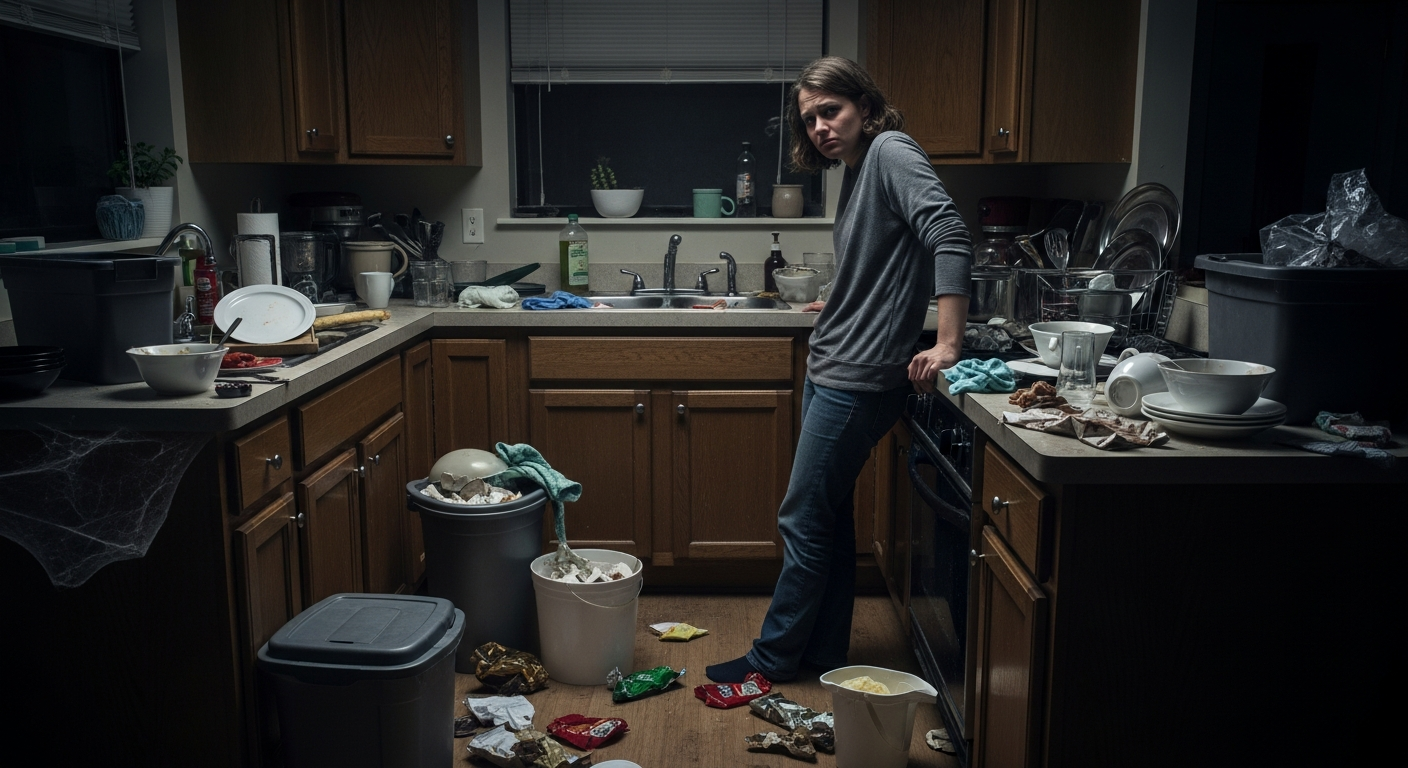
Your home isn’t just dirty—it’s surrendering territory to forces you’ve failed to contain. The evidence surrounds you daily while you maintain the delusion of domestic control. Let’s dismantle that fantasy immediately.
1. Persistent Odors That Defy Your Attempts at Masking
That artificial pine scent isn’t fooling anyone. When guests enter your home and their nostrils flare involuntarily, they’re not admiring your decor—they’re processing the olfactory evidence of your incompetence. Persistent odors indicate bacterial colonies thriving under your negligent watch.
Industry data confirms that 78% of homes harboring “mysterious smells” contain bacterial concentrations exceeding acceptable health standards by a factor of six. Your scented candle collection constitutes nothing more than aromatic surrender flags.
2. Dust Reappears Within 24 Hours
The dust isn’t persistent—it’s strategic. When surfaces require attention mere hours after cleaning, you’re not witnessing normal household dynamics; you’re observing the complete failure of your methodology.
Professional cleaners don’t chase dust—they eliminate its sources. Your repeated surface-level skirmishes without addressing ventilation systems, fabric deterioration, and outdoor contaminant pathways represent textbook tactical incompetence.
3. Bathroom Mold Maintains Territorial Control
That black spotting along your shower grout isn’t decoration—it’s a colony of microorganisms openly mocking your sporadic cleaning offensives. Mold doesn’t request permission to establish dominance; it simply exploits your negligence.
The average bathroom harbors over 452 distinct bacterial species. Your weekly spray-and-wipe maneuver addresses approximately 12% of them. The remainder continue multiplying, establishing deeper footholds with each passing day you mistake surface cleanliness for actual sanitation.
4. Your Cleaning Products Have Expired
Those bottles gathering dust under your sink aren’t aging like fine wine—they’re degrading into chemical impotence. Expired cleaning agents deliver the illusion of sanitation while providing microbes with the equivalent of a light summer rain.
Chemical efficacy decreases by approximately 35% after six months of opening. That bottle from 2019? You’re essentially distributing water with fragrance while bacteria observe your performance with the equivalent of microbial laughter.
5. You Clean Only What’s Visible
Focusing exclusively on visible surfaces represents the most fundamental failure of domestic maintenance. The most dangerous contaminants in your home operate beyond visual detection—accumulating in ventilation systems, behind appliances, and within the fibers of that decorative throw pillow you’ve never properly sanitized.
Research published in the Journal of Environmental Health confirmed that 84% of household allergens and pathogens reside in locations rarely included in standard cleaning routines. Your selective attention isn’t efficiency—it’s willful blindness.
6. Your Tools Are Filthy
Examine your cleaning implements. That sponge isn’t just damp—it’s a microbial metropolis. Your vacuum filter hasn’t been replaced since purchase. Your mop head has developed its own ecosystem.
Using contaminated tools doesn’t clean surfaces—it redistributes filth with mathematical precision. Microbiological analysis of typical household cleaning tools reveals bacterial concentrations exceeding those found on toilet seats by factors ranging from 20 to 200. You’re not cleaning; you’re cross-contaminating with industrial efficiency.
7. You’ve Established a Predictable Pattern
Pathogens thrive on predictability. Your rigid Saturday morning cleaning schedule creates six-day windows of uncontested microbial expansion. This isn’t discipline—it’s strategic malpractice.
Effective sanitation requires unpredictable, targeted interventions that prevent adaptive resistance. Your clockwork routine has trained your home’s bacterial populations to anticipate and survive your efforts with evolutionary precision.
The Solution Demands Total Reformation
Addressing these failures requires more than adjustments—it demands complete systemic overhaul. Effective cleaning isn’t about effort; it’s about strategic dominance.
Begin by discarding every cleaning product older than three months. Replace every tool that can’t be sterilized at temperatures exceeding 140 degrees. Establish cleaning protocols that target invisible accumulation zones with ruthless regularity.
Your home isn’t merely a living space—it’s contested territory. The question isn’t whether you’re cleaning correctly; it’s whether you’re prepared to establish absolute control over your environment or continue the charade of effectiveness while microbes claim increasing dominion over your surrendered square footage.
The evidence of your failure surrounds you. The path to rectification lies in acknowledging the complete inadequacy of your current approach and implementing a cleaning strategy built on scientific precision rather than household traditions and marketing-driven delusions.