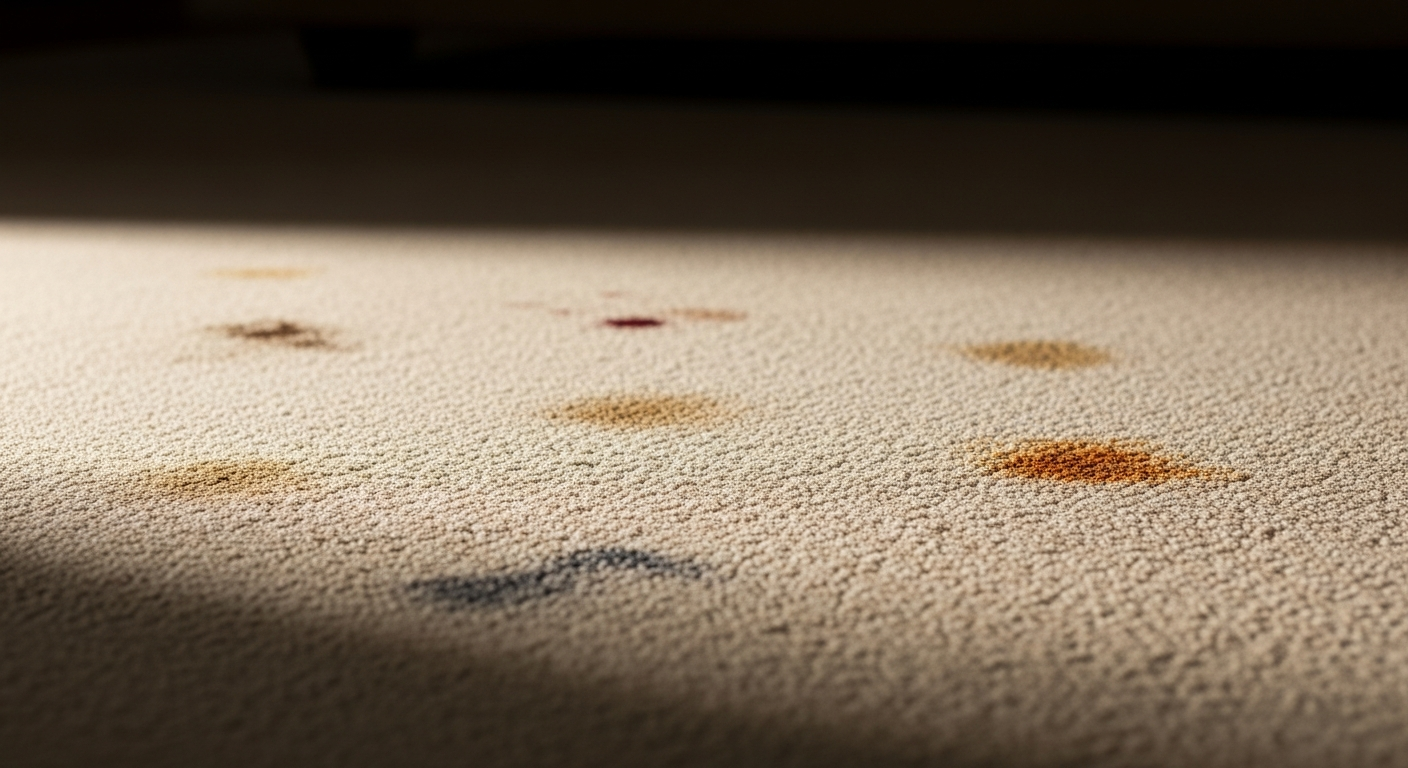
Your carpet is lying to you. Beneath that vacuumed surface lurks a battlefield of microscopic filth that your household remedies cannot—will not—defeat. Consumer-grade cleaning products make promises they have no intention of keeping, while professional cleaners possess weapons-grade solutions you’ll never find on a store shelf.
The average homeowner remains blissfully ignorant of what truly infests their flooring. This stops now. Consider this your intelligence briefing on the enemy that lives beneath your feet.
1. Crystallized Pet Urine Deposits
That pet accident you thought you cleaned six months ago? It’s still there, crystallized into the carpet backing like a biological time bomb. When humidity rises, these crystals reactivate, releasing their signature aroma throughout your home.
Your baking soda and vinegar solution was nothing but a theatrical performance. Professional cleaners utilize enzymatic cleaners at industrial strengths that molecularly dismantle these crystals rather than simply masking them. They’re not removing stains; they’re conducting chemical warfare against biological compounds.
2. Tannin-Based Beverage Residue
Coffee, wine, and tea leave behind tannins that chemically bond to carpet fibers with the tenacity of a hostage-taker. These compounds burrow deep into the pile, creating a discoloration that your store-bought cleaner merely disturbs rather than removes.
Professionals deploy specialized tannin-specific solvents followed by extraction methods that operate at temperatures and pressures your rental machine couldn’t approach if it trained for years. They’re not cleaning; they’re executing a precision extraction operation.
3. Tracked-In Petroleum Compounds
The asphalt from your driveway doesn’t stay there. It hitchhikes on shoes, creating microscopic deposits of petroleum-based compounds throughout your carpet. These stains don’t announce themselves—they accumulate silently, darkening traffic patterns with military precision.
Professional cleaners deploy petroleum-dissolving agents that break these compounds down without damaging carpet fibers. Your citrus cleaner is bringing a water pistol to a firefight.
4. Oxidized Blood Proteins
That minor cut from months ago has left its mark. Blood proteins oxidize and chemically bond to carpet fibers, creating a brownish stain that becomes increasingly resistant to removal with each passing day.
Professionals attack these stains with specialized hydrogen peroxide formulations and cold-water extraction techniques that break the molecular bonds without setting the stain permanently. Your warm water and dish soap attempt merely strengthened the enemy’s position.
5. Microscopic Mold Colonies
Spilled liquids that weren’t completely dried have created the perfect breeding ground for microscopic mold colonies living deep in your carpet padding. They’re not visible yet, but they’re there, multiplying, waiting to emerge as visible stains and respiratory irritants.
Professional cleaners utilize antimicrobial treatments and moisture extraction systems that penetrate to the subfloor level. Your surface cleaning has merely moistened the battlefield, providing these organisms with reinforcements.
6. Chemical Residue Buildup
The biggest threat to your carpet isn’t what you spilled—it’s what you applied afterward. Years of improper cleaning products have left a chemical residue that attracts dirt like a magnet, creating a self-perpetuating cycle of filth that becomes more entrenched with each amateur cleaning attempt.
Professionals employ sequential cleaning processes that first remove these residues before addressing the actual stains. They’re not just cleaning your carpet; they’re liberating it from a chemical prison of your own creation.
7. Synthetic Dye Transfer
That colorful throw pillow or area rug has been silently bleeding dye into your carpet fibers for months. Heat, humidity, and pressure have facilitated a color transfer that appears as a mysterious discoloration rather than an obvious stain.
Professional cleaners utilize color-safe reducing agents that separate transferred dyes from carpet fibers without affecting the carpet’s original color. Your general-purpose cleaner was shooting blindfolded at a target it couldn’t identify.
The truth about your carpet’s condition is unpleasant but necessary. Professional carpet cleaners don’t simply possess better equipment—they command specialized knowledge of chemistry and material science that transforms cleaning from a household chore into a technical operation.
Your carpet requires intervention, not maintenance. The choice is simple: continue living above a contaminated textile battlefield, or call in the specialists who arrive equipped to wage war against stains you didn’t even know existed. The enemy beneath your feet won’t surrender to a steam cleaner and some grocery store spray. It requires professionals who understand that carpet cleaning isn’t housekeeping—it’s combat.